

Maddy summaryHR 3184, the PFAS Alternatives Act, funds research to develop turnout gear (firefighter safety clothing) without harmful PFAS chemicals, directly affecting firefighters who wear this gear. It authorizes $25 million annually (2025-2029) for grants to eligible organizations to research and test PFAS-free gear, requiring partnerships with firefighting groups to translate findings into practice. The bill also allocates $2 million yearly (2027-2031) for training programs on safe gear use and decontamination. Its goal is to reduce firefighters' exposure to chemicals linked to occupational illnesses during operations.
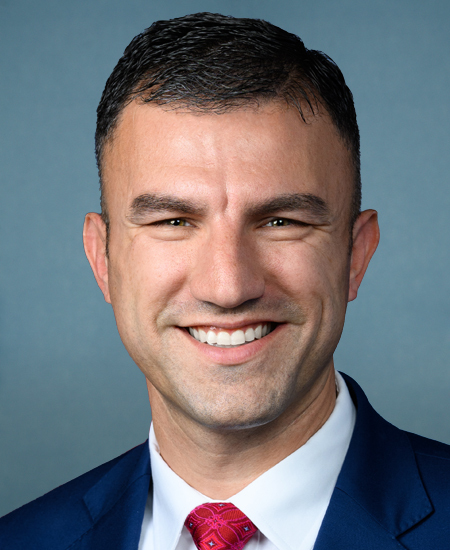
Rep. Rudy Yakym III
Sponsored bills
Maddy summaryHR 976, the "1071 Repeal to Protect Small Business Lending Act," would repeal data collection and reporting requirements for small business loans under Section 704B of the Equal Credit Opportunity Act. This specifically removes the mandate for financial institutions - especially community banks and credit unions - to track and submit loan data by business characteristics like race or gender. The bill aims to reduce compliance costs for lenders, which its findings argue limit small business access to credit. The repeal would eliminate these reporting obligations and remove references to the requirement from related federal laws.
Maddy summaryHR 3193 requires the U.S. Trade Representative to report to Congress within 30 days if South Korea enacts digital regulations that unfairly restrict U.S. digital companies. The bill mandates an assessment of whether such policies violate U.S. trade agreements or create unjustifiable barriers to U.S. commerce. If the report finds violations, the U.S. can initiate enforcement actions like World Trade Organization disputes or Section 301 investigations. This bill directly affects U.S. digital companies operating in South Korea and empowers U.S. trade officials to address discriminatory digital regulations. It focuses on enforcing existing trade obligations rather than creating new regulations.
Maddy summaryThis bill creates a federal grant program to help cover medical costs for retired Federal working dogs (like police or military K9s). It authorizes $1 million annually (2026-2030) for eligible nonprofits with a two-year history of providing such care to dogs that have received official retirement letters and are now with their handlers. The grants allow these organizations to pay for veterinary expenses, directly supporting retired service dogs and their handlers. The program is administered through the Department of Homeland Security under existing grant authority.
Jobs and Opportunity with Benefits and Services (JOBS) for Success Act of 2025 This bill reauthorizes the Temporary Assistance for Needy Families (TANF) program through FY2030, establishes new metrics for measuring states’ performance within the program, and makes other changes to the program’s requirements. Under current law, states participating in TANF are required to meet certain minimum participation rates, or percentages of beneficiaries engaged in work. The bill eliminates minimum participation rates and replaces them with metrics tied to employment outcomes, such as former beneficiaries’ rates of unsubsidized employment and earnings at particular points in time. The Department of Health and Human Services must publish a website with information on each state’s performance. The bill also requires states to create an individual opportunity plan for each beneficiary and to meet with each work-eligible beneficiary at least every 90 days to review the individual’s progress under their plan. (Under current law, individual plans are optional.) Further, the bill prohibits states from using TANF funds to provide benefits to families with monthly incomes that exceed twice the poverty line. Finally, the bill requires states to spend at least 25% of their TANF grant funds on certain activities, including work supports, education and training, and apprenticeships. The bill also lowers the percentage of TANF funds that a state may spend on administrative costs to 10%, with an exception for costs related to case management necessary to assist in the development of individual opportunity plans.
Maddy summaryThis bill creates a new federal program to expand high-speed broadband access in rural areas by providing grants, loans, and combinations of both. It sets minimum standards requiring 100 Mbps downstream and upstream speeds, prioritizes projects in communities where at least 90% of households lack such service, and directs funding toward areas with high poverty, small populations, or strategic community plans. Eligible applicants include tribal organizations, cooperatives, local governments, and rural utilities, with requirements to meet buildout deadlines, participate in federal affordability programs, and provide cost-sharing (up to 25%). The program authorizes $650 million annually from 2026 to 2030 to fund infrastructure construction, improvement, or acquisition in underserved rural communities.
Maddy summaryThis bill expands access to employee ownership by modifying the Small Business Act to allow S corporations owned by employee stock ownership plans (ESOPs) to retain small business status, even when an ESOP owns over 49% of the company. It creates a new Treasury Department office to provide education and technical assistance for S corporations establishing ESOPs, and establishes a Labor Department Advocate for Employee Ownership to coordinate outreach and resolve disputes. These changes directly affect S corporations transitioning to ESOP ownership and their employees, who gain retirement benefits through ESOP accounts. The bill aims to increase employee ownership by removing eligibility barriers and improving support for businesses adopting this model.
Maddy summaryHR 3050 prohibits U.S. federal agencies from entering into contracts over $100,000 with companies that engage in a boycott of Israel after January 1, 2026. Companies must certify they are not boycotting Israel when bidding for such contracts, and contracts must include a requirement that companies refrain from boycotting Israel during the contract term. If a company violates this prohibition, the agency must terminate the contract 30 days after notifying the company, unless the company ends the boycott. This bill directly affects businesses with federal contracts exceeding $100,000 and defines "boycott" as actions taken due to boycott calls, without valid business reasons, or based on nationality, national origin, or religion.
Maddy summaryHR 3006 would limit Medicare coinsurance for certain surgical procedures performed in ambulatory surgical centers (ASCs). Specifically, it prevents patients from paying coinsurance exceeding the annual inpatient hospital deductible for those procedures. If the coinsurance amount would surpass the deductible, the Medicare program must reduce the patient's share to match the deductible and reimburse the ASC for the difference. This change applies to services provided on or after January 1, 2026, directly affecting Medicare beneficiaries using ASCs for qualifying surgeries.
Maddy summaryThis bill updates highway safety laws to better protect people involved in roadside incidents and work zones. It expands definitions to include "occupants and pedestrians associated with disabled vehicles" in safety programs and requires collecting data on roadside deaths and work zone fatalities. The bill creates two new working groups - one focused on disabled vehicle crashes and another on work zone safety - to analyze data, develop solutions, and share best practices with the National Highway Traffic Safety Administration. It also mandates annual reports from the Federal Highway Administration on how states use work zone safety funds, including spending details and effectiveness. These changes directly affect drivers, pedestrians, construction workers, and emergency responders by improving data collection and safety planning.