

Maddy summaryHR 9864, the Keep Food Containers Safe from PFAS Act of 2024, prohibits the sale of food packaging containing intentionally added PFAS chemicals (like those used in non-stick coatings) in interstate commerce. It directly affects food manufacturers and packaging producers who currently use these chemicals. The bill amends federal food safety law to ban such packaging starting January 1, 2025, defining PFAS as man-made chemicals with at least one fully fluorinated carbon atom. This is a concrete policy change to remove specific chemicals from food contact materials.
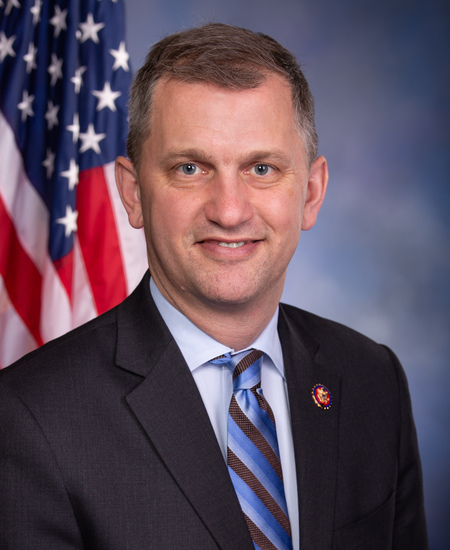
Rep. Sean Casten
Sponsored bills
Maddy summaryThis bill creates a voluntary buyout program for properties that repeatedly flood, allowing the National Flood Insurance Program to purchase homes from owners to prevent future claims. It targets properties identified as repetitive loss or severe repetitive loss properties, or those that would file maximum coverage claims, and permits buyouts even for properties not in special flood hazard areas. The program allows buyout amounts to exceed claim amounts, with the Administrator using National Flood Insurance Fund resources to cover costs while ensuring no delay to existing claim payments. Communities with repetitive flooding issues must develop and implement flood mitigation plans, and the bill provides additional assistance for underserved and high-risk communities to address flooding problems. The goal is to reduce long-term costs to the National Flood Insurance Fund while helping families affected by repeated flooding.
Maddy summaryThis bill establishes a voluntary program allowing food manufacturers to label products with standardized greenhouse gas emissions data across the entire food lifecycle. The Environmental Protection Agency (EPA) will develop the label format, requiring two numerical summaries: one for emissions from production (farm to retail) and another for consumer use (home storage to disposal), verified using international standards like ISO 14044. Food companies must apply for EPA approval to use the label, which must include a QR code linking to a public database of detailed emissions data. Participation is optional, with the EPA responsible for verifying consumer-use emissions data while manufacturers validate production-phase data. The program aims to provide clear, consistent information to consumers without mandating participation or making environmental claims.
Maddy summaryThis bill eliminates a tax credit for using carbon dioxide (CO2) in enhanced oil recovery (EOR) operations. It amends the Internal Revenue Code by removing Section 43 (the EOR credit) and modifying Section 45Q to prohibit the credit for new facilities starting construction after the law's enactment. The primary effect is ending the federal tax incentive for oil companies that inject CO2 to extract more oil from existing wells. This change directly affects oil and gas companies planning new EOR projects using CO2, as they will no longer qualify for this specific tax credit.
Maddy summaryHR 5509, the Electronic Permitting Modernization Act, requires the U.S. Department of the Interior to create modern online systems for processing permits and related paperwork. It mandates a centralized public website with easy navigation links to all electronic permitting systems and contact information for DOI staff assisting state, tribal, and local governments. The bill aims to reduce paper use, improve service efficiency, and increase public access to permitting information. The Secretary must also provide regular updates to congressional committees on implementation progress.
Maddy summaryHR 1719, the Honoring Our Fallen Heroes Act of 2023, establishes a presumption that certain cancers diagnosed in public safety officers (like police and firefighters) are work-related if linked to their duties. It defines 22 specific cancers (including lung, mesothelioma, and WTC-related cancers) as "exposure-related," allowing officers or their families to receive benefits without proving direct work connection, provided they were diagnosed within 15 years of leaving active service. The bill also creates a process for adding new cancers to the list based on scientific evidence, requiring the Bureau to review petitions and make decisions within 180 days. This applies to deaths or disabilities occurring on or after January 1, 2023, directly affecting officers who developed covered cancers during service.
Maddy summaryHCONRES 130 is a symbolic concurrent resolution commending state and local governments that treat reproductive rights as human rights following the *Dobbs* decision. It recognizes efforts by cities like Austin, Texas, and Montgomery County, Maryland, to expand abortion access and condemn criminalization of pregnancy outcomes. The resolution affirms that reproductive rights are human rights, urges states to repeal restrictive laws, and references U.S. obligations under international human rights treaties. As a non-binding resolution, it does not create new laws or alter existing policies.
Maddy summaryHRES 1499 is a symbolic resolution expressing concern about rising book bans in U.S. schools and libraries, citing PEN America data showing over 10,000 individual book bans in public schools between July 2023 and June 2024 - more than double the previous year. It highlights how bans disproportionately target books featuring LGBTQ+ themes, racial history, and marginalized voices (like *The Handmaid’s Tale*, *Maus*, and *Fry Bread*), while emphasizing students’ First Amendment rights to access diverse materials. The resolution calls on school districts and libraries to follow established best practices for handling book challenges and to protect students’ right to read widely, including works reflecting diverse perspectives. As a non-binding resolution, it does not create new law but urges local education entities to uphold free expression.
Maddy summaryThe Vehicle Energy Performance Act of 2024 creates a tax credit for new passenger automobiles and light trucks with better-than-average fuel economy and a fee for vehicles with worse-than-average fuel economy. The credit amount, capped at $5,000 per vehicle, is calculated based on how much a vehicle's fuel efficiency exceeds the median for its model year. This applies to new vehicles meeting specific fuel economy standards starting with the 2026 model year, with manufacturers required to report fuel economy data annually. The credit is refundable and can be transferred to dealers at the time of purchase, while the fee applies to vehicles below the median fuel economy starting in 2028. The bill amends the Internal Revenue Code and establishes new reporting requirements for vehicle fuel economy data.
Maddy summaryHR 3433, the "Give Kids a Chance Act of 2024," requires pharmaceutical companies developing certain cancer drugs to conduct pediatric studies if the drugs target molecular pathways relevant to childhood cancers. It directly affects drug manufacturers submitting new applications for cancer treatments, particularly those combining previously approved adult cancer drugs or containing a single new active ingredient. The bill amends FDA regulations to mandate these pediatric investigations only when specific conditions are met, such as when a drug's molecular target is relevant to pediatric cancer growth. The FDA must issue implementing guidance within 12 months, and reports to Congress will track implementation and effectiveness starting 2 years after enactment.