Federal Firearm Licensee Act This bill makes various changes related to federal firearms licensees, including by establishing physical security requirements and increasing licensing fees. It also amends several appropriations laws to remove limitations on the authority of the Bureau of Alcohol, Tobacco, Firearms and Explosives to conduct activities related to the administration of federal firearms laws.
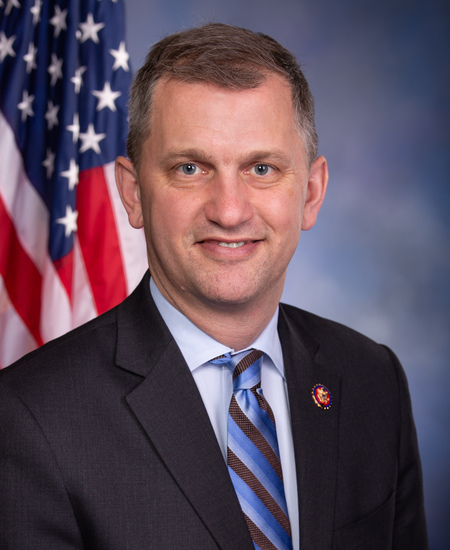
Rep. Sean Casten
Sponsored bills
Repeal Existing Policies that Encourage and Allow Legal HIV Discrimination Act of 2022 or the REPEAL HIV Discrimination Act of 2022 This bill addresses federal and state laws, policies, and regulations that may burden people living with HIV/AIDS. Specifically, the bill directs the Department of Justice (DOJ), the Department of Health and Human Services (HHS), the Department of Defense (DOD), and the White House Office of National AIDS Policy to initiate a national review of federal (including military) and state laws, policies, regulations, and judicial precedents and decisions regarding criminal and related civil commitment cases involving people living with HIV/AIDS. DOJ must transmit to Congress and make publicly available the results of such review with related recommendations. The White House Office of National AIDS Policy must also develop and publicly release guidance to assist states with handling relevant cases. The office, DOJ, HHS, and DOD must transmit to the President and Congress any proposals necessary to implement adjustments to federal laws, policies, or regulations. This bill shall not be construed to discourage the prosecution of individuals who act with the intent to do harm to another individual by intentionally transmitting HIV.
Bringing an End to Harassment by Enhancing Accountability and Rejecting Discrimination in the Workplace Act or the BE HEARD in the Workplace Act This bill expands protections against discrimination and harassment in the workplace and raises the minimum wage for tipped employees. Specifically, the bill (1) makes it an unlawful employment practice to discriminate against an individual in the workplace based on sexual orientation, gender identity, pregnancy, childbirth, a medical condition related to pregnancy or childbirth, or a sex stereotype; and (2) provides a statutory definition for what constitutes workplace harassment. Further, these protections apply to all workplaces, regardless of size, and to all workers, including independent contractors, interns, volunteers, and trainees. The bill prohibits employers from entering into contracts or agreements with workers that contain certain nondisparagement or nondisclosure clauses and prohibits certain predispute arbitration agreements and postdispute agreements. It also establishes grant programs to (1) prevent and respond to workplace discrimination and harassment, (2) provide legal assistance for low-income workers, and (3) establish a system of legal advocacy in states to protect the rights of workers. The bill further provides employees the right to retain their tips and it increases, in specified annual increments, the minimum wage for tipped employees to match the federal minimum wage for nontipped employees. Additionally, the bill requires the Equal Employment Opportunity Commission to provide specified training and resource materials, establish and convene a harassment prevention task force, and establish an Office of Education and Outreach with regard to prohibited discrimination and harassment in employment. The bill also requires specified studies, reports, and research on prohibited workplace harassment.

Supporting Every at-Risk Veteran In Critical Emergencies Act of 2021 or the SERVICE Act of 2021 This bill authorizes the Office of Community Oriented Policing Services within the Department of Justice to make grants to support the creation and operation of veterans' response teams in state, local, and tribal law enforcement agencies.
Gun Trafficker Detection Act This bill requires gun owners to report the theft or loss of a firearm to law enforcement. It imposes civil monetary penalties on a violator.
Lifting Immigrant Families Through Benefits Access Restoration Act of 2021 or the LIFT the BAR Act of 2021 This bill repeals certain limits on the eligibility of noncitizens who lawfully reside in the United States for federal means-tested programs, including Medicaid, the Children's Health Insurance Program (CHIP), programs funded through Temporary Assistance for Needy Families (TANF) grants, Supplemental Security Income (SSI), and certain nutrition and housing programs.
Supreme Court Term Limits and Regular Appointments Act of 2021 This bill establishes staggered, 18-year terms for Supreme Court Justices and limits the Senate's advice and consent authority in relation to the appointment of Justices. Specifically, the bill requires the President to appoint a Supreme Court Justice every two years. If the appointment of a Justice would result in more than nine Justices on the Court, then the nine most junior Justices shall make up the panel of Justices exercising judicial power in cases and controversies. Further, any Justice who has served a total of 18 years is deemed retired from regular service and may continue to serve as a Senior Justice. Senior Justices may continue to perform judicial duties assigned to them by the Chief Justice. However, no Justice appointed before the date of enactment shall be counted towards such panel, nor shall they be required to retire from regular active service. In the event of a vacancy on the Court, the Chief Justice must assign the Justice most recently designated as a Senior Justice to serve on the Court until the appointment of a new Justice. Additionally, the Senate's advice and consent authority is waived if the Senate does not act within 120 days of a Justice's nomination.
Frank Harrison, Elizabeth Peratrovich, and Miguel Trujillo Native American Voting Rights Act of 2021 This bill addresses the voting rights of Native American and Alaska Native voters and voting access on tribal lands. The bill includes provisions expanding the types of facilities that can be used as voter registration agencies; increasing polling site accessibility, including by expanding early in-person voting and providing ballot drop boxes; providing enforcement power to citizens and attorneys general; requiring approval for actions like moving a polling place; validating certain tribal identification for voting or registering to vote; permitting voters to designate another individual to return a ballot on their behalf; and expanding requirements for bilingual voting accessibility. In addition, the bill establishes a Native American voting task force grant program for the purpose of increasing voter outreach, education, registration, turnout, and accessibility for Native American communities. The bill also directs the Government Accountability Office to study and report on (1) the prevalence of nontraditional or nonexistent mailing addresses among Indians, members of tribes, and individuals residing on Indian lands; and (2) the alternatives for removing barriers to voter registration, receipt of voter information and materials, and receipt of ballots.
Hold Accountable and Lend Transparency on Campus Sexual Violence Act of 2021 or the HALT Campus Sexual Violence Act of 2021 This bill addresses dating violence, domestic violence, sexual assault, or stalking incidents on college campuses, including by expanding requirements governing the disclosure of such incidents and efforts to prevent them. Specifically, the bill requires the Department of Education (ED) to make available an online survey tool regarding student experiences with domestic violence, dating violence, sexual assault, harassment, and stalking. ED must publish a biennial report that includes campus-level data for each institution of higher education (IHE). The bill permits ED to impose civil penalties on IHEs that have violated a law under the jurisdiction of its Office for Civil Rights. In addition, the bill directs ED, the Department of Health and Human Services, and the Department of Justice to create a task force on sex-based harassment and violence in education.
Supreme Court Ethics Act This bill establishes a new statutory requirement for the Judicial Conference of the United States to issue a judicial code of conduct for judges and justices of U.S. courts, including Justices of the Supreme Court. Currently, the Judicial Conference issues a code of conduct for judges of U.S. courts (but not for Justices of the Supreme Court).