Backlog Justice Act of 2022 This bill requires certain actions to address the backlog of untested sexual assault kits. For example, the bill (1) directs the Bureau of Justice Assistance to establish a publicly accessible online database regarding untested kits, and (2) requires the Department of Justice to provide an increased amount of certain grant funding for states that have in place electronic evidence tracking systems for these kits.
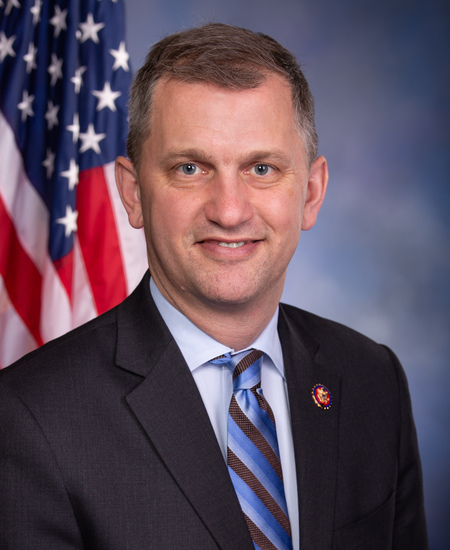
Rep. Sean Casten
Sponsored bills
Stealthing Act of 2022 This bill establishes a civil action for the nonconsensual removal of a sexual protection barrier (e.g., a condom). A person may recover compensatory and punitive damages, injunctive and declaratory relief, and such other relief as a court may deem appropriate.
Consent is Key Act This bill directs the Department of Justice to increase a state's allocation of funds under the Sexual Assault Services Program if the state has in effect a law that authorizes civil damages and equitable relief against a person who engages in the nonconsensual removal of a sexual protection barrier (e.g., a condom).
Pathways to Policing Act This bill authorizes the Office of Community Oriented Policing Services within the Department of Justice to award grants to states, local governments, and law enforcement agencies to support recruitment of law enforcement officers. In particular, these grants may be used for (1) marketing and recruitment campaigns to encourage candidates to seek careers in law enforcement; and (2) developing, operating, or expanding Pathways to Policing programs (e.g., programs that facilitate entry into full-time law enforcement positions for certain candidates).
Stopping Harmful Image Exploitation and Limiting Distribution Act of 2022 or the SHIELD Act of 2022 This bill establishes a new criminal offense related to the distribution of intimate visual depictions. Specifically, it makes it a crime to knowingly distribute (or intentionally threaten to distribute) an intimate visual depiction of an individual (1) with knowledge of or reckless disregard for the individual's lack of consent and reasonable expectation of privacy, and (2) without a reasonable belief that distributing the depiction touches a matter of public concern. A violator is subject to criminal penalties—a fine, a prison term of up to two years for each individual victim depicted, or both.
Latonya Reeves Freedom Act of 2022 This bill prohibits government entities and insurance providers from denying community-based services to individuals with disabilities that require long-term service or support that would enable such individuals to live in the community and lead an independent life. Specifically, these entities may not discriminate against such individuals in the provision of community-based services by such actions as imposing prohibited eligibility criteria, cost caps, or waiting lists or failing to provide a specific community-based service. Additionally, community-based services must be offered to individuals with such disabilities prior to institutionalization. Institutionalized individuals must be notified regularly of community-based alternatives. The bill requires the Department of Justice to issue regulations requiring government entities and insurance providers to offer community-based long-term services to individuals with such disabilities who would otherwise qualify for institutional placement. Government entities must ensure sufficient availability of affordable, accessible, and integrated housing that is not a disability-specific residential setting or a setting where services are tied to tenancy. Regulations shall also (1) require government entities and insurance providers to perform self-evaluation on current services, policies, and practices and concerning compliance with requirements of this bill; and (2) require government entities to submit a transition plan. The bill provides funds for FY2022 for the Department of Health and Human Services to provide technical assistance with respect to transition plans. The bill allows civil actions by individuals subjected to, or about to be subjected to, a violation of its requirements.
Fair Calculations in Civil Damages Act of 2022 This bill prohibits courts from awarding damages to plaintiffs in civil actions using a calculation for projected future earning potential that takes into account a plaintiff's race, ethnicity, gender, religion, or actual or perceived sexual orientation. The bill requires the Department of Labor to develop guidance for economists to develop future earnings tables that do not rely on race, ethnicity, gender, religion, or actual or perceived sexual orientation. Additionally, Labor and the Department of Justice must develop guidance for states on how to calculate future earnings in state tort proceedings in a manner that is free of such biases. The Judicial Conference of the United States must report on damages awarded under federal law for personal injury, employment discrimination, tort damages, and cases involving protected classes of individuals sharing a common characteristic or identity who are legally protected against discrimination. The Administrative Office of the United States Courts must submit recommendations to ensure that future earnings calculations that take into account age and disability do not conflict with federal equal protection laws. The bill requires the Federal Judicial Center to train federal judges on how to implement this bill.

Protect Children Through Safe Gun Ownership Act This bill establishes certain requirements and education programs for the safe storage of firearms, including by establishing grants to provide parents with educational materials on gun safety and the importance of secure gun storage.
Defending Ukraine Sovereignty Act of 2022 This bill authorizes security assistance for Ukraine, requires sanctions against Russia if it escalates hostilities in or against Ukraine, and addresses related issues. The bill (1) authorizes the Department of Defense to use various authorities to provide and expedite the delivery of defense articles to support Ukraine's armed forces, (2) allows the President to exercise drawdown authority to provide defense articles to Ukraine, and (3) authorizes the Department of State to provide International Military Education and Training assistance to Ukraine. The President must periodically determine whether Russia's government is significantly escalating hostilities in or against Ukraine and whether such an escalation has the aim or effect of undermining Ukraine's government or interfering with Ukraine's sovereignty or territorial integrity. If the President determines that Russia's government has engaged in such escalation, the President must impose sanctions on (1) certain government officials, including Russia's president and prime minister; (2) certain Russian financial institutions; (3) entities involved in certain transactions involving Russian debt; (4) entities (and corporate officers of such entities) involved in constructing or operating Russia's Nord Stream 2 natural gas pipeline; and (5) certain entities involved in Russian resource extraction industries. The President may terminate such sanctions after certifying to Congress that Russia's government has taken certain actions, such as entering into an agreed settlement with Ukraine's legitimate democratic government. The bill also authorizes Radio Free Europe/Radio Liberty to explore opening new bureaus to reach new audiences on Russia's periphery. The State Department must establish an initiative to deepen and foster ties with the Baltic states.
COPS on the Beat Grant Program Reauthorization and Parity Act of 2022 This bill reauthorizes through FY2031 and makes changes to the Community Oriented Policing Services grant program. Among the changes, the bill reduces the required matching contribution for certain rural communities during the first three years of a grant and eliminates the preference for agencies that exceed the matching requirements; allows grant funds to be used to increase wages of career law enforcement officers in states or localities that have a median household income of less than 70% of the national median household income and qualify for a reduced matching contribution; and provides statutory authority for the Office of Community Oriented Policing Services within the Department of Justice. Additionally, the bill requires the Government Accountability Office to report on whether law enforcement workforces are representative of the communities they serve, the percentage of law enforcement employees who live in the community they serve, the average pay of officers compared to the cost of living in the community they serve, and recommendations for improvements.