

Maddy summaryHR 8796, the "Stop Comstock Act," removes outdated restrictions from federal law that previously banned the distribution of materials related to contraception and abortion as "obscene" or "indecent." The bill amends Title 18 and the Tariff Act by deleting references to "indecent," "immoral," "unlawful abortion," and "procuring abortion" from provisions governing obscene materials. It clarifies that the law only prohibits "obscene materials" in commerce, eliminating broad restrictions on reproductive health information. This directly affects internet platforms, healthcare providers, and individuals sharing reproductive health resources by removing legal barriers to their distribution.
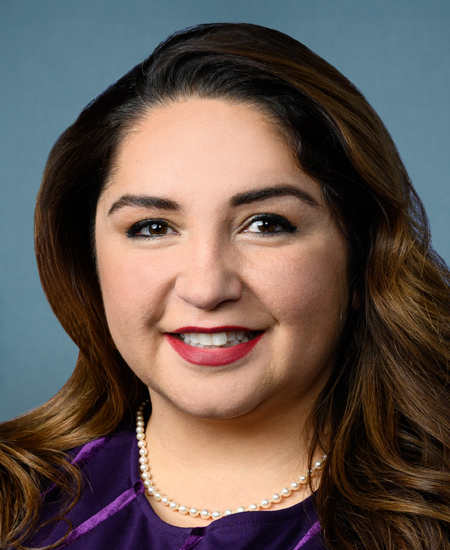
Rep. Delia C. Ramirez
Sponsored bills
Maddy summaryThe WPA Act establishes a federal job guarantee program requiring eligible entities (states, tribal entities, political subdivisions, and consortia) to provide employment to any eligible individual (18+ with principal residence in the area) who applies through the program. Jobs must include a minimum wage of $17 per hour or higher, health insurance options, paid family/medical leave, paid sick leave, and paid training opportunities. Eligible entities must submit detailed applications showing local job needs (including unemployment rates, poverty rates, and demographic information) and post all available jobs on a public website. The program includes specific provisions to support individuals with barriers to employment, such as those with disabilities or criminal records, and requires annual reporting on program outcomes including employment rates, wages, and demographic data.
Maddy summaryThe End Polluter Welfare Act of 2024 eliminates numerous subsidies and tax benefits for fossil fuel companies by repealing provisions that provide royalty relief, reducing royalty rates, and ending tax incentives for oil, natural gas, and coal production. The bill prohibits federal funding for fossil fuel projects by restricting international financial institutions, the Export-Import Bank, and the Department of Transportation from supporting fossil fuel infrastructure. It also repeals recent legislation that provided fossil fuel subsidies, including parts of the Fiscal Responsibility Act and Inflation Reduction Act. This comprehensive approach directly affects oil, gas, and coal producers by removing financial benefits that have historically supported the fossil fuel industry, while directing studies to identify and eliminate additional fossil fuel subsidies.
Maddy summaryThe Youth Homelessness Guaranteed Income Pilot Program Act of 2024 would establish a 36-month pilot program providing monthly cash payments to up to 105,000 homeless youth and young adults aged 18-30. Participants would receive payments of at least $1,400 per month (or the adjusted fair market rent for a 2-bedroom home in their area) along with housing navigation services, financial coaching, and workforce development support. The program would prioritize individuals from historically marginalized communities and include a study to evaluate how direct cash payments affect housing stability, economic outcomes, and health for participants. The bill aims to address systemic barriers to stable housing faced by homeless youth, particularly those from Black, Indigenous, and other communities of color.
Maddy summaryThe Community Housing Act of 2024 significantly increases federal investment in affordable housing through major funding boosts, including $44.5 billion for the Housing Trust Fund and $1.5 billion for the Capital Magnet Fund over the next decade. It repeals the Faircloth amendment, which had limited public housing construction since 1992, allowing public housing authorities to build new units without the previous cap. The bill establishes a permanent emergency rental assistance program providing $3 billion annually through 2029 to help low-income households with rent payments and creates the Unlocking Possibilities program to fund local efforts to streamline housing regulations and reduce zoning barriers. These provisions directly affect low- and moderate-income households, community land trusts, and rural communities facing housing insecurity and affordability challenges.
Maddy summaryHR 7119, the Fairness in Nursing Home Arbitration Act, prohibits nursing homes and providers of home health or community-based care from requiring residents or patients to sign arbitration agreements before any dispute arises. It directly affects residents of skilled nursing facilities (covered under Medicare) and individuals receiving home health or nursing care (covered under Medicaid), preventing facilities from enforcing such agreements for current or former patients. The key provision bans the use of pre-dispute arbitration agreements entirely, making them invalid and unenforceable, and ensures courts - not arbitrators - decide disputes related to these agreements. The bill applies to all service providers, including their employees and affiliates, and takes effect upon enactment.
Maddy summaryThe Healthy MOM Act (HR 6716) would require health insurance plans to provide a special enrollment period for pregnant individuals beginning when pregnancy is reported to the insurer. It would mandate that group health plans cover maternity care for all dependents, including young women who might otherwise lack coverage due to plan exclusions. The bill would extend Medicaid coverage for pregnant individuals and infants to a full 12 months postpartum, rather than the current 60-day period. These provisions aim to improve access to comprehensive maternity care, which the bill states could prevent 3 in 5 pregnancy-related deaths by addressing coverage gaps that disproportionately affect women of color.
Maddy summaryThe Marriage Equality for Disabled Adults Act removes a rule requiring disabled adult children to remain unmarried to receive Social Security benefits. It ensures married disabled adult children, or their spouses, can maintain eligibility for Social Security Disability Insurance and Medicaid without losing benefits due to marriage. The bill changes how income and resources are counted, so a spouse's income and resources are no longer deemed against the disabled adult child for benefit calculations. It also requires states to preserve Medicaid eligibility for these individuals at the same level as if they were unmarried.
Maddy summaryThe FOREST Act of 2023 prohibits U.S. imports of products made from commodities (palm oil, soybeans, cocoa, cattle, and rubber) produced on land where illegal deforestation occurred after the law's enactment. Importers must file declarations demonstrating they've assessed supply chain risks of illegal deforestation, with stricter requirements for products from countries identified in action plans. The law establishes a process to identify countries without adequate deforestation protections and requires them to develop action plans with specific benchmarks for compliance. It creates a fund using import penalty revenue to provide foreign assistance to help countries eliminate illegal deforestation and includes procurement preferences for federal contracts with suppliers demonstrating deforestation-free supply chains.
Maddy summaryThis bill creates a framework for states to develop their own universal health care systems by applying for waivers from certain federal health care requirements. States must demonstrate they can provide comprehensive coverage meeting or exceeding current federal standards (like Medicaid, Medicare, and CHIP) for at least 95% of residents within 5 years, with the federal government redirecting funds that would have gone to federal programs to support state systems. States must include specific protections like reproductive health care coverage and submit regular reports on coverage rates, affordability, and quality. The bill includes special provisions to protect Indian health care services and ensure they remain accessible under state plans. States that fail to meet coverage goals may face consequences, including potential termination of their waiver.