

Maddy summaryThe REPORTS Act requires federal agencies to analyze how new significant regulations affect people living near or below the poverty line and racial inequity when proposing rules. It also mandates annual reports from the Government Accountability Office (GAO) examining government programs' impacts on poverty and racial inequity over the past five years. Agencies must include these analyses with proposed rules, and GAO reports must cover two to five programs annually. The law applies to major federal regulations and programs, focusing on transparency about equity impacts without altering policy outcomes.
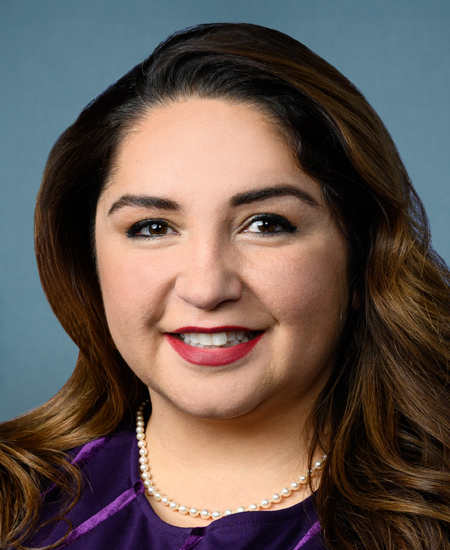
Rep. Delia C. Ramirez
Sponsored bills
Maddy summaryThis bill, HR 1097 (Everett Alvarez, Jr. Congressional Gold Medal Act of 2023), authorizes the award of a Congressional Gold Medal to Everett Alvarez, Jr., in recognition of his service as a U.S. Navy pilot and Vietnam War prisoner of war. It directly honors Alvarez, who was the first U.S. pilot shot down in the Vietnam War, spent over 8.5 years in captivity, and later served in the Peace Corps and Veterans Administration. The bill’s key mechanism is directing the U.S. Mint to strike a gold medal bearing his name and image, with bronze duplicates available for sale to cover costs. It does not create new policies or affect any group beyond the honoree.
Maddy summaryThis bill (HR 10539) prevents U.S. immigration authorities from rejecting visa applications solely due to missing information in fields that are not required by regulations. It directly affects immigrants and nonimmigrants applying for visas or immigration status, ensuring applications won't be denied for minor, non-essential omissions. The bill adds specific language to the Immigration and Nationality Act requiring that applications submitted in the prescribed format cannot be rejected for such non-required field omissions. It also mandates the Secretary of Homeland Security to create new regulations implementing this change to prevent future rejections based on these non-essential gaps.
Maddy summaryThis bill creates a task force within Homeland Security to reunite children separated from parents or guardians at the U.S.-Mexico border between January 20, 2017, and January 20, 2021, under the Zero-Tolerance Policy. The task force must identify all affected children, recommend legal pathways for reunification (including parole, visas, or services like mental health support), and consult with affected families and organizations. It must report to Congress every 60 days and will sunset within 120 days of all reunifications or by January 20, 2039, whichever comes first. The bill directly affects children separated during that specific policy period and requires federal agencies to coordinate on practical solutions.
Maddy summaryHRES 1618 is a non-binding resolution designating November 20-December 20, 2024, as "National Survivors of Homicide Victims Awareness Month." It expresses support for raising awareness about survivors of homicide victims and encourages communities to provide them with support services and resources. The resolution calls for promoting survivor-centered initiatives, addressing trauma through behavioral health services, and fostering community engagement to honor victims and support families affected by homicide.
Maddy summaryHRES 1617 is a non-binding resolution expressing the House of Representatives' view that the federal government should dramatically expand and strengthen the care economy. It calls for federal investments to address systemic gaps in care infrastructure, including universal access to affordable childcare, elder care, paid family leave, and mental health services, while prioritizing higher wages and union protections for care workers - particularly women of color and immigrants. The resolution emphasizes repairing historical inequities rooted in exclusion from labor protections and connecting care infrastructure to broader goals like climate justice and economic equity. It does not create new law but urges future legislation to adopt these principles as a foundation for policy. The resolution directly affects millions of care workers, families relying on care services, and communities facing systemic barriers to care access.
Maddy summaryThis bill increases compensation for people wrongfully convicted and imprisoned. It raises the base damages from $50,000 to $70,000 under federal law and requires annual adjustments for inflation using the Consumer Price Index. The changes directly affect individuals exonerated after serving time for crimes they didn't commit. The key mechanism ensures compensation keeps pace with rising living costs over time.
Maddy summaryThis bill requires states to prohibit physicians from performing specific non-emergency surgeries on foster children under age 6 who have variations in sex characteristics (commonly called intersex traits), unless the procedure addresses an immediate life threat. It targets procedures like clitoral reduction, gonadectomy, and vaginoplasty that are often done without consent on infants. States must enforce this through licensing penalties, and it applies only to children in foster care as a condition for receiving federal foster care funding. The bill explicitly states it does not restrict medically necessary surgeries or procedures for transgender youth.
Maddy summaryThis bill (HR 10237) requires U.S. Customs and Border Protection (CBP) to create new guidelines within 180 days for handling personal belongings of individuals arrested, restrained, or confined by CBP. The guidelines must ensure detainees can keep as much property as operationally feasible, return all stored items upon release, and specify essential categories like medical devices, IDs, phones, and legal documents that must remain with or be returned to the individual. CBP must also provide written receipts for stored items, detail circumstances for discarding property, and track compliance through annual reports to Congress. The bill mandates consultation with advocacy groups and includes oversight by the Comptroller General to review implementation and effects on CBP operations.
Maddy summaryThe SAFE for Survivors Act of 2024 provides comprehensive workplace protections for survivors of domestic violence, dating violence, sexual assault, and stalking. It establishes a new entitlement to 40 work days of safe leave per year (with 10 days paid) for employees to address qualifying acts of violence, including time for counseling, safety planning, legal assistance, and medical care. The bill prohibits employers from discriminating against or retaliating against employees who take this leave, requires reasonable accommodations for survivors, and ensures unemployment compensation eligibility for those who separate from work due to violence. It also includes insurance protections preventing insurers from denying coverage or charging higher premiums based on a person's status as a survivor. This legislation directly affects employees, employers, and insurance providers across the United States.