

Maddy summaryThe AID Youth Employment Act creates new federal programs to provide subsidized summer and year-round employment opportunities for youth aged 14-24, with special focus on marginalized youth facing barriers like homelessness, foster care, involvement in the justice system, or living in underserved communities. The bill authorizes $375 million annually for summer employment programs and $500 million annually for year-round programs, distributed through competitive grants to state, local, tribal, and community-based organizations that form partnerships with educational agencies, workforce development entities, and community organizations serving youth. To receive funding, organizations must submit detailed applications describing how they will identify, recruit, and place eligible youth in employment while providing support services like transportation, child care, and mentorship. The bill establishes performance metrics to track outcomes including employment rates, educational attainment, and postsecondary credential completion for program participants. It also requires annual reports to Congress on program implementation and effectiveness.
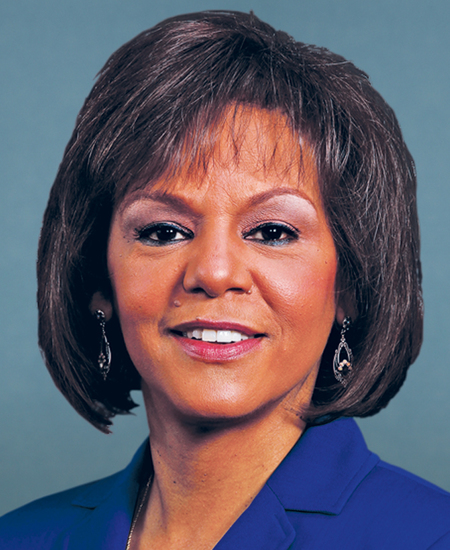
Rep. Robin L. Kelly
Sponsored bills
Maddy summaryThis bill establishes a comprehensive framework to address environmental justice by requiring federal agencies to identify and address disproportionately adverse environmental and health effects on communities of color, low-income communities, and Tribal and Indigenous communities. It creates a White House Environmental Justice Interagency Council to coordinate federal efforts, mandates that agencies develop environmental justice strategies, and requires consideration of cumulative impacts in permitting decisions for pollution sources. The bill also establishes grant programs for environmental justice communities, creates training requirements for federal employees, and includes specific provisions for safer cosmetics and economic revitalization in fossil fuel-dependent communities. These provisions aim to ensure fair treatment and meaningful involvement of all people in environmental decision-making processes, directly affecting federal agencies and communities disproportionately burdened by environmental hazards.
Maddy summaryThe ACTION for National Service Act reorganizes the Corporation for National and Community Service into the AmeriCorps Administration, an Executive department, and establishes new programs to expand national service opportunities. It increases national service educational awards to twice the average in-state tuition for public 4-year colleges and raises living allowances for participants. The bill creates a Civilian Climate Corps focused on climate-related projects in disproportionately impacted communities and establishes a National Service Foundation to accept private donations. It also creates a new outreach program to notify individuals aged 17-30 about service opportunities, with a goal of reaching 1 million participants annually by 2033.
Maddy summaryHR 2753, the Firearms Retailer Code of Conduct Act of 2023, requires licensed firearm retailers, manufacturers, and importers to implement new safety protocols. It mandates annual training for employees on recognizing straw purchases, illegal transfers, and self-harm risks, including a 20-question exam with a 70% passing requirement. Retailers must display written protocols identifying red flags (like multiple purchases or accomplices) and maintain liability insurance covering negligent transfers, unless they certify selling fewer than 20 firearms annually. The law takes effect 545 days after enactment, with penalties including fines up to $10,000 or license suspension for violations.
Providing Resources and Occupational Training for Emotional Crisis and Trauma in 911 Act or the PROTECT 911 Act This bill establishes a grant program, and requires the Department of Health and Human Services (HHS) to develop resources, for addressing mental health conditions among public safety telecommunicators. These include 9-1-1 operators and other public safety personnel who are responsible for responding to requests for emergency assistance. Specifically, HHS must award grants to state, local, and regional emergency communications centers or nonprofits for behavioral health and wellness programs to prevent and mitigate job-related mental health issues among public safety telecommunicators. Additionally, HHS must develop and disseminate (1) best practices for identifying, preventing, and treating post-traumatic stress disorder among public safety telecommunicators; and (2) resources for educating mental health professionals about the workplace culture of, stressors and challenges experienced by, and therapies for treating mental health issues common to public safety telecommunicators.
Maddy summaryThe Dignity for Detained Immigrants Act establishes new standards for Department of Homeland Security detention facilities, requiring them to meet or exceed the American Bar Association's Civil Immigration Detention Standards. The bill mandates annual, unannounced inspections by the DHS Inspector General, public reporting on facility compliance, and a phased-out timeline for private detention facilities (phasing out by 3 years after enactment). It prohibits solitary confinement for all detainees, requires community-based alternatives to detention for vulnerable individuals, and mandates detailed public reporting on facility conditions, staffing, and detainee demographics. The legislation directly affects all immigrants held in DHS custody, including children, vulnerable persons, and primary caregivers, with specific protections for these groups in detention procedures.
This resolution expresses the sense of the House of Representatives that the Food and Drug Administration (FDA) has the authority to review and approve drugs pursuant to its own expertise, and that recent court decisions blocking the FDA's approval of mifepristone (which is used in medication abortion) violate congressional intent with respect to the FDA's authority.
Maddy summaryHR 2728, the Young Farmer Success Act, expands student loan forgiveness eligibility under the Higher Education Act to include full-time farm and ranch workers. It directly affects young agricultural workers employed as employees or managers at farms meeting specific revenue thresholds. The key provision adds "full-time job engaged in farm work" as a qualifying employment type for loan forgiveness, requiring farms to earn at least $35,000 in gross revenue from agricultural sales in 2023 (with annual inflation adjustments based on the Consumer Price Index). This amendment modifies existing loan forgiveness rules without creating new programs, applying to workers meeting the farm revenue criteria.
Maddy summaryHR 2725, the "Do No Harm Act," amends the Religious Freedom Restoration Act (RFRA) to clarify that RFRA does not apply when federal laws protect against discrimination or promote equal opportunity. It specifically exempts protections under the Civil Rights Act, Americans with Disabilities Act, workplace benefits like leave, child labor safeguards, and healthcare access from RFRA challenges. The bill also clarifies that RFRA does not block private lawsuits between individuals, applying only to cases involving government entities. This amendment ensures that existing federal civil rights and workplace protections remain enforceable under RFRA.
Maddy summaryThe Latonya Reeves Freedom Act of 2023 strengthens the Americans with Disabilities Act's requirement that individuals with disabilities receive long-term services and supports in community settings rather than institutions. It defines "community-based" services to include specific housing options where individuals with disabilities can live independently with maximum control over their lives, including access to integrated housing, employment, and community participation. The bill requires states to develop transition plans to move people from institutional settings to community-based services within 12 years, with measurable annual targets for reducing institutionalization. It establishes enforcement mechanisms through the Department of Justice and Department of Health and Human Services to ensure compliance with these requirements.