

Maddy summaryThis bill directs the Federal Communications Commission (FCC) to review its satellite communication rules to identify potential changes that could better support precision agriculture. It specifically requires the FCC, with input from a designated agricultural technology task force, to examine rules for fixed, mobile, and earth exploration satellite services. The FCC must then submit a report within 15 months to Congress with recommendations for implementing any rule changes. This bill does not enact new rules itself but initiates a review process to improve satellite connectivity for farmers using precision agriculture technology.
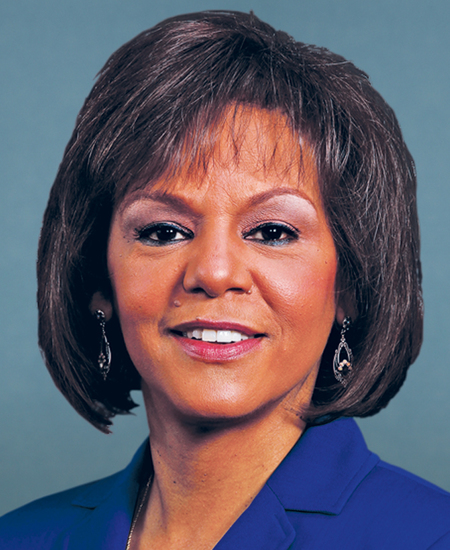
Rep. Robin L. Kelly
Sponsored bills
Maddy summaryThe Postal Police Reform Act of 2023 updates federal law to explicitly include "Postal Service police officers" alongside Postal Inspectors as authorized personnel for enforcing regulations on U.S. Postal Service property. It clarifies that the Postmaster General can establish and post rules for protecting postal property, with violations punishable by fines or up to 30 days in jail. This change directly affects USPS police officers (by formalizing their role), the Postmaster General (by expanding regulatory authority), and anyone on postal property who must follow posted rules. The bill makes existing enforcement procedures more explicit without altering penalties or creating new requirements.
Maddy summaryThis bill protects living organ donors from insurance discrimination by prohibiting life, disability, and long-term care insurers from denying coverage, raising premiums, or altering policy terms solely because someone donated an organ while alive. It also updates the Family and Medical Leave Act to include recovery from organ donation surgery as a qualifying health condition, allowing donors to take protected leave for this purpose. Additionally, the bill requires the Health and Human Services Secretary to update public educational materials about living donation benefits, risks, and insurance protections within six months of enactment. These changes directly affect living organ donors, insurers, employers, and healthcare systems by ensuring fair access to insurance and workplace leave.
Maddy summaryHR 2955, the Stop Institutional Child Abuse Act, establishes a Federal Work Group to improve data collection and best practices for youth in residential programs (like therapeutic schools, treatment centers, and group homes). The Work Group, composed of federal agency representatives and diverse stakeholders, must develop national data standards, create risk assessment tools, and issue biennial reports with recommendations to enhance safety, reduce restraints, and expand community-based alternatives. It directly affects youth with mental health, substance use, or disability needs placed in these facilities, as well as agencies overseeing them. The bill also mandates a National Academies study to examine funding, oversight, and barriers to community care. These mechanisms aim to standardize data tracking and promote less restrictive, trauma-informed care for youth in residential programs.
Forced Arbitration Injustice Repeal Act of 2023 or the FAIR Act of 2023 This bill prohibits a predispute arbitration agreement from being valid or enforceable if it requires arbitration of an employment, consumer, antitrust, or civil rights dispute.
Raise the Age Act of 2023 This bill establishes new restrictions on the sale or transfer of certain semiautomatic firearms to individuals under 21 years of age. Specifically, this bill makes it unlawful for a licensed gun dealer, importer, manufacturer, or collector to sell or deliver a semiautomatic center-fire rifle or semiautomatic center-fire shotgun that has (or has the capacity to accept) an ammunition feeding device with a capacity of more than five rounds to an individual who the licensee knows or has reasonable cause to believe is under age 21. The prohibition does not apply if the individual under age 21 is a full-time law enforcement officer or active-duty member of the Armed Forces. The bill also requires the Federal Bureau of Investigation to report on the operation of its public access line, including a description of information sharing protocols and recommendations for improving such protocols.
Secure Background Checks Act of 2023 This bill extends federal restrictions on the receipt, possession, shipment, and transportation of firearms and ammunition to two new categories of persons: persons who fail to meet the minimum age requirements imposed by federal law and by the law of their resident state; and persons who are out-of-state residents and do not qualify for an exception, such as the temporary loan or rental of a firearm for lawful sporting purposes. Additionally, the bill imposes criminal penalties—a fine, a prison term of up to 10 years, or both—on an individual who ships, transports, or receives a firearm or ammunition while under indictment for a crime punishable by imprisonment for a term exceeding 1 year.
End Gun Violence Act of 2023 This bill extends federal restrictions on the sale or disposition of firearms and ammunition to a new category of persons: persons who have been convicted in any court of a violent misdemeanor within the preceding five years.
Maddy summaryHR 2370, the Access to AEDs Act, authorizes $25 million in federal funding (2024-2028) to help public elementary and secondary schools improve access to automated external defibrillators (AEDs) and CPR training. The bill directs the Secretary of Health and Human Services to award grants to school districts and partners for developing AED programs, training staff and students, purchasing and maintaining AEDs, and creating cardiac emergency response plans. It specifically targets schools to address sudden cardiac arrest (SCA), which is a leading cause of death among student athletes and youth, with 90% of SCA victims dying without immediate CPR and defibrillation. The law requires grantees to report on their activities and establishes a clearinghouse to collect data on school AED access and costs.
Maddy summaryThis bill expands a tax credit for employers hiring certain youth by allowing year-round eligibility (not just summer) and creating a new category for "disconnected youth." It increases the credit amount for qualifying hires and defines disconnected youth as individuals aged 16-25 who haven't attended school or worked regularly for six months, or foster youth aged 16-21. Employers hiring these youth will receive the tax credit for work performed between September 16 and April 30, in addition to summer months. The changes apply to hires after the bill's enactment date.