

Maddy summaryHR 3850, the Pride In Mental Health Act of 2023, establishes a federal grant program to improve mental health and substance abuse services for LGBTQ+ youth (including nonbinary, intersex, and Two Spirit individuals). The bill directs the Health and Human Services Secretary to fund eligible organizations to provide trauma-informed care, cultural competency training for caregivers, school bullying prevention guidelines, and family support resources. It explicitly prohibits grant funds from being used for conversion therapy or advertising related to such therapy. The bill also requires data collection on LGBTQ+ youth mental health and a federal survey to measure psychological distress.
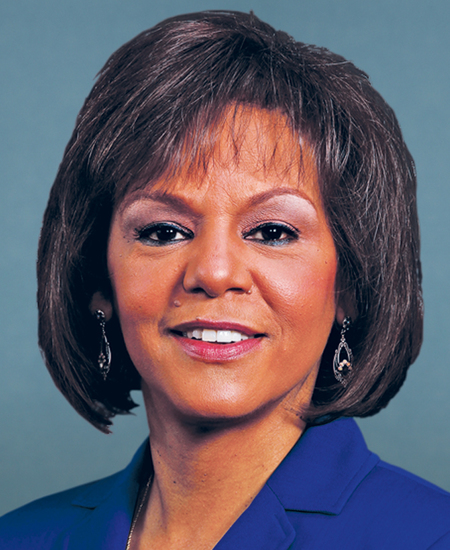
Rep. Robin L. Kelly
Sponsored bills
Maddy summaryHRES 484 is a non-binding House resolution acknowledging systemic disparities faced by Black women in the U.S., including economic inequality, healthcare access gaps, and housing discrimination. It formally endorses the Black Women Best (BWB) framework - which proposes policies like guaranteed income, expanded tax credits, and equitable healthcare access - and urges federal policymakers to center Black women's lived experiences in future legislation. The resolution references specific recommendations from the Congressional Caucus on Black Women and Girls' "An Economy for All" report to address historical inequities. As a procedural resolution, it does not create new law but serves as a policy guideline for inclusive policymaking.
Maddy summaryThe American Family Act establishes a monthly child tax credit of $250 per month for each child under age 6 and $300 per month for each child aged 6-18, with income limits of $150,000 for joint filers and $112,500 for other filers. The credit is refundable, meaning it can be paid even if the taxpayer owes no income tax, and will be adjusted annually for inflation. The bill includes detailed rules for determining eligibility, including requirements that the child resides with the taxpayer for more than half the month and provisions to prevent fraud through recapture of improperly received payments. The credit will be paid monthly in advance rather than as a single annual payment, with specific mechanisms for calculating and distributing the payments.
Maddy summaryThis resolution (HRES 475) expresses congressional support for designating the first Tuesday in June as "National Cancer Survivor Beauty and Support Day." It recognizes an existing volunteer-driven event where beauty industry professionals provide free services to cancer survivors, with no fundraising involved. The resolution notes this observance has operated nationwide since 2003, involving thousands of salons across all 50 states. It does not create new laws or funding but formally acknowledges the day's role in supporting cancer survivors' well-being.
Maddy summaryThe TRACE Act requires the National Missing and Unidentified Persons System (NamUs) to add a data field tracking whether a missing person’s last known location was on federal land (e.g., national parks, military bases). It mandates an annual report to Congress starting in 2025, detailing how many cases involved federal land locations. The bill specifically defines "federal land" as areas under the jurisdiction of the Agriculture, Interior, or Defense departments (excluding tribal trust land), focusing on locations like national forests or Army Corps projects. This policy change directly affects cases involving missing persons near federal properties by improving data collection and transparency for federal agencies.
Maddy summaryHR 3855 establishes the National Digital Reserve Corps within the General Services Administration to recruit digital and cybersecurity professionals for temporary assignments to federal agencies. It requires participants to commit to a 3-year service term (minimum 30 days annually) with annual compensation capped at $10,000, while agencies receive support for needs like cybersecurity, data management, and digital project development. The program authorizes $30 million for implementation, mandates GSA to manage recruitment and assignments, and requires annual congressional reports tracking reservist numbers, agency requests, and assignment outcomes. Covered agencies include major departments like the U.S. Postal Service and the Executive Office of the President.
Maddy summaryThe Keeping Gun Dealers Honest Act of 2023 increases federal oversight of licensed gun dealers by requiring three annual compliance inspections instead of one. It raises penalties for violations, including up to five years in prison for certain offenses and up to ten years for recordkeeping failures that aid gun trafficking. The bill also authorizes civil penalties of $10,000 per violation and license suspension for dealers failing to maintain secure gun storage or unlawfully transferring firearms. Additionally, dealers linked to 10 or more crime guns or found to have unlawfully transferred firearms must conduct a physical inventory of their stock.
Maddy summaryHR 698, the Assault Weapons Ban of 2023, prohibits the sale, manufacture, transfer, and possession of specific firearms and ammunition devices commonly referred to as "assault weapons" and "large capacity magazines" in interstate commerce. The bill defines "semiautomatic assault weapons" to include rifles like AR-15s and AK-47s, as well as firearms with specific features such as folding stocks, pistol grips, threaded barrels, and detachable magazines holding more than 15 rounds. It exempts law enforcement, military, antique firearms, and weapons already lawfully owned before the law's enactment (known as "grandfathered" weapons). The bill also requires new identification markings on these weapons and large capacity magazines, and adds background check requirements for transfers of grandfathered weapons.
Maddy summaryH.Res. 460 is a non-binding resolution expressing the House of Representatives' support for Congress to enact the Older Americans Bill of Rights. This resolution does not create new laws but calls for a proposed bill that would establish specific rights for older Americans, including access to affordable health care, financial security, and community participation. It highlights challenges like high prescription drug costs, retirement insecurity, and barriers to care, urging Congress to address these through legislative action. The resolution directly affects older Americans (ages 65+) and their families by advocating for policy changes to ensure dignity and independence.
This bill establishes a student loan deferment and forgiveness program for physicians who provide mental and behavioral health services (including substance abuse prevention and treatment services) to racial and ethnic minority groups and low-income individuals. To carry out the program, the Department of Health and Human Services must pay the outstanding principal and interest (up to a maximum limit) on specified federal student loans for eligible physicians who work in qualifying employment. While participating in the program, physicians do not need to pay the principal of their loans but must pay any interest that accrues. To be eligible, physicians must complete a mental or behavioral health professions degree or certificate at a minority-serving institution of higher education. Physicians must also provide mental and behavioral health services for five consecutive years while working either (1) as solo practitioners where at least 30% of patients receive Medicaid and at least 50% of patients are members of racial and ethnic minority groups; or (2) at institutions that accept Medicaid and where at least 50% of patients served by the institution are members of racial and ethnic minority groups.