

Maddy summaryHRES 768 is a symbolic House Resolution expressing congressional support for Israel following Hamas' October 7, 2023 attacks. It condemns Hamas' actions, reaffirms Israel's right to self-defense, and calls for the immediate release of hostages. The resolution references the U.S. commitment to Israel's security through existing military aid programs, including the 2016 U.S.-Israel Memorandum of Understanding, and emphasizes enforcement of laws like the Taylor Force Act to prevent U.S. aid from reaching terrorist groups. As a symbolic resolution, it does not create new policy but serves as a statement of congressional support for Israel.
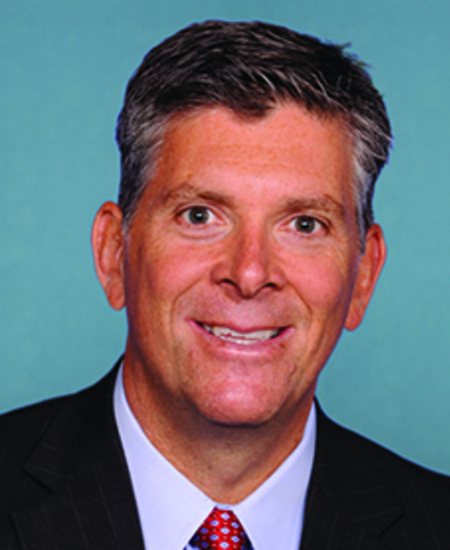
Rep. Darin LaHood
Sponsored bills
Maddy summaryThe Streamlining Federal Grants Act of 2023 requires federal agencies to simplify grant application and reporting processes, with a focus on improving access for underserved communities, rural areas, and historically excluded organizations like faith-based groups. Key mechanisms include designating senior agency officials for grants, creating a Grants Council to coordinate improvements, and mandating plain-language notices of funding opportunities under 500 words. Agencies must develop annual plans to streamline procedures, ensure language accessibility for limited-English speakers, and report progress to Congress. The bill directly affects federal agencies managing grants and their recipients, aiming to reduce administrative burdens while expanding equitable access to federal funding.
'Operation Swords of Iron' Iron Dome Supplemental Appropriations Act This bill provides $2 billion in appropriations for the Department of Defense to provide to the government of Israel for the procurement of the Iron Dome defense system to counter short-range rocket threats. The funds must be provided to address emergent requirements in support of Operation Swords of Iron.
Maddy summaryHR 5110, the Protecting Hunting Heritage and Education Act, amends the Elementary and Secondary Education Act of 1965 to clarify that federal education funds cannot be used for certain weapons - but this restriction does not apply to archery, hunting, or other shooting sports training programs. The bill directly affects schools and educational programs seeking to use federal funds for these specific activities, such as archery clubs or hunting safety education. It adds an explicit exception to the existing prohibition, allowing funds to support "educational instruction or enrichment activities" in these sports under authorized programs. This change removes ambiguity about funding eligibility for such educational initiatives in K-12 schools.
Maddy summaryThis resolution designates the week of September 25-29, 2023, as "National Clean Energy Week" to recognize the growing role of clean energy in the U.S. economy. It expresses support for clean energy jobs and innovation, noting the sector employed about 8.1 million people in 2022. The resolution encourages federal, state, and local investment in affordable clean energy technologies and promotes "commonsense solutions" for energy needs. As a symbolic gesture, it has no legal force or funding implications - it simply urges recognition of clean energy's economic and environmental contributions.
Maddy summarySammy's Law of 2023 requires large social media platforms (defined as those with over 100 million monthly users or $1 billion in annual revenue) to create and maintain application programming interfaces that allow parents or legal guardians to delegate account management for children aged 13 or older to third-party safety software providers. These providers must register with the Federal Trade Commission, agree to use data solely for child safety, and follow strict rules about data disclosure. The law establishes a national standard that prevents states from creating their own requirements for this feature while including FTC enforcement mechanisms and data security provisions. The legislation aims to give parents more tools to monitor and protect children from specific online harms like cyberbullying, trafficking, and violence on major social media platforms.
Maddy summaryHJRES 11 proposes a constitutional amendment that would limit Members of Congress to serving a maximum of three terms in the House of Representatives and two terms in the Senate. If passed and ratified, it would prevent any member who has already served the maximum terms from running for re-election, including time spent filling vacancies (for more than one year in the House or three years in the Senate). This amendment directly affects current and future members of Congress by changing eligibility rules for re-election. The proposal is currently a joint resolution in the House, requiring ratification by three-fourths of state legislatures to become part of the Constitution.
Maddy summaryHR 5820, the Technology for Energy Security Act, extends a federal tax credit for businesses installing qualified fuel cell technology. It amends the tax code to change the expiration date for this credit from January 1, 2025, to January 1, 2033. This extension provides businesses with a longer timeframe to claim the credit for eligible fuel cell property investments. The bill directly affects companies deploying fuel cell energy systems by making the tax incentive available for an additional decade.
This bill designates the community-based outpatient clinic of the Department of Veterans Affairs in Bloomington, Illinois, as the Andrew Jackson Smith Medal of Honor Department of Veterans Affairs Clinic.
Maddy summaryThis bill updates the Opportunity Zones program by requiring designated census tracts to meet specific poverty and income criteria, with a process to replace tracts that no longer qualify. It establishes mandatory annual reporting for Opportunity Zone funds and investors, collecting data on investments, employment, and community impact. The bill extends the tax deferral period for capital gains invested in Opportunity Zones from 2026 to 2028. Additionally, it creates a $1 billion State and Community Dynamism Fund to support investments in underserved communities, with specific requirements for how these funds can be used for affordable housing, small businesses, and community capacity building.