

Maddy summaryThe Farm to Fly Act of 2025 amends agricultural programs to include sustainable aviation fuel (SAF) as a qualifying biofuel, directly affecting U.S. farmers, agricultural producers, and the aviation industry by creating new market opportunities. It defines SAF with specific requirements - meeting ASTM standards, not derived from palm oil or petroleum, and achieving at least a 50% lifecycle greenhouse gas emissions reduction compared to jet fuel. The bill mandates the Secretary of Agriculture to lead a new collaboration initiative focusing on advancing SAF development through partnerships with farmers, rural economic support, and public-private partnerships. Additionally, it expands existing manufacturing assistance programs to include SAF production, aiming to strengthen domestic energy security and grow markets for agricultural feedstocks.
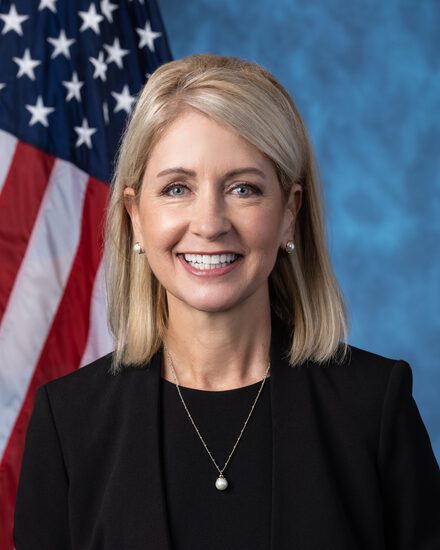
Rep. Mary E. Miller
Sponsored bills
Maddy summaryHJRES 82 disapproves the District of Columbia Council's approval of the Insurance Regulation Amendment Act of 2024 (D.C. Act 25-699), a local law that would have amended insurance regulations in Washington, D.C. This procedural resolution, submitted under the District of Columbia Home Rule Act, allows Congress to reject the District's legislative action. The bill itself does not change insurance regulations but formally expresses disapproval of the District's law, preventing it from taking effect.
Maddy summaryThe SHORT Act (HR 2395) redefines federal firearm definitions to exclude antique and collector firearms from being classified as firearms, and removes distinctions between short-barreled rifles and shotguns in federal regulations. It prevents state laws from imposing taxes or registration requirements on short-barreled rifles and shotguns, requiring state rules to align with federal compliance instead. The bill also mandates the federal government to destroy specific records related to these firearms within one year of enactment.
Maddy summaryThe Freedom from Unfair Gun Taxes Act of 2025 would prohibit states and local governments from imposing taxes on the sale of firearms, ammunition, or firearm parts during interstate or foreign commerce. This bill directly affects state tax policies and manufacturers or dealers selling these items across state lines. It explicitly states that the bill does not change the existing federal tax on firearms and ammunition that funds wildlife conservation programs. The key provision bans state-level taxes for these sales in interstate transactions while preserving current federal funding mechanisms.
Maddy summaryThis bill amends Title IX to prohibit individuals assigned male at birth (based on reproductive biology and genetics at birth) from using locker rooms designated for females during active use in school programs. It directly affects transgender girls and schools implementing gender-segregated facilities. The key provision makes it unlawful under federal law to use such facilities when they are actively used by individuals of a different sex. The policy change takes effect 30 days after enactment.
Maddy summaryThis bill creates a presumption that certain health conditions resulting from the COVID-19 vaccine are connected to military service for veterans who received the vaccine under mandatory orders between August 24, 2021, and January 10, 2023. It specifically covers diseases like myocarditis, pericarditis, thrombosis with thrombocytopenia syndrome, and Guillain-Barré Syndrome, shifting the burden of proof to the VA for these claims. The VA must report quarterly on claim status, including approvals, denials, and appeals, and make these reports publicly available. This changes the claims process for affected veterans but does not create new benefits or expand eligibility beyond the defined timeframe and conditions.
Maddy summaryHR 2387, the "No Harm Act," prohibits federal funding for certain medical treatments for minors that the bill defines as "sex-trait altering treatments," including puberty blockers, hormone therapy, and gender reassignment surgeries (except for specific medical conditions like disorders of sex development). The bill directly affects minors receiving such care, healthcare providers, medical institutions, and schools, requiring parental consent for any treatment and banning federal funds for facilities or schools that provide these treatments without parental approval. Key provisions include banning federal funds for any promotion or facilitation of these treatments, mandating a 72-hour parental consultation period before treatment, and creating civil lawsuits for violations. The bill defines "sex" as biological sex at birth and "gender" as social aspects, excluding only treatments for medically verified conditions.
Maddy summaryThis bill amends the U.S. Code to define key terms like "sex," "male," and "female" based on biological characteristics present at conception, specifically referencing reproductive anatomy. It requires all federal agencies, courts, and Congress to use these biological definitions when interpreting laws, regulations, or agency actions - replacing current interpretations that consider gender identity. The bill explicitly states that "gender identity" does not constitute a valid basis for determining sex under federal law. This change would directly affect how federal agencies implement existing laws related to healthcare, education, employment, and civil rights by mandating biological sex definitions in their operations.
Fairness for High-Skilled Americans Act of 2025 This bill eliminates the Optional Practical Training Program or any successor program, unless Congress expressly authorizes such a program. (The program provides an F-1 student visa holder temporary employment authorization before or after completion of the student's studies, or both.)
Maddy summaryHR 2174, the Paycheck Protection Act, prohibits federal agencies and the U.S. Postal Service from deducting labor organization dues, fees, or political contributions from employee paychecks. This bill directly affects federal employees and postal workers by ensuring these amounts are no longer withheld from their earnings. The key provision amends existing laws (Title 5 U.S.C. § 7115 and Title 39 U.S.C. § 1205) to explicitly ban such deductions. It does not change existing tax treatment of union dues or affect private-sector workers.