

Maddy summaryThis resolution recognizes Tren de Aragua members as "alien enemies" under the 1798 Alien Enemies Act, affirming the President's authority to apprehend and remove them from the U.S. It does not create new law but supports the executive action taken under existing legal authority. The resolution specifically references the President's March 2025 proclamation declaring Tren de Aragua's activities constitute an invasion, citing its presence in 19 states and alleged violent actions against law enforcement.
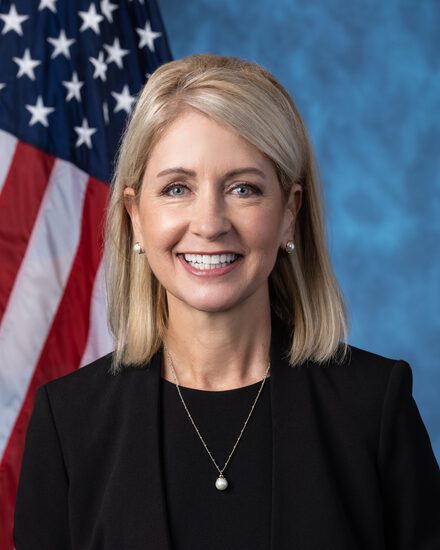
Rep. Mary E. Miller
Sponsored bills
Nuclear Family Priority Act This bill imposes limits on various types of family-sponsored immigration visas. The non-U.S. national ( alien under federal law) parents of U.S. citizens shall not qualify for visas for immediate relatives, which are not subject to any direct numerical limits. Currently, the spouses, unmarried children under 21, and parents of citizens are considered immediate relatives. The bill also creates a nonimmigrant visa for such parents of citizens. Such non-U.S. nationals shall not be eligible for employment or any public benefits. The bill also reduces the baseline annual cap for family-sponsored visas from 480,000 to 88,000, and revises the methods for calculating the cap. Currently, the 480,000 cap may be adjusted depending on various factors but shall not be less than 226,000. The bill eliminates preference allocations (visa categories subject to various annual caps) for various family-sponsored visas, including those for the siblings and married children of citizens. The bill provides for a preference allocation for the unmarried children under 21 and spouses of permanent residents, subject to the 88,000 annual cap.
Maddy summaryHR 2666, the CBO Scoring Accountability Act, requires the Congressional Budget Office (CBO) to annually analyze and publicly report on the actual costs and revenue impacts of major federal legislation for the first 10 years after it becomes law. It mandates that the CBO compare actual spending/revenue results against prior estimates, and if discrepancies exceed 10% for costs or revenue, the CBO must explain the causes in a report to Congress. This applies to bills projected to affect at least 0.25% of U.S. GDP in spending or revenue (defined as "major legislation"), and federal agencies must provide data to support these analyses. The bill aims to improve transparency around budget estimates without altering legislative processes.
Maddy summaryThis bill, HR 2102 (Major Richard Star Act), allows veterans with combat-related disabilities to receive both full military retired pay and veterans' disability compensation simultaneously, without the previous offset that reduced retired pay. It directly affects veterans already eligible for both benefits due to combat-related injuries, removing the requirement that their retired pay be reduced by the disability compensation amount. The key provision amends Title 10 and Title 38 to eliminate the offset rule (sections 5304 and 5305 of Title 38) for these veterans. The change applies to payments starting after the bill’s enactment date, effective for all qualifying veterans. This is a policy change to increase financial support for affected veterans, not a new benefit.
Maddy summaryHR 2644, the "Love Them Both Act of 2025," prohibits the Equal Employment Opportunity Commission (EEOC) and the Office of Congressional Workplace Rights from finalizing, implementing, or enforcing any regulations related to abortion or abortion-related services under the Pregnant Workers Fairness Act. This bill directly affects federal agencies responsible for workplace regulations, blocking them from creating rules about abortion coverage in employment contexts. The key mechanism is a specific restriction on regulatory actions, preventing agencies from developing policies on abortion-related services under the existing Pregnant Workers Fairness Act. It does not alter the core protections of the Pregnant Workers Fairness Act but limits how its regulations can address abortion coverage.
Maddy summaryHR 2561, the "One Vote One Choice Act," prohibits states from using ranked choice voting (RCV) in elections for federal offices, including U.S. President, Congress, and other federal positions. It amends the Help America Vote Act of 2002 to add a new section explicitly stating that states may not conduct federal elections using RCV systems where voters rank candidates by preference. This policy change directly affects all states that currently permit or plan to implement RCV for federal races, requiring them to switch to traditional single-choice voting methods. The law applies to elections held on or after its enactment date, with no exceptions for federal elections.
Maddy summaryThis bill prohibits the District of Columbia from using ranked choice voting in any election, including those for local or federal offices and ballot initiatives. It amends the Help America Vote Act to add a new provision (Section 305) explicitly banning ranked choice voting systems where voters rank candidates by preference. The law directly affects DC voters and election administrators by requiring all District elections to use traditional single-choice voting instead. This is a procedural change to federal election law, not a new voting right or policy.
Maddy summaryHRES 270 is a House resolution proposing the removal of Chief Judge James E. Boasberg of the U.S. District Court for the District of Columbia. It alleges he failed to maintain "good behavior" under Article III of the Constitution by interfering with President Trump's foreign policy regarding the Alien Enemies Act and ordering the return of Tren de Aragua members (a group designated under that law). The resolution also cites undisclosed non-federal payments and misuse of discretion on the Foreign Intelligence Surveillance Court as additional grounds. This procedural resolution, if passed, would send an "article of removal" to the Senate for trial, but does not remove the judge immediately. It targets Boasberg personally and focuses on specific judicial conduct claims.
Maddy summaryThe Free Speech Fairness Act (HR 2501) would amend tax law to allow 501(c)(3) organizations, such as charities and educational nonprofits, to make political campaign statements as part of their regular activities without risking their tax-exempt status. The bill specifies that these statements must be made in the ordinary course of the organization's exempt purpose and result in only minimal additional costs. This change clarifies that routine political commentary by these groups does not violate their tax-exempt status under current rules. The provision would apply to tax years beginning after the bill's enactment.
Amplifying Processing of Livestock in the United States Act or the A–PLUS Act This bill directs the Department of Agriculture (USDA) to revise its regulations to allow certain packers to hold an ownership interest in, finance, or participate in the management or operation of a market agency selling livestock on a commission basis. The bill applies to packers that have a cumulative slaughter capacity of (1) less than 2,000 animals per day or 700,000 animals per year with respect to cattle or sheep, and (2) less than 10,000 animals per day or 3 million animals per year with respect to hogs. In addition, USDA must revise its regulations to include a disclosure requirement for a market agency that has an ownership interest in, finances, or participates in the management or operation of a packer. Specifically, the market agency must disclose the existence of such ownership interest, financial relationship, or participation.