

Maddy summaryThis bill designates the Peter J. McGuire Memorial and Gravesite in Pennsauken, New Jersey, as the "Peter J. McGuire Memorial National Commemorative Site." It formally recognizes the site's historical significance as the resting place of Peter J. McGuire, a foundational labor leader who co-founded the American Federation of Labor and proposed Labor Day. The designation does not make the site part of the National Park System but allows for cooperative educational programs. The memorial, already listed on both New Jersey and National Registers of Historic Places since 2018-2019, honors McGuire’s role in labor history.
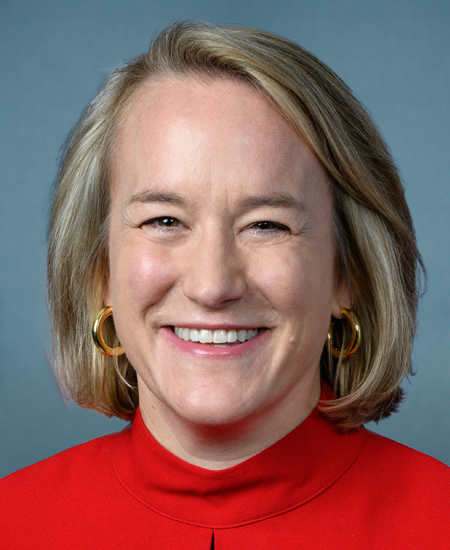
Rep. Nikki Budzinski
Sponsored bills
Maddy summaryThe America Grows Act of 2023 sets automatic annual funding increases for four specific USDA agencies: the Agricultural Research Service, Economic Research Service, National Agricultural Statistics Service, and National Institute of Food and Agriculture. It requires each agency to receive 105% of its prior year's funding, adjusted annually for inflation based on the Consumer Price Index. This funding is exempt from automatic budget cuts (sequestration) and remains available for the full fiscal year. The bill directly affects these agencies' budgets but does not create new programs or alter their core functions.
Maddy summaryThe Sustaining Our Democracy Act creates a federal program to provide states with annual funding to improve election administration and increase voting access. It allocates $2 billion each year from 2024-2033 through the State Election Assistance and Innovation Trust Fund to support activities like upgrading voting equipment, training election workers, and expanding voting access for underserved communities, people with disabilities, and voters on Indian lands. States must submit detailed plans for using funds, which cannot be used for activities that restrict voting access or target election officials. The Act establishes an Office of Democracy Advancement and Innovation to administer the program, monitor fund usage, and oversee compliance with its requirements.
Maddy summaryHR 5295, the Expanding the VOTE Act, modifies Section 203 of the Voting Rights Act to expand language access for voters. It requires states and localities to provide voting materials (including ballots and instructions) in the language of covered language minority groups, with new provisions for American Indian and Alaska Native languages requiring tribal government consultation for unwritten languages. The bill creates $15 million in grants to help jurisdictions provide voting materials in languages that don’t currently trigger Section 203 coverage, while mandating continued provision for those groups in future elections. It also directs a study to evaluate lowering population thresholds for language protections and expanding the definition of covered languages.
Investing in Rural America Act This bill allows Farm Credit System (FCS) institutions to provide financing and technical assistance for essential community facility projects as part of the Department of Agriculture's Community Facilities Direct Loan & Grant Program. (This program provides funding to develop essential community facilities in rural areas.) The FCS financing and technical assistance may be provided in order to make capital available to develop, build, maintain, improve, or provide other support for essential community facilities in rural communities (e.g., certain facilities that provide healthcare, community support, public safety, educational, or utility services). Under the bill, the financing provided by an FCS institution may not exceed 15% of the institution’s total assets unless the FCS institution offers at least one non-FCS lending institution an interest in the financing under reasonable terms and conditions acceptable to the borrower. The FCS institution must also report the offer to the Farm Credit Administration (FCA). The FCA must submit an annual report to Congress on the activities undertaken by FCS institutions under this bill, including through the partnerships between FCS institutions and other lending institutions. The FCA must post the report on the agency's website.
Maddy summaryHR 4745, the Delivering for Rural Seniors Act of 2023, creates a pilot program to expand home delivery of food packages under the Commodity Supplemental Food Program (CSFP) for low-income seniors in rural areas. The bill authorizes $10 million annually (2024-2026) for competitive grants to state agencies, which must prioritize rural service providers to cover costs like transportation, staffing, and outreach for home delivery. It requires grantees to report on delivery metrics, costs, and effectiveness annually. The program directly affects rural CSFP participants facing transportation barriers to accessing food assistance.
Rural Hospital Technical Assistance Program Act This bill provides statutory authority for the Rural Hospital Technical Assistance Program within the Department of Agriculture (USDA). Under the bill, USDA must establish and maintain (directly or by grant, contract, or cooperative agreement) a program to help eligible hospital facilities in rural areas with a population of 50,000 inhabitants or less. The program must provide tailored technical assistance and training to hospital facilities to identify development needs for maintaining essential health care services and support action plans for financial, operational, and quality improvement projects to meet these needs. Development needs include (1) constructing, expanding, and modernizing health care facilities; (2) increasing telehealth capabilities; and (3) acquiring or upgrading health care information systems (e.g., electronic health records). The program must also provide technical assistance and training to help hospital facilities to better manage their financial and business strategies and identify, and apply for assistance from, USDA loan and grant programs. In selecting eligible hospital facilities to participate in the program, USDA must give priority to borrowers and grantees of certain USDA rural assistance programs. USDA must also submit an annual report to Congress on the progress and results of the program.
Rural Wellness Act This bill prioritizes behavioral and mental health treatment services under certain rural development grant and loan programs. The bill also reauthorizes through FY2028 the set-asides and prioritizations for substance use disorder treatment services under the Department of Agriculture's (1) Community Facilities Direct Loan and Grant Program, (2) Rural Health and Safety Education Competitive Grants Program, and (3) Distance Learning and Telemedicine Grant Program. Under the community facilities program, the bill prioritizes direct loans and grants for the development of behavioral and mental health services facilities, including facilities that provide treatment services. Further, loans and grants provided under the program may be used to develop facilities and systems to provide telehealth services for behavioral and mental health treatment. Under the Rural Health and Safety Education Competitive Grants Program, the bill prioritizes grants for behavioral and mental health education and treatment. Under the Distance Learning and Telemedicine Grants Program, the bill includes a 17% set-aside for telemedicine projects that provide substance use disorder treatment services (currently a 20% set-aside).
Maddy summaryHR 4288, the Agricultural Labeling Uniformity Act, establishes national uniformity for pesticide labeling under federal law. It prohibits states, local governments, or courts from imposing additional or different labeling requirements on pesticides beyond those approved by the federal Administrator under the Federal Insecticide, Fungicide, and Rodenticide Act (FIFRA). The bill requires that all pesticide labeling aligns with federal human health assessments and carcinogenicity classifications, preventing states from creating separate rules for warnings or packaging. This directly affects pesticide manufacturers, distributors, and state regulatory agencies by eliminating conflicting state labeling standards. The key mechanism is a federal preemption of state labeling rules that differ from the nationally approved labeling.
Maddy summaryThe ReConnecting Rural America Act of 2023 provides federal funding through grants, loans, and combinations of both to build broadband infrastructure in rural areas. It requires projects to provide at least 100 Mbps downstream and 100 Mbps upstream service, with priority given to areas where at least 90% of households lack such service. The bill authorizes $650 million annually from 2024-2028 for this program, targeting rural communities that currently lack adequate broadband access, while requiring cost-sharing of up to 25% and technical assistance for applicants. Eligible entities include state/local governments, tribes, cooperatives, and corporations, but not individuals or general partnerships. The program will expire on September 30, 2028.