

Maddy summaryHR 592 requires the Department of Veterans Affairs (VA) to obtain specific certifications before expanding or continuing its electronic health record system at VA facilities. For existing facilities, the VA must certify the system achieves 99.9% monthly uptime for four consecutive months and completes all pre-enactment system improvements. For new facility implementations, the VA must certify the system build is accurate, staff/infrastructure are ready, and implementation won’t harm patient safety, wait times, or care quality. This bill directly affects VA hospitals and the Veterans Health Administration by setting concrete technical and operational requirements before system changes can proceed.
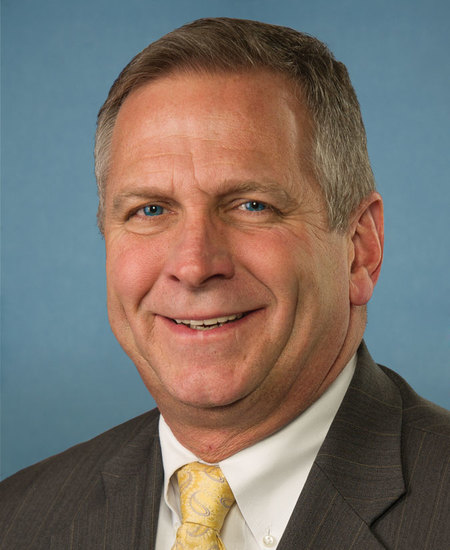
Rep. Mike Bost
Sponsored bills
Maddy summaryHR 4721, the Main Street Tax Certainty Act, makes a permanent the 20% tax deduction for eligible small business owners under Section 199A of the tax code. This provision directly affects pass-through business owners (like S-corps, partnerships, and sole proprietorships) who qualify for the deduction. The bill achieves this by removing the temporary expiration language (subsection (i)) from the existing tax code provision. The key change is ending the need for annual congressional extensions of this deduction, providing long-term tax certainty for small businesses.
Maddy summaryThis bill, the Veteran Care Improvement Act of 2023, establishes new standards for when veterans can receive care from private providers instead of the Department of Veterans Affairs (VA). It requires the VA to allow veterans to seek community care if they cannot get an in-person appointment within 30 days for primary care or 60 days for specialty care at a VA facility within a 30 or 60-minute drive, respectively. The legislation also mandates that the VA notify veterans of their eligibility for community care within two business days, provide information about telehealth options, and explain reasons for denied care requests along with appeal instructions. Additional provisions include requiring the VA to conduct outreach to inform veterans about community care options, mandate the use of value-based reimbursement models for community care, and establish a pilot program to improve care administration through scheduling improvements and provider incentives. The bill also extends the deadline for health care entities to submit claims under the prompt payment standard from 180 days to one year, and requires the VA Inspector General to assess VA medical center performance in implementing community care programs within three years of enactment.
Maddy summaryHR 3952 limits the flags that can be flown over Department of Veterans Affairs (VA) facilities to just six specific flags: the U.S. flag, any state flag, any federally recognized tribal government flag, the VA department flag, any military branch flag, and the POW/MIA flag. This applies directly to all VA buildings and properties nationwide. The bill explicitly restricts all other flags, including political or commemorative flags, from being displayed on these facilities.
Maddy summaryHRES 580 is a symbolic resolution expressing the House's support for designating "Journeyman Lineworkers Recognition Day." It honors lineworkers who work in hazardous conditions (such as at heights near live wires) and respond to disasters like hurricanes and wildfires, while recognizing their contributions and the legacy of Henry Miller, an early electrical worker who died on the job. The resolution has no legal effect - it solely encourages public recognition and reflection on these workers' service.
This resolution expresses the sense of the House of Representatives that research and promotion boards support efforts to develop new markets and strengthen existing markets via research, education, and promotion.
Maddy summaryThe IDEA Full Funding Act (HR 4519) mandates specific annual increases in federal funding for special education programs under the Individuals with Disabilities Education Act (IDEA). It requires Congress to appropriate increasing amounts each fiscal year - from $5.87 billion for 2024 up to $55.53 billion for 2033 - to reach 40% of the national average per-pupil expenditure for public schools by 2033. This directly affects all public school districts serving students with disabilities, as federal IDEA funding supports their special education services. The bill sets fixed dollar amounts or percentage targets (whichever is greater) for each fiscal year, aiming to gradually close the long-standing gap between promised and actual federal funding. It does not alter eligibility for services but mandates higher, phased funding levels to meet the 40% target.
Maddy summaryHRES 574 is a commemorative resolution passed by the U.S. House of Representatives to honor the victims and survivors of the July 4, 2022, mass shooting at Highland Park, Illinois' Independence Day Parade. It specifically remembers the seven people killed - Katie Goldstein, Irina McCarthy, Kevin McCarthy, Stephen Strauss, Jacquelyn Sundheim, Nicolas Toledo-Zaragoza, and Eduardo Uvaldo - and acknowledges the over 40 injured. The resolution expresses the House’s solidarity with Highland Park residents, emergency responders, and all affected by the tragedy, and supports the community’s healing process one year after the attack. As a non-binding resolution, it has no legal effect or policy changes - it solely serves as a symbolic gesture of remembrance.
Maddy summaryHR 4417, the "Ending Agricultural Trade Suppression Act," prevents state and local governments from imposing additional production standards on agricultural products sold across state lines if those standards aren't already required by federal law or the state where the product is grown. It directly affects agricultural producers, distributors, and businesses operating in interstate commerce by allowing them to sue states in federal court to challenge such regulations. The bill creates a private right of action for affected parties to seek court invalidation of the regulations and damages for economic losses, with provisions for preliminary injunctions to halt enforcement during litigation. This aims to reduce regulatory barriers that could hinder the movement of agricultural goods between states.
Maddy summaryThe EHR Program RESET Act of 2023 establishes a new program to modernize the Department of Veterans Affairs' electronic health record system, creating a dedicated program office within the Veterans Health Administration. The bill sets specific performance metrics that facilities must meet before continuing EHR deployment, requires termination of the current Oracle-Cerner contract for training and change management, and mandates new reporting requirements on system stability, staff satisfaction, and interoperability. It also creates an advisory subcommittee of health care experts to provide guidance on the EHR modernization strategy and requires detailed reports on contract savings, system performance, and alternatives to the current EHR technology. The legislation aims to improve veteran care quality, provider satisfaction, and system security while reducing costs and preventing vendor lock-in.