Maddy summaryHRES 723 is a ceremonial resolution recognizing the 180th anniversary of the United States Naval Academy, established on October 10, 2025. It formally commemorates the Academy's founding, historical contributions, and legacy of producing naval and marine leadership. The resolution highlights the Academy's role in educating graduates who have served in major conflicts, earned military honors, and held significant national leadership positions. As a symbolic gesture with no policy changes or direct impact on constituents, it serves solely to honor the institution's history and ongoing mission.
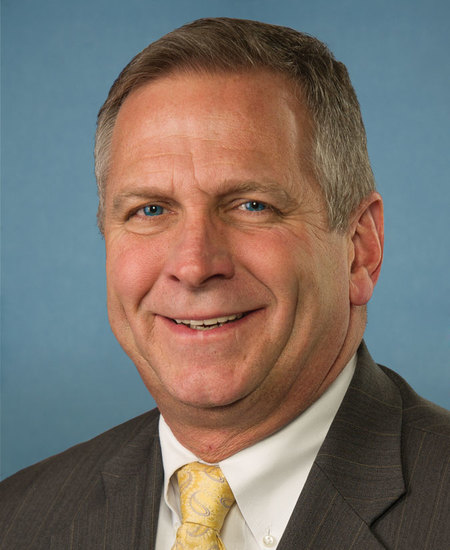
Rep. Mike Bost
Sponsored bills
Maddy summaryHR 5401, the Pay Our Troops Act of 2026, ensures military personnel, civilian Defense workers, and supporting contractors receive pay during government funding gaps in fiscal year 2026. It appropriates emergency funds for active-duty service members, reserves, and their supporting personnel (including Coast Guard staff under DHS) if regular appropriations aren't enacted by the end of the fiscal year. The bill provides necessary pay and allowances during any period when full-year funding is unavailable, covering both active service and support roles. Funding expires when regular appropriations are passed, a funding resolution is enacted, or January 1, 2027, whichever comes first. This is a procedural measure to prevent pay delays for military and support staff during fiscal year 2026 funding lapses.
Maddy summaryHRES 702 is a symbolic resolution condemning the September 10, 2025, assassination of Charlie Kirk, founder of Turning Point USA and a conservative political activist. It expresses condolences to his family, praises first responders, and reaffirms the right to peaceful assembly. As a non-binding resolution, it does not create new laws or policies but serves as a formal statement of condemnation. The resolution directly addresses the House of Representatives' stance on this event, with no direct impact on constituents or legislation.
Maddy summary# Summary of the Weather Act Reauthorization Act of 2025 This comprehensive legislation reauthorizes and modernizes the National Oceanic and Atmospheric Administration's (NOAA) weather and climate programs through 2030, with several key focuses: ## Core Program Reauthorizations - **Commercial Data Program** ($100M annually): Establishes a formal program to acquire weather/environmental data from private sector entities, including standards, prioritization, and data assimilation practices - **Commercial Data Pilot Program** (15% of Commercial Data Program funds): Tests and evaluates private sector data for use in NOAA operations - **Advanced Weather Interactive Processing System**: Requires transition to cloud-based operations by 2030 to enable more flexible workforce ## Hazard Communication Improvements - **Hazardous Weather Risk Communication Program**: Focuses on simplifying and improving communication of weather hazards through social, behavioral, and risk science research - **Post-Storm Surveys**: Requires systematic surveys after significant weather events, with emphasis on vulnerable populations - **NOAA Weather Radio Modernization**: Expands coverage, enhances reliability, and transitions to internet protocol-based communications ## Operational Modernization - **National Weather Service Workforce**: Includes hiring assessments, health/morale evaluations, and designation of service hydrologists - **Aviation Weather Program**: Enhances turbulence forecasting, data acquisition, and coordination with the Federal Aviation Administration - **Data Management**: Establishes consistent data standards, infrastructure, and sharing practices across NOAA ## Specialized Programs - **Atmospheric Rivers Forecast Improvement Program**: Focuses on improving forecasts of atmospheric rivers that impact the western U.S. - **Coastal Flooding and Storm Surge Program**: Improves coastal inundation forecasting and warning systems - **National Integrated Drought Information System**: Enhances drought monitoring and forecasting capabilities - **National Mesonet Program**: Expands environmental observation networks across the U.S., with 15% of funds for financial assistance to state/local entities - **National Coordinated Soil Moisture Monitoring Network**: Supports soil moisture monitoring for agricultural and drought management - **Precipitation Forecast Improvement Program**: Aims to improve precipitation forecasting across all timescales ## Funding The bill authorizes significant funding across these programs, with annual appropriations ranging from $10M to $70M depending on the program, for fiscal years 2026-2030. The legislation represents a major effort to modernize NOAA's infrastructure, improve weather communication to the public, and better integrate commercial data sources while maintaining NOAA's leadership in weather and climate science.

Maddy summaryHR 3055, the TRANSPORT Jobs Act, requires the Secretary of Transportation to create an action plan within 30 days of enactment to help transitioning military service members and veterans enter supply chain careers (like trucking, rail, and logistics). The plan must identify barriers veterans face in hiring, challenges employers encounter, and high-demand regions, while highlighting transferable skills and existing program gaps. It will recommend specific steps for the Transportation, Defense, Veterans Affairs, and Labor departments to improve recruitment, training, and retention of veterans in supply chain jobs. The bill directly affects veterans seeking these careers and supply chain employers needing qualified workers.
Maddy summaryThis bill increases federal funding for Impact Aid, which supports school districts that serve students on federal property (like military bases) or have high numbers of children with disabilities. It authorizes specific annual funding amounts for four key areas: payments for federal property acquisition, basic support for heavily impacted districts, aid for children with disabilities, and school construction. The funding grows incrementally each year from 2026 through 2031, with total annual amounts rising from $85 million to $250 million for property payments, and from $1.49 billion to $2.35 billion for basic district support. This directly affects school districts in communities with significant federal land or federal facility presence.
Maddy summaryThis bill amends Title IX to clarify that "female," "male," and "sex" refer to biological characteristics (egg-producing or sperm-producing reproductive systems). It explicitly states that schools receiving federal funding cannot be forced to eliminate sex-segregated spaces (like bathrooms or locker rooms) or sex-segregated athletic/academic programs. The bill directly affects all schools and colleges that accept federal education funding, ensuring they may maintain such programs without losing that funding. Key mechanisms include adding specific definitions to Title IX and prohibiting the Secretary of Education from making funding contingent on ending sex-segregated facilities or programs.
Maddy summaryHRES 636 is a symbolic House resolution condemning a July 28, 2025, shooting in New York City that killed three civilians and NYPD Officer Didarul Islam, alongside security officer Aland Etienne. It honors the victims, commends the NYPD's response, and condemns violence against law enforcement. The resolution does not create new laws or policies but formally expresses the House's stance against such violence and supports law enforcement. It was introduced by Representatives Stefanik, Tenney, and others and referred to the Oversight Committee.
Maddy summaryHRES 628 is a ceremonial resolution recognizing the 20th anniversary of the Renewable Fuel Standard (RFS), a policy established in 2005 and expanded in 2007. It highlights the RFS's historical role in supporting rural economies (through 2,700+ renewable fuel facilities and 644,000 jobs), reducing greenhouse gas emissions via mandatory fuel standards, and lowering consumer fuel costs. The resolution does not create new policy or alter the RFS; it solely commemorates the program's past impacts on energy security, agriculture, and environmental performance. It affirms the RFS as a foundational element of U.S. energy policy without proposing any legislative changes.
Maddy summaryThis bill requires the Postal Service to immediately post public notices about emergency post office closures (including signs and website updates) and notify local elected officials within 5 days. For closures lasting 30 days, it mandates a public review period for feedback; for 60-day closures, it triggers relocation planning and additional public input. The law also requires annual reports to Congress starting in 2026 detailing all emergency closures, with "emergencies" defined to include natural disasters, safety concerns, or lease issues. It directly affects post offices during emergencies, local officials, and the public receiving closure notices.