

Maddy summaryHR 7270 creates a federal grant program administered by the Treasury Secretary to provide funding to states for developing secure digital identity systems. States would use these grants to create digital driver’s licenses and identity credentials that comply with NIST guidelines, prioritize protection against deepfake attacks, and replace vulnerable legacy systems. The bill requires states to use at least 10% of grant funds to assist individuals in obtaining digital identity services, while prohibiting states from forcing residents to use digital IDs or eliminating physical licenses. It aims to reduce identity theft fraud in government benefit programs and the financial system by enhancing digital identity security, with no requirement for states to develop digital credentials.
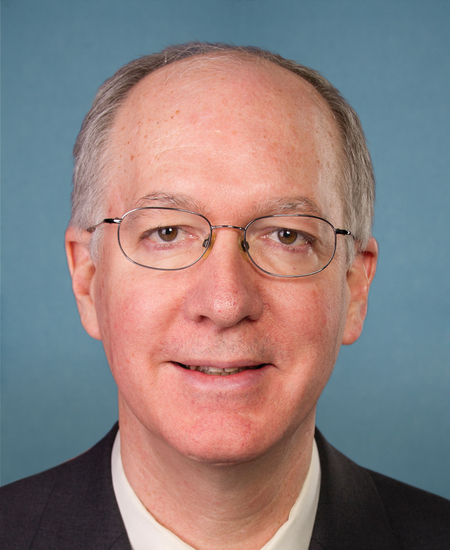
Rep. Bill Foster
Sponsored bills
Maddy summaryHCONRES 68 would require the President to remove U.S. military forces from Venezuela unless Congress has explicitly authorized their use through a declaration of war or a specific law. This applies to any U.S. Armed Forces currently stationed in Venezuela without such authorization. The resolution is based on the War Powers Resolution, which mandates congressional oversight of military deployments. It directs the immediate withdrawal of unapproved forces without adding new time limits or conditions.
Maddy summaryThe MOLD Act (HR 7188) establishes uniform health and safety standards for military housing managed by private contractors, directly affecting approximately 700,000 service members and their families living in privatized housing across 78 developments. It requires the Defense Secretary to set enforceable limits on indoor humidity (below 50%), mandate third-party inspections after tenant complaints or unit turnover, and hold contractors fully responsible for mold remediation, relocation costs, and property damage. The bill also mandates public reporting of complaints, inspection results, and remediation timelines, and requires contractors to use certified professionals for mold assessments. These provisions aim to reduce mold-related health risks and improve accountability in privatized military housing.
Maddy summaryThis bill sets minimum annual funding levels for two financial oversight agencies: $124.6 million for the Office of Financial Research (OFR) and $15.3 million for the Financial Stability Oversight Council (FSOC). It requires these agencies to maintain minimum staffing levels (231 and 48 full-time equivalent positions, respectively) and adjusts both funding amounts yearly based on government wage increases. Crucially, the bill prohibits congressional review or reduction of these funding levels, protecting the agencies' independence. The bill directly affects how the OFR and FSOC operate by securing their core resources from legislative interference.
Maddy summaryHRES 1004 is a symbolic House resolution honoring Dr. Martin Luther King, Jr.'s legacy by celebrating diversity and condemning hate. It specifically calls for the House to celebrate his 97th birthday on January 19, 2026, and to condemn harassment, discrimination, or prejudice targeting Black Americans, Indigenous people, Jewish, Asian-American/Pacific Islander, Muslim, Hispanic/Latino communities, and LGBTQ+ individuals. The resolution affirms Dr. King’s teachings on unity and equality but does not create new laws or impose obligations on any entity. As a ceremonial resolution, it has no legal effect and directly affects no individuals or groups.
Maddy summaryThe NO NATO for Purchase Act bans federal agencies from using government funds to buy land or assets in NATO member countries. It directly affects all federal departments and agencies by prohibiting such acquisitions as defined in the 1949 North Atlantic Treaty. The key provision blocks any action or expenditure related to purchasing territory within NATO nations. This prevents U.S. government purchases of foreign territory belonging to NATO member countries.
Maddy summaryHRES 996 is a resolution introduced by multiple House members to impeach Kristi Lynn Arnold Noem, the Secretary of Homeland Security, for alleged violations of law and the Constitution. It outlines three articles of impeachment: obstructing congressional oversight by denying access to detention facilities and withholding funds, violating public trust through warrantless arrests and excessive force (including tear gas on children), and self-dealing by awarding federal contracts to associates without competitive bidding. If approved by the House, this resolution would formally charge Noem, triggering a Senate trial to determine her removal from office. The resolution itself does not enact new policy but initiates the constitutional impeachment process against a sitting Cabinet official.
Maddy summaryHRES 994 is a resolution urging the Secretary of Defense to review section 504 of title 10, U.S. Code, which governs military enlistment of aliens. It specifically requests an assessment of whether current policy permits enlisting immigrants holding Deferred Action for Childhood Arrivals (DACA) employment authorization - a status created by a 2012 DHS memo. This resolution does not change military eligibility rules but asks for a formal review to determine if DACA holders could be recruited. It directly affects the Department of Defense’s enlistment procedures and potential recruitment of immigrants with DACA status.
Maddy summaryHR 6088, the *Restoring Food Security for American Families and Farmers Act of 2025*, repeals specific sections (10101-10108) from a prior reconciliation law. This action revives previous provisions related to food security programs that were modified by those repealed sections. The bill directly affects federal food assistance and agricultural support programs by restoring their prior legal framework. It does not create new policies but reverses recent changes to existing food security measures.
Maddy summaryThe MORE Act (HR 5068) would remove cannabis from the federal list of controlled substances, effectively decriminalizing it at the federal level while establishing a new tax on cannabis products. The bill creates an Opportunity Trust Fund that would distribute tax revenues to support communities disproportionately impacted by cannabis prohibition, including funding for expungement programs, job training, and equitable licensing initiatives for minority business owners. It also includes provisions to prevent discrimination based on cannabis use in federal programs, immigration proceedings, and workplace policies. The bill would require federal courts to expunge non-violent cannabis convictions and establish a process for resentencing individuals currently serving time for such offenses. These provisions aim to address racial disparities in cannabis enforcement and create more equitable opportunities in the legal cannabis industry.