

Maddy summaryThe Child Care for Working Families Act creates a federal program to provide affordable, high-quality child care for working families with children under age 6. It would provide direct child care assistance through certificates or grants to parents, with no copayment required for families at or below 85% of state median income. The program requires states to implement quality standards for child care providers, including a tiered quality system and minimum wage requirements for staff (at least a living wage equivalent to elementary educators). The bill appropriates $20 billion for the program over five years, with additional funding for quality improvement initiatives and universal preschool services.
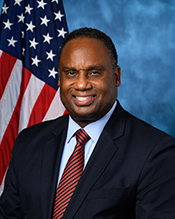
Rep. Jonathan L. Jackson
Sponsored bills
Maddy summaryHCONRES 42 is a symbolic congressional resolution recognizing the persistent wage gap between Black women and White, non-Hispanic men in the U.S. It highlights that Black women earn 66 cents for every dollar earned by White, non-Hispanic men working full-time year-round, with the gap taking over 200 years to close at current rates. The resolution emphasizes how this disparity - rooted in both racial and gender discrimination - impacts Black women’s ability to afford essentials like education, childcare, and housing. It does not create new laws or policies but formally acknowledges the issue on Black Women’s Equal Pay Day (July 10, 2025) and reaffirms support for equal pay.
Maddy summaryHRES 569 is a non-binding House resolution affirming that diversity, equity, inclusion, and accessibility (DEIA) are fundamental U.S. values and emphasizing the need to address ongoing discrimination in workplaces, schools, government programs, the military, and society. It does not create new laws but calls on federal, state, local governments, educational institutions, and businesses to adopt DEIA initiatives to remove barriers faced by marginalized groups, including Black, Latino, AANHPI, Indigenous, women, LGBTQI+, and disabled individuals. The resolution cites data showing persistent discrimination - such as wage gaps, housing segregation, health care disparities, and underrepresentation in leadership - to underscore how systemic inequities cost the economy trillions and limit opportunity. It encourages organizations to foster inclusive environments where all people can achieve their potential, without prescribing specific policy changes.
Maddy summaryHRES 575 is a symbolic resolution designating July 10th as "Journeyman Lineworkers Recognition Day." It honors lineworkers who face significant risks daily - working at heights near live wires and responding to disasters like hurricanes and wildfires. The resolution specifically references Henry Miller, an early leader of the International Brotherhood of Electrical Workers, who died on July 10, 1896, while troubleshooting an outage. It encourages the public to recognize these workers' contributions but does not create new laws or allocate funding.
Maddy summaryThis bill prohibits federal agency personnel from using physical force, detaining, or interfering with Members of Congress while they conduct official oversight activities on federal property. It requires Members to identify themselves with valid congressional ID and confirms the law does not override standard security procedures or prevent action against immediate physical threats. The bill specifically protects oversight activities like investigations, reviews of federal programs, or site visits at government-owned or leased facilities (including detention centers), ensuring Congress can carry out its constitutional oversight role without physical obstruction.
Maddy summaryThe Expanding Access to Mental Health Services in Schools Act of 2025 creates a federal grant program to help high-need schools hire and retain mental health professionals like counselors, psychologists, and social workers. It targets schools in the top 15% of need (based on student poverty or counts) that lack required staff ratios, such as one counselor per 250 students. Grants fund recruitment incentives (e.g., student loan repayment), retention programs, and evidence-based mental health services, with recipients required to contribute 25% of costs from non-federal funds. Schools must report annually on staff numbers, student-to-staff ratios, and retention rates to track progress toward improved mental health access.
Maddy summaryHRES 558 is a symbolic House resolution commemorating the July 4, 2022, Highland Park, Illinois, Independence Day Parade shooting. It honors the seven victims - Katie Goldstein, Irina McCarthy, Kevin McCarthy, Stephen Strauss, Jacquelyn Sundheim, Nicolas Toledo-Zaragoza, and Eduardo Uvaldo - who were killed, and supports the over 40 survivors and the Highland Park community. The resolution expresses the House's remembrance of the tragedy, acknowledges the community's healing efforts, and reaffirms commitment to reducing gun violence. As a commemorative resolution, it contains no new policies or funding provisions.
Maddy summaryThe No Secret Police Act of 2025 requires U.S. Immigration and Customs Enforcement (ICE) and other Department of Homeland Security officers working on border security or immigration enforcement to visibly display their official badges or uniforms and provide identification during detentions or arrests. It prohibits officers from wearing face coverings that conceal their face during these interactions. The bill also mandates that the Department report to Congress about tactical gear policies and research technology to improve badge visibility in different conditions like weather or lighting. These changes aim to increase transparency in immigration enforcement encounters.
Maddy summaryHRES 547 is a symbolic resolution recognizing June as National Caribbean American Heritage Month. It does not create new laws or directly affect any individuals or groups; instead, it encourages the public to observe the month through ceremonies and celebrations. The resolution affirms that Caribbean Americans' contributions are integral to U.S. history, progress, and cultural diversity. It supports the month's goals and highlights the community's longstanding role in American society, from historical figures like Alexander Hamilton to modern leaders like Kamala Harris. As a non-binding resolution, it has no legal effect but serves to honor this cultural observance.
Maddy summaryThis resolution (HRES 549) is a non-binding House measure expressing support for designating June 26 as "LGBTQI+ Equality Day." It commemorates three landmark Supreme Court rulings on June 26 (2003, 2013, and 2015) that ended criminalization of same-sex intimacy, struck down marriage discrimination, and established marriage equality. The resolution encourages public celebration of this day to honor these milestones and educate about ongoing discrimination faced by LGBTQI+ communities. It also acknowledges the need for future legislation to address discrimination in areas like employment, housing, and public accommodations. As a symbolic resolution, it does not create new legal requirements but formally recognizes these historical court decisions.