

Maddy summaryHRES 768 is a symbolic House Resolution expressing congressional support for Israel following Hamas' October 7, 2023 attacks. It condemns Hamas' actions, reaffirms Israel's right to self-defense, and calls for the immediate release of hostages. The resolution references the U.S. commitment to Israel's security through existing military aid programs, including the 2016 U.S.-Israel Memorandum of Understanding, and emphasizes enforcement of laws like the Taylor Force Act to prevent U.S. aid from reaching terrorist groups. As a symbolic resolution, it does not create new policy but serves as a statement of congressional support for Israel.
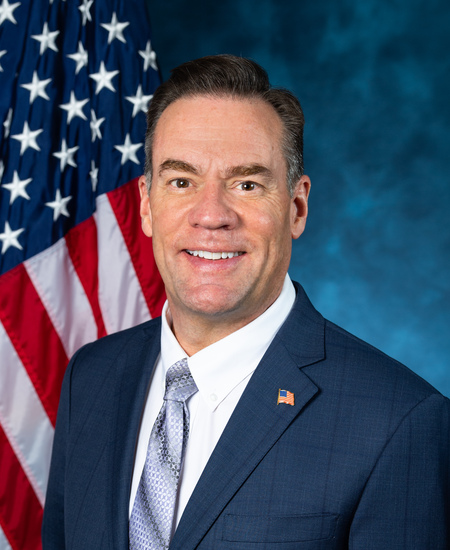
Rep. Russ Fulcher
Sponsored bills
Maddy summaryHRES 758 is a symbolic resolution designating the first Wednesday in October as National Energy Appreciation Day. It expresses the House's support for recognizing energy workers - across oil, gas, coal, nuclear, hydro, and renewable sectors - who power the U.S. economy and improve quality of life. The resolution cites statistics on energy's role in job creation (7.8 million U.S. jobs), poverty reduction, and national security, but does not create new laws or funding. As a non-binding resolution, it solely aims to raise awareness of the energy industry's contributions. (HRES 758, introduced October 3, 2023)
Maddy summaryThis bill mandates the U.S. Secretary of the Interior to reissue a 2017 rule that removed grizzly bears in the Greater Yellowstone Ecosystem from the federal endangered species list, within 180 days of the bill's enactment. It directly affects grizzly bear management in that ecosystem by reinstating state-led management authority previously established under the 2017 rule. The key provision requires the rule's reissuance without any legal challenges, explicitly stating the action "shall not be subject to judicial review."
Maddy summaryHR 5577, the FACE Act Repeal Act of 2023, would repeal a federal law (Section 248 of Title 18, U.S. Code) that made it a crime to block access to abortion clinics or threaten clinic staff. This repeal would remove criminal penalties for obstructing access to clinics, affecting abortion providers, clinic staff, and individuals attempting to access or block clinic entrances. The bill specifically targets the repeal of this prohibition, applying to prosecutions pending or initiated after the law's enactment. It does not change other abortion-related laws or create new policies.
Maddy summaryThis bill extends existing programs that provide payments to counties and states with federal land, primarily to support local schools and communities. It updates key deadlines, extending secure payments through 2026, special project authorities through 2029, and county fund expenditure authority through 2028. A new pilot program allows regional foresters to appoint resource advisory committee members directly, with this authority ending October 1, 2028. These changes directly affect rural counties and states managing federal lands, maintaining current funding mechanisms without altering eligibility or payment amounts.
Maddy summaryHR 1435, the Preserving Choice in Vehicle Purchases Act, amends the Clean Air Act to restrict states from implementing vehicle emissions rules that limit the sale or use of new gasoline-powered cars. It directly affects states with stricter emissions standards (like California) by adding a new definition that blocks state rules "directly or indirectly" limiting internal combustion engine vehicles as defined in federal regulations as of January 1, 2023. The bill requires the EPA to revoke existing state emissions waivers granted between January 2022 and the bill’s enactment if they don’t comply with this new definition. This creates a concrete federal standard preventing states from advancing policies that could reduce demand for conventional vehicles.
Maddy summaryThis bill amends existing law to allow Indian tribes, alongside counties and state governors, to retain and use funds from timber sales under "good neighbor agreements" for forest restoration projects. It directly affects tribes, counties, and state agencies participating in these agreements, which involve collaborative forest management on federal lands. The key change lets tribes keep timber sale revenue to fund restoration work under their agreements, just as counties and governors can. The bill does not create new programs but adjusts who can access these funds. It applies to projects initiated after 2018 or on or after the bill's enactment date.
Maddy summaryHR 4416, the "No Funds for Armed Regulators Act of 2023," prohibits using federal funds to hire or keep armed enforcement officers within three specific agencies: the Internal Revenue Service, the Department of Labor, and the Environmental Protection Agency. The bill defines "armed Federal regulatory enforcement officers" as individuals who enforce laws using tactical means, including weapons or force. It directly affects these agencies' enforcement personnel by blocking funding for armed roles in their regulatory work. The key mechanism is a funding restriction embedded in federal budget allocations, not a new law governing enforcement tactics. This bill focuses solely on restricting financial support for armed enforcement, without altering agency authority or duties.
Maddy summaryThis bill amends the Infrastructure Investment and Jobs Act to require the federal Broadband Equity, Access, and Deployment Program to comply with the Freedom of Information Act (FOIA). It allows the public to request government records about how broadband funding is allocated and spent, increasing transparency. This directly affects agencies like the Federal Communications Commission (FCC) managing the program and enables citizens to access information on federal broadband spending decisions. The change removes prior exemptions from FOIA requirements for this specific program.
Maddy summaryHR 5161 amends the Elementary and Secondary Education Act to prohibit the use of federal education funds for hunting or archery programs in schools. The bill specifically revises Section 8526 to remove language allowing such funding and adds clarity to fund restrictions. This change directly affects public schools receiving federal education funding by preventing them from using those funds for hunting or archery activities. The policy change is procedural, modifying existing fund usage rules rather than creating new programs or benefits.