

This bill prohibits the Big Cypress National Preserve in Florida from being designated as wilderness or as a component of the National Wilderness Preservation System. The National Park Service currently manages Big Cypress National Preserve, which is a freshwater swamp ecosystem of 729,000 acres. In general, development activities, commercial activities, permanent structures, and roads are prohibited in wilderness areas. In contrast, natural preserves typically allow some development activities, such as hunting or oil and gas exploration.
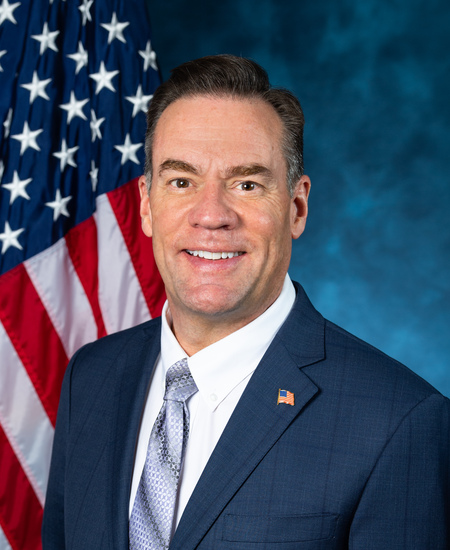
Rep. Russ Fulcher
Sponsored bills
Maddy summaryHR 1206, the WEST Act of 2025, cancels a specific Bureau of Land Management (BLM) rule titled "Conservation and Landscape Health" (published in the Federal Register on April 3, 2023). The bill directly affects the BLM and anyone subject to the rule, which governed land management practices on public lands. Its key mechanism is a straightforward provision declaring the rule "shall have no force or effect," effectively removing it from federal regulations without creating new policies. This is a procedural action targeting a specific existing regulation, not a broader policy change.
Credit Union Board Modernization Act This bill reduces the required frequency of meetings held by the board of directors of certain credit unions. Under the bill, new credit unions and credit unions with a low soundness rating must meet monthly, as required under current law. All other credit unions must hold at least six meetings annually, with at least one meeting held during each fiscal quarter.
Maddy summaryHR 1137, the "No Kill Switches in Cars Act," repeals Section 24220 of the Infrastructure Investment and Jobs Act (Public Law 117-58), which previously required vehicle manufacturers to implement advanced impaired driving technology. This bill directly affects car manufacturers by removing a mandate to integrate specific safety technology designed to detect driver impairment. The key provision is the repeal itself, eliminating the requirement without creating new obligations or altering existing vehicle safety standards.
Maddy summaryHR 1046, the Marc Fischer Memorial Act, requires the Bureau of Prisons to implement digital mail scanning technology at all federal prisons to detect fentanyl and other synthetic drugs in inmate mail. It mandates a strategy within 90 days of an evaluation, including 100% scanning of all mail, digital copies of mail to inmates within 24 hours, and physical mail delivery within 30 days for non-contaminated items. The bill directly affects federal prison staff, inmates, and the Bureau of Prisons by aiming to reduce drug-related overdoses and alleviate staff workload tied to mail processing. Implementation must be completed within three years, with annual reports tracking detected drugs and strategy efficiency. The legislation focuses on concrete technological and procedural changes to enhance safety, referencing a successful pilot program at two facilities.
Maddy summaryThis bill rescinds a 2023 federal withdrawal of lands in Minnesota's Superior National Forest, allowing mining operations to resume. It requires the Secretary to complete environmental reviews for mine plans within 18 months (or 6 months for supplements) and reissues canceled mineral leases with 20-year terms plus automatic 10-year renewals. The bill directly affects mining companies operating in the forest, particularly those with canceled leases or rejected applications since 2021. It mandates issuance of new permits for surface use related to mining and prohibits judicial review of these reissued leases.
Fair Access to Banking Act This bill places restrictions on certain banks, credit unions, and payment card networks if they refuse to do business with a person who complies with the law. Restrictions include prohibiting the use of electronic funds transfer systems and lending programs, termination of an institution's depository insurance, and specified civil penalties. Banks and other specified financial institutions are allowed to deny financial services to a person only if the denial is justified by a documented failure of that person to meet quantitative, impartial, risk-based standards established in advance by the institution. This justification may not be based upon reputational risks to the institution. The bill establishes the right for a person to bring a civil action for a violation of this bill.
Maddy summaryHJRES 33 is a congressional resolution seeking to block a Federal Communications Commission (FCC) rule that aimed to expand the E-Rate Program to address the "homework gap" by improving school internet access. The resolution invokes a federal process (under Chapter 8 of Title 5, U.S. Code) to disapprove the FCC's specific rule, which was published in the Federal Register on August 20, 2024. If passed, this resolution would prevent the FCC rule from taking effect, directly affecting the implementation of E-Rate Program upgrades for schools and libraries. The measure does not create new policy but halts an existing FCC rule through congressional disapproval.
Maddy summaryHR 925, the "Dismantle DEI Act of 2025," would eliminate diversity, equity, and inclusion (DEI) programs across federal government operations. The bill requires federal agencies to close DEI offices, rescind related executive orders, and prohibit the use of federal funds for DEI training, offices, or initiatives. It defines "prohibited diversity, equity, or inclusion practice" as any activity that discriminates based on race, ethnicity, religion, biological sex, or national origin, or requires employees to complete training asserting that certain groups are inherently superior or inferior. The legislation also prohibits requiring employees to sign statements about race, ethnicity, or gender, and establishes private lawsuits for violations with potential damages of $1,000 per violation per day. This bill would directly affect federal agencies, contractors, grantees, and advisory committees receiving federal funding.
Maddy summaryHR 951 authorizes the U.S. Mint to produce commemorative coins (gold $5, silver $1, and half-dollar) in 2028 to mark the 250th anniversary of the Declaration of Independence. Surcharges from coin sales ($35 per gold coin, $10 per silver, $5 per half-dollar) will fund the Stephen Siller Tunnel to Towers Foundation, supporting programs for Gold Star families, first responders, veterans, and their families. The coins must meet specific weight, size, and composition standards, with mintage limits set at 100,000 gold, 500,000 silver, and 750,000 half-dollar coins. All surcharge proceeds directly benefit the Foundation’s existing initiatives, such as mortgage-free housing and scholarships, without requiring additional federal funding.