

Maddy summaryThis bill protects pregnancy centers that provide non-abortion services from federal discrimination. It prohibits government entities and recipients of federal funds from forcing these centers to offer, refer for, or promote abortions, or from restricting their life-affirming services like pregnancy testing, counseling, or baby supplies. The law creates a legal path for affected centers to sue if they face retaliation for declining abortion-related activities. It amends federal health law to explicitly shield such organizations from being penalized for their stance.
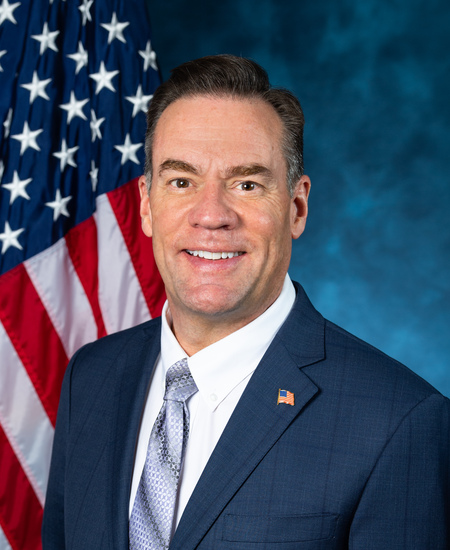
Rep. Russ Fulcher
Sponsored bills
Maddy summaryThis resolution urges the U.S. Secretary of State to designate Nigeria as a Country of Particular Concern (CPC) under the International Religious Freedom Act of 1998, citing ongoing violence against religious minorities. It specifically calls for Nigeria to protect religious minorities, prosecute perpetrators of attacks, and address displacement of millions caused by religiously motivated violence. The resolution also recommends increased U.S. diplomatic engagement with Nigeria and targeted sanctions against those responsible for religious freedom violations. This follows the State Department's omission of Nigeria from its CPC list in 2021-2023 and its 2024 failure to release an annual report.
Maddy summaryThe POWER Act (HR 2074) prohibits the U.S. Army Corps of Engineers or Bureau of Reclamation from breaching federally operated dams or retiring hydropower dams if such actions would increase carbon emissions by over 5%, raise shipping costs for agricultural products by 5% or more, reduce water navigability for commerce, or decrease energy reliability in specific Western states (WA, OR, ID, MT, WY, CA) by 5%. It requires federal agencies to consult with energy, transportation, and agriculture departments before proceeding with dam breaches and mandates that any retired hydropower generation must be fully replaced within 30 days to maintain grid reliability. The bill directly affects federal dam operators and energy providers in the Western U.S., focusing on preventing economic and environmental disruptions tied to hydropower infrastructure changes.
Maddy summaryThe FLASH Act authorizes construction of navigable roads along federal border lands to improve U.S. Customs and Border Protection access and operational control. It requires federal agencies to develop protocols for reducing trash accumulation and environmental degradation from unauthorized border crossings, while targeting illegal cannabis cultivation sites with environmental response initiatives. The bill prohibits using federal funds to provide housing for undocumented immigrants on federal lands and establishes criminal penalties for illegal pesticide use. The legislation affects how federal land management agencies (National Park Service, Bureau of Land Management, etc.) operate along the southern border, with specific reporting requirements for environmental impacts and trash collection.
Maddy summaryThis is a non-binding resolution (HRES 206), not a legislative bill. It expresses the House's support for preserving the "stepped-up basis" tax provision (Section 1014 of the Internal Revenue Code), which allows heirs to reset the tax cost basis of inherited assets like farmland or business equipment to their current market value. The resolution cites that 98% of farms and 19% of businesses are family-owned, noting that eliminating this provision could increase taxes for 66% of midsized farms. It specifically urges opposition to new taxes on family farms and small businesses but does not change any tax law or policy.
Maddy summaryHR 956, the Aerial Firefighting Enhancement Act of 2025, updates the 1996 Wildfire Suppression Aircraft Transfer Act to improve how the Department of Defense sells aircraft and parts for wildfire fighting. It specifically adds "water" to the list of materials usable for suppression (alongside fire retardant) and clarifies that sold aircraft can only be used for wildfire suppression services, not other purposes. The bill extends the authorization period for these sales from October 1, 2025, to October 1, 2035. This directly affects the Department of Defense, which manages the sales, and wildfire suppression agencies that would use the aircraft and equipment. The changes aim to streamline access to aerial firefighting resources while ensuring they are used solely for wildfire response.
Maddy summaryThe SPEED for BEAD Act (HR 1870) amends the federal broadband deployment program (BEAD) to accelerate network expansion. It defines "gigabit-level broadband" as 1,000 Mbps download speeds, requires unused funds to be returned to the Treasury instead of reallocated, and allows states to remove high-cost locations from project areas. The bill prohibits grant conditions related to labor practices (e.g., union requirements), diversity initiatives, climate policies, or network management rules, while ensuring all broadband technologies meeting speed standards are eligible. It also explicitly bans government regulation of broadband pricing, directly affecting states administering BEAD funds and the internet providers they fund.
Maddy summaryHR 1851 increases the minimum required fighter aircraft inventory for the Air Force and its reserve components to 1,900 total and 1,200 for the reserve by October 2030, up from current levels (Section 2). The bill allows temporary reductions below these totals for recapitalization, but only for up to two years and with a floor of 1,800 aircraft, requiring congressional notification (Section 2). It mandates quarterly reports to Congress detailing new aircraft acquisitions, assignments, retirements, and recapitalization plans for both active and Air National Guard units (Section 3). The bill specifically protects 25 existing Air National Guard fighter squadrons from fleet reductions until 2030 and requires new aircraft to be assigned to service-retained units at a 3:1 ratio with legacy aircraft retirements (Sections 5, 6).
Maddy summaryHR 1818, the Aviation Workforce Development Act, expands tax-advantaged 529 college savings plans to cover costs for aviation maintenance and commercial pilot training. It allows families to use 529 funds for tuition, fees, books, and equipment at qualifying schools - specifically aviation maintenance technician programs under FAA Part 147 rules or commercial pilot courses at FAA-certified flight schools (Part 61 or Part 141). The bill directly affects students pursuing these aviation careers by making their training more affordable through existing tax-advantaged savings accounts. The change applies to distributions made after the law's enactment date.
Federal Firearms Licensee Protection Act of 2025 This bill modifies criminal penalties for an offense involving the theft of a firearm from a licensed importer, manufacturer, or dealer, or from their business premises. Specifically, the bill does the following: increases from 10 to 20 years the maximum prison term, and creates a 3- or 5-year mandatory minimum prison term for an offense that occurs during the commission of a burglary or robbery. An attempt to commit an offense is subject to the same penalties as a substantive offense.