

Maddy summaryHR 4546, the FIRE Act, prohibits federal, state, and local governments from restricting or banning firearm magazines based on their capacity (how many rounds they hold). It bans federal enforcement of such restrictions, nullifies state or local laws imposing capacity-based limits on magazines, and defines "firearm magazine" and "capacity" for clarity. This directly affects firearm owners who use magazines of certain capacities and law enforcement agencies responsible for enforcing firearm regulations. The law takes effect 30+ days after enactment.
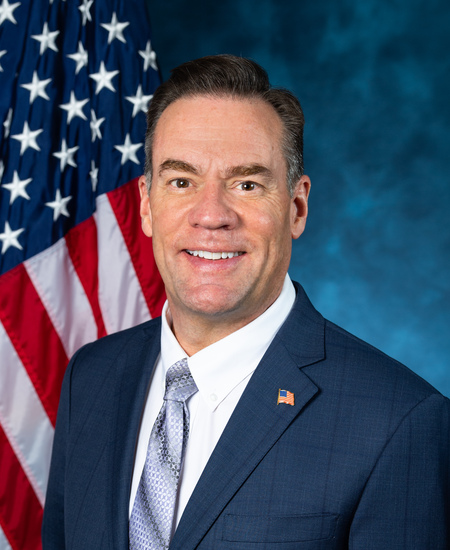
Rep. Russ Fulcher
Sponsored bills
Maddy summaryHR 4448, the Restoring Equal Opportunity Act, prohibits lawsuits alleging discrimination based on "disparate impact" in employment and housing. It amends the Civil Rights Act of 1964 and Fair Housing Act to ban claims where a neutral policy (like a test or screening rule) unintentionally disadvantages protected groups (such as race or gender), even if there was no discriminatory intent. The bill also nullifies specific federal regulations implementing civil rights laws, removing legal grounds for such claims under current enforcement rules. This directly affects employers, housing providers, and federal agencies that enforce civil rights laws, changing how discrimination claims can be brought in court.
Maddy summaryHR 4370, the SAMS Act of 2025, codifies five existing executive orders into law to strengthen U.S. mineral supply chains. It gives legal force to orders focused on securing critical minerals (like lithium and rare earths) for national security and economic resilience, directly affecting federal agencies implementing these strategies. Key provisions require agencies to follow these established policies - addressing reliance on foreign mineral sources, supporting domestic mining, and prioritizing national security in mineral processing - without creating new regulations. The bill does not alter current mineral policies but formally enshrines them as binding federal requirements.
Maddy summaryHR 4324, the "One Subject at a Time Act," requires every federal bill or joint resolution to address only one specific topic, with that topic clearly stated in the bill's title. This applies to all legislation, including appropriations bills, which cannot include unrelated "general legislation" or changes to existing law outside their funding purpose. If a bill violates this rule - by having an unclear title or containing provisions not matching the title - the offending parts (or the entire bill) become invalid. Anyone harmed by a non-compliant bill, including citizens or lawmakers, can file a court challenge to block its enforcement. The law aims to ensure legislative clarity and prevent "rider" provisions in bills.
Maddy summaryHR 4194 would shield manufacturers of critical infrastructure equipment from lawsuits related to wildfires caused by their products, unless they intentionally caused harm through willful misconduct. This law applies to companies defined as critical infrastructure manufacturers under existing federal law (per the Cyber Incident Reporting Act of 2022). It creates legal immunity for these manufacturers against both federal and state lawsuits regarding wildfire-related losses, but requires proof of intentional wrongdoing to override the protection. The bill directly affects companies producing essential infrastructure equipment like power grid components and communication systems.
Maddy summaryHR 4092, the Protect RAIL Act, amends U.S. immigration law to make certain crimes involving stolen goods transported by carriers (like trains, trucks, or ships) grounds for denying entry or deporting non-citizens. It adds new inadmissibility and deportability provisions for anyone convicted of theft from interstate or foreign shipments under Title 18, Section 659 of the U.S. Code. The bill directly affects non-citizens who commit these specific theft offenses, making them ineligible to enter the U.S. or subject to removal. This changes immigration consequences for existing criminal offenses, not the crimes themselves.
Maddy summaryHR 1737 requires the Secretary of Commerce to assess a trans-Atlantic submarine fiber optic cable connecting the contiguous United States, the U.S. Virgin Islands, Ghana, and Nigeria. The bill mandates a report within one year evaluating the cable's security, economic value, cost, feasibility, and related infrastructure needs, including current telecom security between the U.S. mainland and U.S. Virgin Islands. The assessment must cover digital security, cable lifespans, potential military communications infrastructure in the U.S. Virgin Islands, and engagement with trusted entities. The report will be submitted to the House Energy and Commerce Committee and Senate Commerce Committee without requiring entities to provide data. This is a procedural bill focused on federal assessment, not project implementation.
Maddy summaryHRES 527 is a symbolic resolution designating June 2025 as "National Dairy Month" to honor dairy's role in nutrition and the agricultural economy. It recognizes dairy as a key source of calcium and vitamin D (per Dietary Guidelines), supports over 3.2 million jobs, and highlights the industry's $793 billion economic impact. The resolution encourages public support for dairy farmers while condemning unfair regulatory burdens on the sector. As a non-binding expression of support, it does not create new laws or funding.
Maddy summaryH.J. Res. 87 (Public Law 119-15) is a congressional disapproval resolution that prevents an Environmental Protection Agency (EPA) rule from taking effect. The rule, submitted by the EPA on April 6, 2023 (88 Fed. Reg. 20688), related to California’s authority to enforce stricter vehicle emission standards, including for heavy-duty trucks, zero-emission airport shuttles, and advanced clean truck requirements. By disapproving this rule, Congress blocks California from implementing these specific pollution controls under its existing waiver authority. This directly affects California’s ability to regulate motor vehicle emissions independently, as the rule would have allowed the state to enforce its own standards beyond federal requirements.
Maddy summaryH.J.Res. 88 disapproves an Environmental Protection Agency (EPA) rule that would have allowed California to enforce its "Advanced Clean Cars II" vehicle emission standards. This rule, submitted by the EPA on January 6, 2025, sought to grant California a waiver to override federal preemption for its stricter vehicle pollution controls. The resolution, passed by Congress and signed into law on June 12, 2025, formally nullifies the EPA rule, preventing California from implementing its Advanced Clean Cars II program under this specific waiver. The bill directly affects California's ability to set its own vehicle emission standards for passenger cars and light trucks.