

Maddy summaryThis bill requires the United States Postal Service to assign a single, unique ZIP Code to each of 80 specific communities across various states within one year of enactment. The legislation directly affects residents and businesses in these listed areas by ensuring they have their own distinct postal identifier rather than sharing codes with neighboring regions. The primary mechanism is a mandatory directive for the USPS to update its coding system to reflect these individual community boundaries.
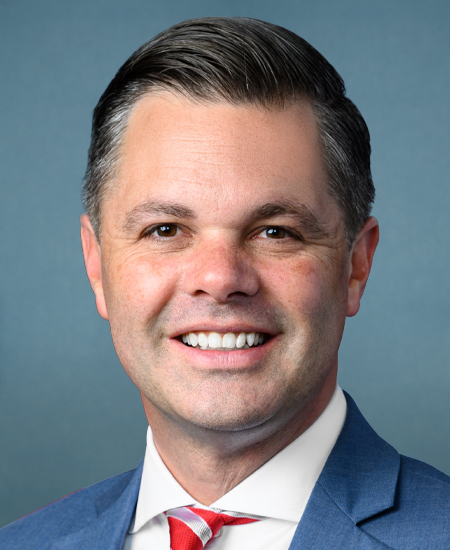
Rep. Zachary Nunn
Sponsored bills
This resolution states that the House of Representatives condemns and denounces socialism in all its forms, including the Democratic Socialists of America, and opposes the implementation of socialist policies in the United States; reaffirms its support for free, fair, and secure elections and calls for enactment of the SAVE America Act; reiterates that American elections are for American citizens only; and recommits itself to upholding the U.S. Constitution.
Maddy summaryThis bill clarifies that certain personal services entities owned by registered stockbrokers are not automatically considered "brokers" under securities law, if specific conditions are met. It directly affects registered representatives who own personal services entities (like independent contractor firms) and their brokers. Key provisions require brokers to control payment details, prevent entities from advertising as brokers, maintain written agreements, restrict ownership to the representative or immediate family, and preserve required records for oversight. The change aims to eliminate regulatory confusion for small, representative-owned entities without altering core broker-dealer rules.
Maddy summaryThis bill prohibits the Securities and Exchange Commission (SEC) from requiring national securities exchanges, associations, or their members to report investors' personally identifiable information (PII) for consolidated audit trail purposes. It directly affects financial market participants whose personal details - like names, addresses, Social Security numbers, email addresses, or IP addresses - would otherwise be shared under SEC rules. The law specifically blocks the SEC from mandating this PII for order or reportable event reporting under existing regulations. This is a policy change to limit the types of data collected and shared in market transparency systems.
Maddy summaryThis bill amends federal law to allow certain prior active duty service as a regular member of an Armed Force to count toward the reduced eligibility age for retirement in the reserve components. The change directly affects members of the Ready Reserve who have served on active duty, enabling them to qualify for retirement benefits at an earlier age than previously permitted under current rules. The legislation applies retroactively to qualifying service performed after January 28, 2008, ensuring that past service is recognized for these retirement calculations.
Maddy summaryThis bill amends Title 36 of the United States Code to formally rename the Reserve Officers Association of the United States as the Reserve Organization of America and updates its federal charter accordingly. The legislation establishes that the organization is a federally chartered, non-profit corporation with perpetual existence, dedicated to supporting military policy and national security. Key provisions prohibit the group from issuing stock, engaging in political activities, or distributing income to members, while also requiring it to maintain specific financial records and designate a registered agent in Washington D.C.
Maddy summaryThe Empowering States to Protect Seniors from Bad Actors Act authorizes the Securities and Exchange Commission to distribute competitive grants to state securities commissions and insurance departments to combat financial fraud targeting individuals aged 62 and older. These funds can be used to hire staff for investigations, purchase technology and training equipment, develop educational materials for seniors, and strengthen state laws against exploitation. Each eligible entity may receive up to $500,000 annually, or $1,000,000 if the state agency handles both securities and insurance regulation. The bill appropriates $10 million per year from fiscal years 2025 through 2030 and requires the Commission to conduct annual audits and submit effectiveness reports to Congress at two and five-year intervals.
Maddy summaryHR 7008, the Stop Insider Trading Act, restricts Members of Congress, their spouses, and dependent children from purchasing certain investments like stocks in publicly traded companies. It requires 7-14 days' advance public notice before selling any such investment, including the sale date, description, and number of shares. Exceptions apply for work-related transactions (e.g., employer compensation) and reinvesting dividends. Violations trigger a fee of $2,000 or 10% of the investment’s value (whichever is greater), plus any net gain, paid from personal funds - not congressional allowances or campaign donations. The bill aims to prevent conflicts of interest by increasing transparency around congressional financial dealings.
Maddy summaryThe Enhancing K-12 Cybersecurity Act directs the Cybersecurity and Infrastructure Security Agency to create a public website and database that helps schools share security tips, find government-funded tools, and apply for cybersecurity grants. It also establishes a voluntary registry where schools can report cyber incidents to help identify trends and improve national monitoring without revealing private student information. Additionally, the bill funds a program to provide tailored cybersecurity strategies, ransomware protection services, and training specifically designed for the unique resources of elementary and secondary schools. These measures aim to strengthen digital safety for K-12 institutions by improving information exchange, tracking threats, and offering direct technical support.
Maddy summaryThe WINGS Act of 2026 expands federal financial aid eligibility to cover specific aviation training expenses for students enrolled in qualifying aviation programs at colleges and universities. Under this bill, students could use federal funds to pay for costs such as flight simulator hours, aircraft instruction, aviation training materials, and licensing exam fees. The legislation defines eligible programs as those offering associate's or bachelor's degrees in aviation-related fields and includes professional degree programs that meet specific regulatory training standards. These changes would take effect on July 1, 2027, allowing students to access financial support for practical aviation training components starting with the 2027-2028 award year.