

Maddy summaryHR 2978, the GUARD Act, allows state, local, and tribal law enforcement agencies to use existing federal grant funds for investigating elder financial fraud, "pig butchering" investment scams, and general financial fraud. The bill directs these funds toward hiring specialized staff, training on blockchain tools and transnational fraud, purchasing investigative software, improving data collection, and creating financial sector liaisons to coordinate with banks. It requires annual reports from law enforcement on fund usage and outcomes, and mandates federal agencies to submit comprehensive reports to Congress on scam statistics, enforcement actions, and funding allocation. The legislation directly affects law enforcement agencies and aims to strengthen efforts against fraud targeting vulnerable populations, particularly elderly individuals.
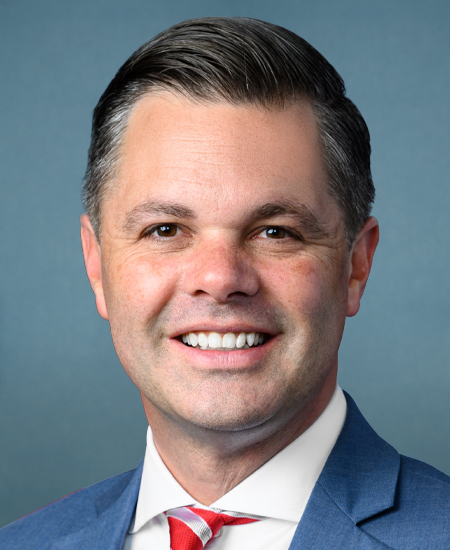
Rep. Zachary Nunn
Sponsored bills
Maddy summaryHR 2004, titled "Tyler’s Law," requires the Secretary of Health and Human Services to study how often hospital emergency departments test for fentanyl during overdose cases (beyond standard drug tests), including associated costs, patient benefits/risks, and impacts on privacy and patient-physician relationships. The study must be completed within one year of the bill's enactment. Based on the study results, the Secretary must issue guidance within six months on whether emergency departments should routinely test for fentanyl, how to inform clinicians about test contents, and how such testing may affect future overdose risks and health outcomes. This bill directly affects hospital emergency departments and patients experiencing overdoses by shaping future testing protocols.
Maddy summaryHR 1266, the Combating Illicit Xylazine Act, adds xylazine - a veterinary sedative increasingly found in illicit drug mixtures - to Schedule III of the Controlled Substances Act, regulating its use and trafficking. It directly affects veterinarians, animal owners, and manufacturers by allowing xylazine to be legally dispensed for animal use under specific veterinary prescriptions, while prohibiting non-veterinary human use. The bill includes transition periods (60 days for practitioners, 1 year for labeling) to ease compliance for manufacturers and practitioners, and requires the DEA and FDA to expedite necessary applications. It also mandates two congressional reports on xylazine's illicit use and trafficking patterns, and directs the Sentencing Commission to review penalties for offenses involving xylazine.
Maddy summaryThis bill requires all new passenger vehicles manufactured for sale in the U.S. to include AM radio as standard equipment (not an optional add-on) by 2027-2028, depending on manufacturer size. It mandates that AM radio receivers must be easily accessible to drivers and allows compliance through digital AM broadcast technology. During a transition period, manufacturers must clearly label vehicles without AM radio but cannot charge extra for this feature. The bill also mandates a GAO study on AM radio's role in emergency alerts and includes a 10-year sunset provision for the rule. It preempts state laws regarding AM radio access in vehicles.
Maddy summary# Summary of Digital Commodities and Blockchain Technology Regulatory Framework This comprehensive legislation establishes a new regulatory framework specifically for digital commodities and blockchain technology, creating a balanced approach that protects investors while fostering innovation. ## Key Components 1. **New Regulatory Structure**: - Creates new categories for digital commodity exchanges, brokers, and dealers under the Commodity Futures Trading Commission (CFTC) - Establishes "qualified digital asset custodians" as a new regulatory category - Defines "mature blockchain systems" with special regulatory treatment 2. **Core Requirements**: - Mandates segregation of customer assets and strict custody requirements - Requires robust risk management systems - Sets capital requirements for digital commodity brokers and dealers - Establishes new disclosure and reporting obligations - Defines "blockchain control persons" with special restrictions on selling digital commodities 3. **Innovation-Focused Provisions**: - Creates a "Strategic Hub for Innovation and Financial Technology" (FinHub) at the SEC - Establishes "LabCFTC" as a dedicated innovation lab within the CFTC - Provides exemptions for SEC-registered entities from certain CFTC requirements - Includes provisions for expedited hiring of digital commodities experts 4. **Studies and Research**: - Mandates studies on decentralized finance (DeFi) - Requires a study on non-fungible tokens (NFTs) - Directs a study on financial literacy among digital commodity holders - Requires a study on tokenized securities and derivatives 5. **Exclusions**: - Excludes decentralized finance activities from regulation - Excludes certain blockchain-related activities from regulatory requirements The legislation aims to create a functional regulatory framework that acknowledges the unique benefits and risks of digital commodities while ensuring investor protection, preventing market manipulation, and promoting the responsible development of this emerging technology within the United States. It seeks to prevent the shift of digital commodity development to less regulated countries by establishing a clear, balanced regulatory path.
Maddy summaryHR 4707 designates the U.S. Postal Service facility at 1019 Avenue H in Fort Madison, Iowa, as the "Martin L. Graber Post Office." The bill updates all official federal references - such as in laws, maps, and documents - to use this new name for the facility. It does not change operations, funding, or services at the post office. This is a naming resolution with no substantive policy impact, solely commemorating Martin L. Graber.
Maddy summaryHR 1869 creates a new DOJ task force within the Criminal Division to investigate and prosecute international trade crimes, such as customs evasion, smuggling, and trade-based money laundering. It requires the DOJ to hire specialized prosecutors, coordinate with agencies like U.S. Customs and Border Protection, and focus on specific violations covered under statutes like 18 U.S.C. §§ 541-546 and 21 U.S.C. § 331. The bill authorizes $20 million in funding for fiscal year 2026 (with 80% dedicated to criminal prosecutions), mandates annual reports to Congress on enforcement activities, and requires the DOJ to develop multi-agency partnerships to address these crimes. This directly affects federal prosecutors, border enforcement agencies, and industries impacted by trade violations.
Maddy summaryThis House resolution expresses support for designating the week of September 11 through September 17, 2026, as "Patriot Week." The bill encourages citizens, educational institutions, and government agencies at all levels to participate in activities that honor American history, founding documents, and national symbols. It specifically acknowledges the victims of the September 11, 2001, attacks while linking the commemorative period to Constitution Day on September 17.
Maddy summaryHR 5267, the American Franchise Act, clarifies when franchisors can be considered joint employers of franchisee employees under federal labor laws. It defines "substantial direct and immediate control" over essential employment terms like wages, benefits, hours, hiring, and discipline - requiring franchisors to actively set these terms to be deemed joint employers. The bill explicitly excludes routine brand standards, training, or minimal safety requirements from constituting such control. This directly affects franchisors and franchisees by limiting joint employer liability to cases where franchisors exert significant, ongoing influence over core employment decisions. The law applies prospectively to new cases after enactment, not past disputes.
Maddy summaryThe Congressional Pension Accountability Act would strip former members of Congress of their pension eligibility if they are expelled from office or resign following an ethics committee finding of substantial misconduct. This measure directly affects current and future legislators by making their congressional service non-creditable for retirement benefits under both the Civil Service Retirement System and the Federal Employees Retirement System. While affected individuals would receive a refund of their personal contributions, they would forfeit any government-matched funds in their Thrift Savings Plans and would not be required to repay pension benefits already received before the forfeiture took effect. A presidential pardon or commutation of sentence would not restore these lost benefits, and the law applies only to misconduct occurring after its enactment.