

Maddy summaryHRES 638 designates the week of August 3-9, 2025, as "National Farmers Market Week" to recognize the role of farmers markets in U.S. communities. The resolution highlights that farmers markets generated $1.7 billion in farmer income in 2020, grew from 1,755 to 8,771 nationwide between 1994 and 2019, and support local economies, sustainable farming, and food access. It does not create new laws or funding but formally supports the designation and acknowledges how these markets connect urban and rural communities while aiding farmers and consumers. This commemorative resolution directly affects farmers markets, their operators, and communities that rely on them for economic and social engagement.
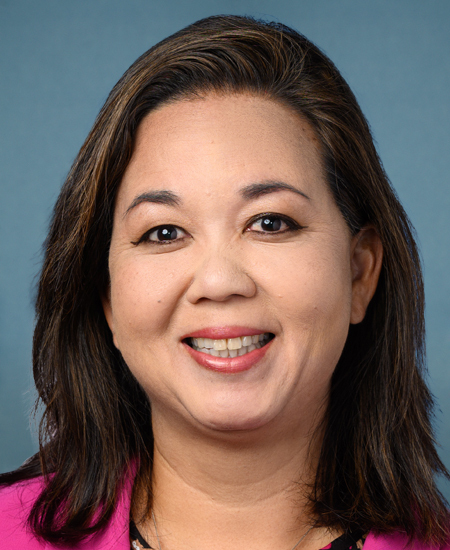
Rep. Jill N. Tokuda
Sponsored bills
Maddy summaryThis bill requires the U.S. Department of State to include specific, detailed reporting on reproductive rights in its Annual Country Reports on Human Rights Practices. It mandates descriptions of each country's policies regarding access to contraception, abortion services, and comprehensive reproductive health care, alongside data on pregnancy-related deaths, discrimination against women and LGBTQI+ individuals, and disparities based on race, disability, or other factors. The bill also directs the State Department to consult with civil society organizations and health experts to ensure thorough reporting on these issues. This change aims to align U.S. reporting with international human rights standards and address past omissions of reproductive rights from these reports.
Maddy summaryHR 4860, the U.S.-Taiwan Defense Innovation Partnership Act, aims to create a formal partnership between the U.S. Department of Defense and Taiwan's defense authorities. It directs the Secretary of Defense to coordinate on defense industrial priorities, streamline research and development, and create market pathways for defense technology startups in both countries. The bill specifically targets collaboration on emerging technologies like drones, microchips, artificial intelligence, missile systems, and surveillance capabilities. This partnership directly affects U.S. and Taiwan-based defense technology companies, particularly startups, by enhancing market access and joint development opportunities.
Maddy summaryThis bill adjusts health insurance subsidies by modifying the premium tax credit structure under the Internal Revenue Code. It replaces previous income thresholds with a sliding-scale formula, increasing subsidies for households earning between 150% and 400% of the federal poverty level - reducing their required premium payments as income rises within these tiers. The changes apply to tax years beginning after December 31, 2025, directly affecting middle-income individuals and families purchasing coverage through health insurance marketplaces. It also repeals specific provisions from a prior reconciliation law related to health care.
Maddy summaryThe Advancing Research on Agricultural Soil Health Act of 2025 requires the U.S. Department of Agriculture to develop a standardized method for measuring soil carbon within 270 days of enactment. It establishes a national Soil Carbon Inventory and Analysis Network to track soil carbon changes across agricultural lands and create predictive models showing how farming practices affect carbon sequestration. The bill includes provisions for voluntary reporting of soil carbon data by farmers and ranchers, with technical assistance provided in multiple languages and formats. It authorizes $2 million annually for methodology development and $17.5 million for the Soil Carbon Inventory and Analysis Network, with requirements for stakeholder consultation including socially disadvantaged farmers and ranchers.
Maddy summaryHRES 619 is a non-binding resolution recognizing the disproportionate mental health challenges faced by minority communities in the U.S. and supporting "Minority Mental Health Awareness Month." It highlights specific disparities, such as higher rates of untreated mental health conditions among Black, Indigenous, Asian American, and Pacific Islander populations due to barriers like stigma, lack of culturally competent care, and systemic inequities. The resolution calls on the President to improve mental health care access that addresses racial, cultural, and social differences in minority communities. It does not create new laws or allocate funds but serves as a symbolic acknowledgment of these health disparities.
Maddy summaryThis bill removes a barrier preventing most low-income students from accessing SNAP benefits. It amends the Food and Nutrition Act to explicitly allow students enrolled at least half-time in recognized higher education programs to qualify for SNAP, reversing a prior exclusion. The key change eliminates the previous requirement that students meet specific exceptions (now deleted) and adds a new eligibility category under Section 3(m)(5). This directly affects low-income undergraduate and graduate students at colleges and training programs who were previously ineligible. The changes take effect January 2, 2026.
Maddy summaryThis bill authorizes $50 million annually for the Centers for Disease Control and Prevention (CDC) to conduct research on firearms safety and gun violence prevention, beginning in fiscal year 2026 through 2031. The funding is in addition to existing CDC appropriations and would support studies under the Public Health Service Act. It does not create new regulations or directly affect individuals, but aims to expand research into causes and prevention strategies for gun violence. The bill focuses solely on enabling CDC research, without proposing policy changes or restrictions.
Maddy summaryHR 4796, the Restoring Essential Healthcare Act, repeals a provision that blocked Medicaid payments to certain healthcare providers during a specific period. It directly affects Medicaid beneficiaries who received care from these providers between the enactment of the prior law (Public Law 119-21) and this bill's enactment. The key provision retroactively restores Medicaid payments for services already provided during that blocked period, treating the payment restriction as if it never existed. This change ensures eligible individuals and providers receive reimbursement for covered care delivered during the prohibited timeframe.
Maddy summaryHR 4812 requires the Secretary of the Air Force to include depot-level aircraft maintenance coordination in at least one annual multinational military exercise within the U.S. Indo-Pacific Command area. It directs specific collaboration with partner nations (including Australia, Korea, Japan, Canada, New Zealand, and the UK) on planning, real-time logistics, mutual certification, and emergency scenarios for aircraft maintenance. The bill mandates a report to Congress within one year detailing lessons learned, partnership opportunities, and potential challenges with Korea and Australia, including logistical, intellectual property, and regulatory barriers. This procedural bill focuses on enhancing military interoperability through structured maintenance coordination with key allies in the Indo-Pacific region.