

Maddy summaryThis resolution (HRES 820) is a symbolic measure supporting the designation of the week beginning October 12, 2025, as "National Wildlife Refuge Week." It does not create new policies or affect any specific groups directly; instead, it urges the House to formally recognize and encourage observance of this week. The resolution highlights the National Wildlife Refuge System's role in conserving habitats, supporting biodiversity, and contributing to local economies through recreation. It emphasizes the system's value for wildlife conservation, public access, and community engagement, but the resolution itself only involves the House's supportive statement.
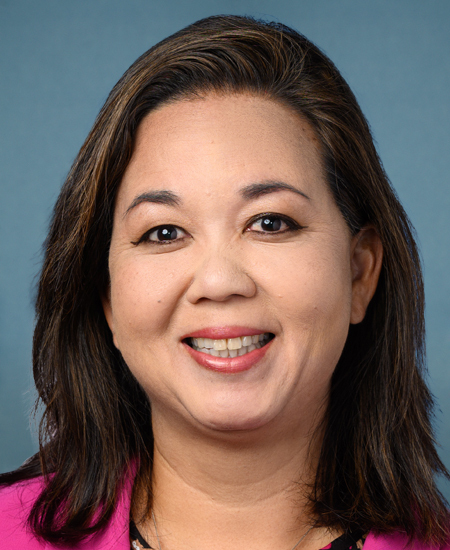
Rep. Jill N. Tokuda
Sponsored bills
Maddy summaryHRES 809 is a symbolic resolution expressing the House of Representatives' support for designating the second Monday in October 2025 as "Indigenous Peoples' Day." It does not create new law or directly affect any individuals or communities, but rather encourages the public to observe this day through ceremonies celebrating Indigenous history and culture. The resolution highlights existing local and state observances (over 200 municipalities and 17 states) and notes that Columbus Day currently does not honor Indigenous contributions. It urges Americans to recognize Indigenous Peoples' enduring legacy and cultural impact, while supporting the eventual designation of this day as a Federal holiday.
Maddy summaryThe MARA Act of 2025 establishes a framework for developing sustainable offshore aquaculture (seafood farming in U.S. ocean waters beyond coastal zones). It creates an Office of Aquaculture within NOAA to coordinate research, permit demonstration projects, and develop environmental standards. The bill requires demonstration projects to use native species, minimize environmental impacts, and collaborate with educational institutions, while collecting socioeconomic data. It also creates Aquaculture Centers of Excellence to train workers and support workforce development in coastal communities, aiming to expand domestic seafood production and reduce the U.S. seafood trade deficit.
Keep Air Travel Safe Act This bill provides continuing appropriations for the Transportation Security Administration (TSA) during any period in which there is a lapse in appropriations for TSA. It also requires the continuing appropriations to be funded using certain unobligated funds that were provided to U.S. Immigration and Customs Enforcement by the One Big Beautiful Bill Act. The bill provides the appropriations for TSA to continue all programs, projects, or activities (including the costs of direct loans and loan guarantees) that were funded in the preceding fiscal year. The appropriations provided by this bill are available from the first day of a lapse in appropriations for TSA until the earlier of the date on which the applicable regular appropriations bill for the fiscal year becomes law or a joint resolution making continuing appropriations becomes law, or the date that is 180 days after the first day of a lapse in appropriations.
Maddy summaryThis resolution requires the House of Representatives to hold daily meetings and recorded attendance checks during government shutdowns. Members must electronically confirm their presence each day via a "quorum call," with fines of $500 for a first offense and $2,500 for repeat failures. Fines cannot be paid using campaign or official funds, and the rules apply to all House members, including delegates and the Resident Commissioner. The bill aims to ensure continuous House operations during shutdowns but does not alter the cause or duration of shutdowns.
Maddy summaryThis bill makes federal funding for the WIC program mandatory by requiring Congress to appropriate necessary funds annually for fiscal year 2026 and each subsequent year. It removes discretionary language from WIC funding requirements and clarifies that eligible participants must be served without participation limits. The bill directly affects low-income pregnant women, new mothers, and young children who rely on WIC for nutrition assistance, ensuring continued access to critical food, health, and education services.
Maddy summaryHR 5708, the Federal Employees Civil Relief Act, provides temporary protections for federal workers and contractors during government shutdowns. It suspends civil proceedings like evictions, mortgage foreclosures, student loan collections, and tax payments if the worker is furloughed or working without pay. During a shutdown (and for 30 days after), courts can pause these obligations or adjust payments to prevent harm, and lenders/insurers cannot penalize workers for missed payments due to the shutdown. The law directly affects federal employees whose income is disrupted by a shutdown, ensuring housing, loan, and tax protections while maintaining their civil rights.
Maddy summaryHR 5705 requires the federal government to reimburse state agencies for funds they use to maintain participation in the WIC program during a government shutdown. It directly affects states that cover WIC costs using their own money when federal funding lapses. The bill establishes a process where states can seek reimbursement from the federal government after the shutdown ends. This ensures states aren’t burdened with costs for a federal funding gap that impacts nutrition assistance for women, infants, and children.
Maddy summaryThis resolution expresses congressional support for designating September 2025 as "Hawaiian History Month." It recognizes the history, culture, and contributions of Native Hawaiians to Hawaii, the U.S., and globally, while reaffirming the U.S. Federal trust relationship with Native Hawaiians. The bill does not create new laws or funding but encourages federal agencies, schools, and communities to observe the month through educational programs. It specifically references historical milestones like Public Law 103-150 (1993) acknowledging the 1893 overthrow of the Kingdom of Hawai'i. As a symbolic resolution, it has no legal force but aims to promote awareness of Native Hawaiian heritage.
Maddy summaryHR 5680, the "Pay Our Public Shipyard Workers Act," ensures continuous pay for civilian and military workers at public shipyards during budget gaps in fiscal years 2026 or 2027. It appropriates funds from the Treasury to cover their pay and allowances if regular appropriations bills aren't enacted before the start of those fiscal years. The funding expires no later than January 1, 2027, or when regular appropriations are passed, whichever comes first. This bill directly affects shipyard workers whose pay would otherwise be interrupted during federal budget transitions.