

Maddy summaryThis bill extends the health insurance premium tax credit program for tax years after 2025, allowing individuals with household incomes above 400% of the federal poverty line to continue receiving subsidies. It modifies the calculation method for these credits to temporarily extend eligibility beyond the current threshold, with the extension date determined by the Secretary of the Treasury based on budget estimates. The bill also includes a separate provision rescinding unobligated funds for U.S. assistance to Argentina, though this is unrelated to healthcare. The changes directly affect millions of Americans who rely on federal subsidies to afford health insurance coverage through marketplaces.
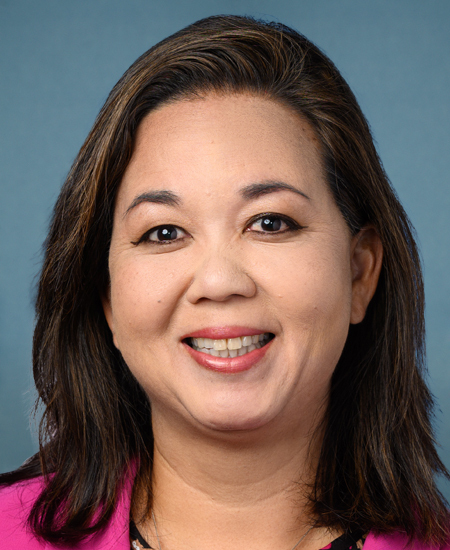
Rep. Jill N. Tokuda
Sponsored bills
Maddy summaryHRES 865, the "Opening the People’s House Resolution," would amend House rules to allow any member to end a "district work period" (a time when members work in their districts instead of in Washington) by submitting a letter to the Clerk. If a majority of House members submit such letters, the current district work period would end within two days, and the Speaker could not schedule a new one for three weeks after the House reconvenes. The Clerk would publicly list all signers in the Congressional Record and online daily. This resolution directly affects House members and the Speaker by changing how district work periods are terminated.
Maddy summaryHR 5941, the Restoring Access for Detainees Act, requires U.S. Immigration and Customs Enforcement (ICE) to provide immigration detainees in DHS custody with specific communication access. It mandates 200 free monthly minutes for general outgoing calls, unlimited free minutes for contacting legal counsel, courts, consulates, or oversight offices, and special initial contact provisions during arrival or transfer. Detention facilities must allow uninterrupted legal communication time, cannot restrict minutes for legal calls, and must provide private spaces for confidential legal discussions. The bill also requires facilities to establish clear, publicly available communication policies that comply with these requirements.
Maddy summaryHR 5965, the Student Veteran Work Study Modernization Act, expands work-study eligibility for veterans pursuing education or rehabilitation programs at least half-time (instead of the current three-quarter-time requirement). The bill creates a 5-year pilot program allowing veterans to receive a work-study allowance from the VA while studying part-time, directly affecting veterans enrolled in qualifying programs. It requires the VA to submit annual reports tracking participation rates, four-year degree attainment, and full-time VA employment outcomes for participants. The law modernizes existing VA work-study rules without altering benefit amounts or creating new funding streams.
Maddy summaryThis bill ensures continuous funding for SNAP (food assistance) and WIC (nutrition program for mothers/children) during government funding gaps. It authorizes emergency Treasury funds to cover SNAP/WIC benefits and reimburse states for costs if Congress fails to pass regular appropriations for the Department of Agriculture by September 30, 2025. The funding covers missed payments retroactively from September 30, 2025, through the bill’s enactment date, and continues until either regular appropriations pass or September 30, 2026. It directly affects low-income households relying on these programs and state agencies administering them during funding lapses.
Maddy summaryThis bill requires states to allow eligible voters to register or update their registration at polling places on election day for federal elections, including during early voting periods. It applies to all states except those with existing laws eliminating voter registration requirements for federal elections. The key mechanism mandates that voters can both register and cast their ballot on the same day at designated polling locations. The requirement takes effect for the November 2026 general election and all subsequent federal elections.
Maddy summaryHRES 846 is a symbolic resolution designating October 2025 as National Domestic Violence Awareness Month. It expresses the House's support for raising awareness about domestic violence and its impacts, and calls for continued congressional attention to ending domestic violence through existing programs. The resolution does not create new laws, allocate funding, or directly affect any specific groups - it is purely a statement of support. It references statistics on domestic violence prevalence but focuses on awareness rather than policy changes.
Maddy summaryThe American Energy Independence and Affordability Act extends multiple clean energy tax credits that were set to expire between 2025 and 2026. It specifically extends residential clean energy credits through 2034, clean electricity investment credits for wind and solar through 2032, and clean vehicle credits for electric vehicles through 2032. The bill also reinstates special rates for sustainable aviation fuel and modifies requirements for energy-efficient home improvements. These provisions directly affect homeowners installing solar panels, businesses investing in clean energy infrastructure, and manufacturers producing clean energy equipment.
Maddy summaryHRES 833 is a non-binding resolution passed by the U.S. House of Representatives to honor Dr. Jane Goodall, a renowned primatologist, conservationist, and advocate for wildlife protection. The resolution recognizes her groundbreaking chimpanzee research at Gombe Stream, her founding of the Jane Goodall Institute and Roots and Shoots program (which engages youth in environmental action globally), and her decades-long advocacy for ethical animal treatment and conservation. It commemorates her legacy following her passing on October 1, 2025, and extends condolences to her family and affiliated organizations. This resolution has no legal effect but serves as a symbolic tribute to her global environmental impact.
Maddy summaryHRES 822 is a non-binding resolution designating October 23, 2025, as "National Marine Sanctuary Day." It supports raising public awareness about the National Marine Sanctuary System, which protects ocean and Great Lakes areas for conservation, recreation, and cultural heritage. The resolution encourages responsible visits to sanctuaries and recognizes their economic benefits, including supporting jobs in tourism and fishing. It does not create new laws or funding but formally acknowledges the system’s role in preserving marine ecosystems and coastal communities. This symbolic gesture aims to foster public engagement with marine sanctuaries across the U.S.