

Maddy summaryThe HELP Copays Act (HR 830) changes how health insurance plans calculate patient cost-sharing. It requires that payments made by third parties (like pharmacies, charities, or discount programs) toward medical costs count toward a patient's deductible, copay, or out-of-pocket limit. This directly affects insured individuals who receive financial assistance, discounts, or product vouchers for healthcare expenses. The law ensures these external payments reduce the patient's actual out-of-pocket costs more quickly, aligning with existing Affordable Care Act and Public Health Service Act requirements.
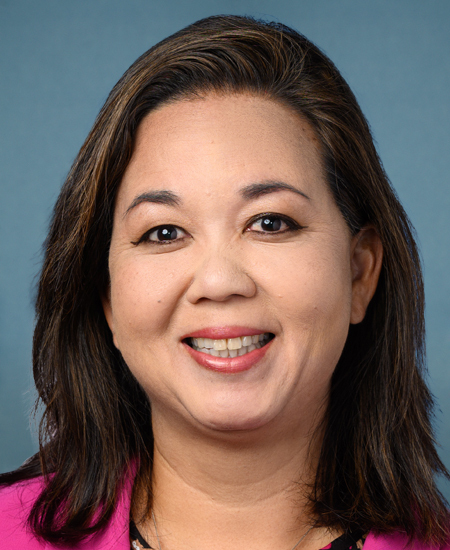
Rep. Jill N. Tokuda
Sponsored bills
This resolution calls on the United States and North Korea to begin the process of reuniting Korean Americans with their immediate relatives in North Korea. (Many families were divided after the signing of the Korean War Armistice Agreement, which divided the Korean Peninsula into North and South Korea.)
Maddy summaryThis bill expands health care coverage under TRICARE for military dependents. It eliminates a separate premium for young adults aged 21-26 enrolled in the TRICARE Young Adult Program, meaning they will no longer pay an extra fee for coverage. The bill also removes an eligibility restriction that previously limited coverage for some dependents in this age group. These changes directly affect military service members' adult children and spouses who rely on TRICARE Young Adult coverage. The policy update simplifies enrollment and reduces out-of-pocket costs for these beneficiaries.
Maddy summaryHR 1044, the Maritime Fuel Tax Parity Act, extends an existing tax exemption for alternative motorboat fuels to cover vessels operating exclusively between Atlantic or Pacific U.S. ports (including territories). This change, effective after December 31, 2021, directly affects small coastal vessel operators who previously did not qualify for the exemption. The bill amends the tax code to include these "one-coast" vessels under the same exemption that previously applied to vessels serving multiple coasts. It creates a policy change by removing a tax distinction for specific coastal shipping operations without altering broader fuel tax structures.
Maddy summaryThis bill authorizes a single Congressional Gold Medal to honor all U.S. Army Dustoff crews who served during the Vietnam War (1962-1973). It recognizes their critical role in evacuating nearly 900,000 wounded personnel, including U.S., South Vietnamese, and allied forces, under extreme combat conditions. The medal, designed with input from the Secretary of Defense, will be presented to the U.S. Army Medical Department Museum for permanent display. Duplicate bronze medals may be sold to cover costs, but the primary action is the commemorative recognition of these crews' service.
Maddy summaryHR 1002, the "Saving the Civil Service Act," restricts how federal government positions can be moved between competitive hiring (where most federal jobs are filled through merit-based exams) and non-competitive "excepted service" positions. The bill prevents agencies from moving positions out of the competitive service unless they fit specific schedules in place as of September 2020, requires Office of Personnel Management (OPM) approval for certain transfers, and mandates employee consent for any position transfer between service types. It also limits the number of employees that can be moved from competitive to excepted service during a presidential term - capping it at 1% of an agency's workforce or five employees, whichever is greater. The bill directly affects federal employees and agencies by making it harder to shift positions out of the competitive hiring system without strict oversight.
Veterans Infertility Treatment Act of 2023 This bill requires the Department of Veterans Affairs (VA) to furnish infertility treatments, standard fertility preservation services, or both to a covered veteran or partner of a covered veteran. A covered veteran is a veteran who is enrolled in the VA health care system and has infertility or is at risk of having infertility, as determined by a licensed physician. The VA may furnish up to three completed in vitro fertilization cycles that result in live birth, or 10 attempted cycles, whichever occurs first. Additionally, the VA may furnish in vitro fertilization treatment using donated gametes or embryos. The VA must receive consent to furnish an in vitro fertilization cycle from the covered veteran, the partner of a covered veteran, and the third-party donor (if applicable). For purposes of paying travel expenses for treatment or services to the partner of a covered veteran, the VA must deem the partner to be a veteran receiving treatment or care. The VA must prescribe regulations related to the provision of infertility treatments and standard fertility preservation services as required by this bill. Prior to the enactment of such regulations, the VA must ensure that (1) counseling and treatment furnished under existing authority is available to a veteran and the veteran's partner, regardless of whether they are married; and (2) treatment under existing authority may be furnished using donated gametes or embryos.
Maddy summaryThis bill amends the Food and Nutrition Act to allow Puerto Rico to transition from its current block grant nutrition assistance program to the federal Supplemental Nutrition Assistance Program (SNAP), aligning it with how states like Hawaii and Guam operate. Puerto Rico must submit a transition plan to the U.S. Department of Agriculture within 60 days, which the agency must review and approve within 180 days. The bill extends Puerto Rico’s existing block grant funding for up to five years or until the transition is complete, whichever comes first, and requires annual progress reports to Congress. This change directly affects Puerto Rico residents currently receiving nutrition assistance under the block grant, potentially providing them with benefits consistent with the SNAP program.
Maddy summaryThe AIM Act of 2023 removes numerous restrictions on the Bureau of Alcohol, Tobacco, Firearms and Explosives (ATF) that were previously placed in annual appropriations bills. The bill eliminates prohibitions on sharing firearms trace data with law enforcement, requirements for physical inventory checks of firearms dealers, and the 24-hour destruction rule for background check records. It also revises standards for revoking firearms licenses, changing the requirement from "willful" to "knowing" violations, and removes barriers to processing Freedom of Information Act requests related to firearms. This legislation directly affects the ATF's operations and firearms dealers who must comply with federal licensing requirements.
Maddy summaryHR 964, the Democracy in Design Act, requires the General Services Administration (GSA) to follow the 1962 "Guiding Principles for Federal Architecture" when designing all new U.S. public buildings. It mandates the GSA Administrator to create new regulations within 180 days of the bill's enactment, establishing minimum design standards for federal buildings. These regulations must be developed after public notice and comment, as required by standard federal rulemaking procedures. The bill directly affects all federal building projects and the GSA's design process, ensuring adherence to established architectural principles.