

Special Immigrant Visas for Afghan Fulbright Scholars Act of 2023 This bill authorizes special immigrant visas for qualifying citizens or nationals of Afghanistan who were selected for certain educational and cultural exchange programs. Specifically, a citizen or national of Afghanistan (and any accompanying spouse or child of such an individual) may be eligible for a special immigrant visa if the individual was selected between October 7, 2001, and August 31, 2023, to participate in a qualifying educational or cultural exchange program administered by the Department of State, including the J. William Fulbright Educational Exchange Program. Generally, such visas shall be subject to protections and requirements similar to those for special immigrant visas for citizens or nationals of Afghanistan who were employed by the United States in Afghanistan.
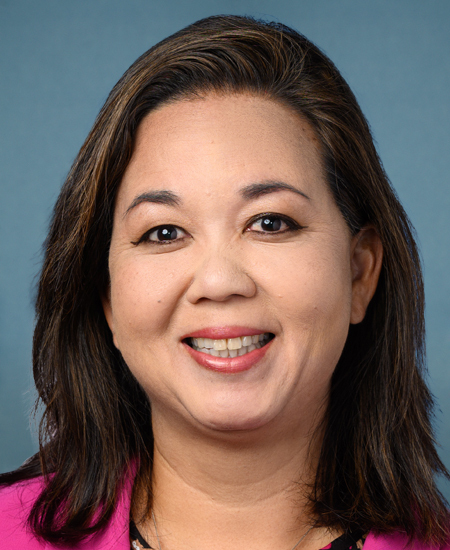
Rep. Jill N. Tokuda
Sponsored bills
Maddy summaryHR 1818, the Aviation Workforce Development Act, expands tax-advantaged savings plans (529 plans) to cover costs for specific aviation training programs. It allows funds from these plans to pay for tuition, fees, and required materials at FAA-certified aviation maintenance technician schools (Part 147) or commercial pilot training programs (Part 61 or 141). This directly affects students pursuing careers as aircraft maintenance technicians or commercial pilots by making these training costs more affordable through existing tax-advantaged savings. The bill amends the tax code to include these programs under "qualified higher education expenses" for 529 plan distributions.
Maddy summaryHR 1831 would award Billie Jean King a Congressional Gold Medal to honor her lifelong advocacy for equal rights in sports and society. The bill directs the Secretary of the Treasury to strike the medal and have it presented by congressional leaders, recognizing her pivotal role in advancing women's equality through tennis (including founding the Women’s Tennis Association and securing equal prize money) and her broader impact on society through initiatives like Title IX advocacy.
Maddy summaryThis bill changes how U.S. foreign aid is provided to international health organizations. It prevents U.S. agencies from denying aid to foreign non-governmental organizations (NGOs) solely because they offer health services (like counseling or referrals) using their own funds, as long as those services follow local laws. It also stops applying stricter rules about how foreign NGOs can use their own funds for advocacy compared to U.S. NGOs receiving similar aid. The bill directly affects foreign health-focused NGOs that rely on U.S. foreign assistance funding.
Maddy summaryHR 1814, the FIRE STATION Act, creates a federal grant program to help fire departments and emergency medical services (EMS) organizations upgrade or build facilities. It directly affects career, volunteer, and combination fire departments, as well as fire training facilities and nonaffiliated EMS organizations (non-hospital-based EMS groups). The program allocates $750 million for fiscal year 2024, with grants covering facility construction/renovation, safety upgrades (like HVAC or mold remediation), and requiring compliance with current safety codes. Grants are capped at $7.5 million per recipient, must follow Davis-Bacon wage standards, and require annual reporting on fund usage and program effectiveness.
Maddy summaryHR 1808 prohibits the military from considering gender identity, sexual orientation, or sex characteristics when determining service eligibility or implementing policies. It requires that all eligibility decisions and military treatment be based solely on a person's ability to meet job-specific military standards, not on protected characteristics like race, religion, or sex. The bill directly affects all current and prospective military members by mandating equality in service through new provisions added to Title 10 of U.S. Code.
Maddy summaryThe SAFEGUARD Act of 2023 restricts U.S. arms sales to countries committing genocide or war crimes. It prohibits defense exports to countries with credible evidence of such violations, with exceptions only if the government has punished perpetrators, prevented recurrence, and provided compensation. The bill requires recipient countries to agree not to use U.S. weapons to violate human rights, mandates end-use monitoring to ensure proper weapon use, and enhances congressional oversight for arms sales to countries with serious human rights concerns. These changes apply to all defense articles and services sold, exported, or transferred by the United States.
Maddy summaryHR 406 extends U.S. legal immunities to the Association of Southeast Asian Nations (ASEAN) under the same provisions that apply to other international organizations the U.S. engages with through treaties or congressional authorization. This would grant ASEAN diplomatic protections and legal standing comparable to existing international bodies, facilitating smoother interactions between ASEAN and U.S. entities. The bill is procedural, modifying legal recognition without changing U.S. foreign policy or substantive relations with Southeast Asia. It directly affects ASEAN's operational status under U.S. law.
Maddy summaryHR 1794 authorizes the minting of commemorative coins to honor the 2028 Los Angeles Olympic and Paralympic Games. It specifies four coin types ($5 gold, $1 silver, half-dollar clad, and proof silver $1) with defined weights, sizes, and mintage limits (e.g., up to 100,000 gold coins). A surcharge is added to each coin sale (e.g., $35 for gold coins), with all surcharge funds directed to the U.S. Olympic and Paralympic Properties to support legacy programs and the Games' operations. The coins must be issued only during 2028 and are legal tender, though the bill focuses solely on commemorative coinage, not policy changes.
Maddy summaryHR 1777 establishes a $50 million annual fund (2024-2028) for collaborative defense research between the U.S. and Israel in emerging technologies like artificial intelligence, cybersecurity, directed energy, and automation. The bill directly supports U.S. and Israeli military forces by enabling joint development of new warfare capabilities to address current and future defense challenges. Key provisions include authorizing $50 million per year for collaborative projects, building on existing U.S.-Israel defense partnerships like counter-tunnel and counter-drone systems. This funding aims to strengthen bilateral defense innovation without altering existing military aid structures.