

Maddy summaryThe SPARC Act creates a federal loan repayment program to address specialty care shortages in rural areas. It provides up to $250,000 in repayment for specialty medicine physicians (like cardiologists or surgeons) and non-physician providers (such as nurse practitioners in specialty roles) who commit to six years of full-time work in designated rural communities facing provider shortages. Participants must agree to repay eligible education loans (including federal student loans) while serving in these areas, with strict rules preventing double-benefits from other loan forgiveness programs. The program requires annual reporting on participant locations and impact, aiming to improve access to specialty care in underserved rural regions.
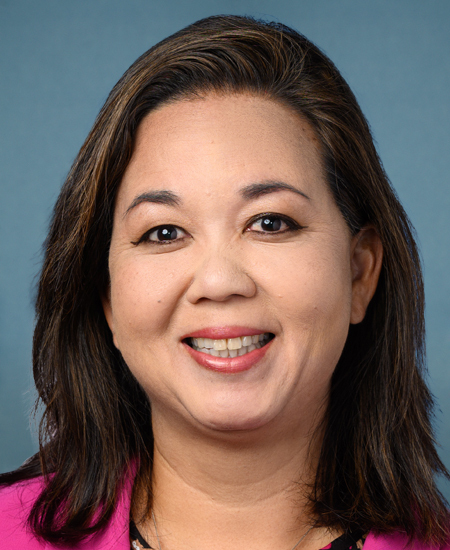
Rep. Jill N. Tokuda
Sponsored bills
Maddy summaryThis bill establishes a "quantum sandbox" program to accelerate near-term quantum applications. It requires the Commerce Secretary and NIST to create a public-private partnership where U.S. businesses and developers can test quantum computing, communication, and sensing solutions for real-world problems within 24 months. The program will engage industry groups and national labs to develop and pilot applications, focusing on practical uses like optimizing supply chains or materials science. It directly affects businesses and researchers working on quantum technologies seeking to deploy solutions faster.
Providing Resources and Occupational Training for Emotional Crisis and Trauma in 911 Act or the PROTECT 911 Act This bill establishes a grant program, and requires the Department of Health and Human Services (HHS) to develop resources, for addressing mental health conditions among public safety telecommunicators. These include 9-1-1 operators and other public safety personnel who are responsible for responding to requests for emergency assistance. Specifically, HHS must award grants to state, local, and regional emergency communications centers or nonprofits for behavioral health and wellness programs to prevent and mitigate job-related mental health issues among public safety telecommunicators. Additionally, HHS must develop and disseminate (1) best practices for identifying, preventing, and treating post-traumatic stress disorder among public safety telecommunicators; and (2) resources for educating mental health professionals about the workplace culture of, stressors and challenges experienced by, and therapies for treating mental health issues common to public safety telecommunicators.
Maddy summaryThe Dignity for Detained Immigrants Act establishes new standards for Department of Homeland Security detention facilities, requiring them to meet or exceed the American Bar Association's Civil Immigration Detention Standards. The bill mandates annual, unannounced inspections by the DHS Inspector General, public reporting on facility compliance, and a phased-out timeline for private detention facilities (phasing out by 3 years after enactment). It prohibits solitary confinement for all detainees, requires community-based alternatives to detention for vulnerable individuals, and mandates detailed public reporting on facility conditions, staffing, and detainee demographics. The legislation directly affects all immigrants held in DHS custody, including children, vulnerable persons, and primary caregivers, with specific protections for these groups in detention procedures.
Maddy summaryThe SAD Act prohibits crisis pregnancy centers (CPCs) from making deceptive claims about offering abortion services, contraception, or employing licensed medical personnel. It directly affects CPCs nationwide - over 2,500 of which operate under false pretenses, often outnumbering abortion clinics by 3:1 in many states. The Federal Trade Commission (FTC) would enforce this by imposing civil penalties up to $100,000 or 50% of a CPC’s annual revenue for violations. The law requires CPCs to provide accurate information about reproductive health services, aiming to prevent misleading patients from accessing abortion care.
Maddy summaryHR 2777, the School Meals during School Closures Act, allows schools to continue providing meals during certain closures without following standard meal program rules. It directly affects schools and meal providers by enabling the Secretary to waive requirements under the National School Lunch Act for closures due to strikes (excluding employer lockouts), weather disasters, public health emergencies, unsafe facilities, construction, or other unanticipated events. The key provision creates a new waiver exception (added to Section 12 of the Act) that skips specific regulatory hurdles normally required for meal services during these closures. This change ensures students can still receive meals when schools close unexpectedly for covered reasons.
This resolution expresses the sense of the House of Representatives that the Food and Drug Administration (FDA) has the authority to review and approve drugs pursuant to its own expertise, and that recent court decisions blocking the FDA's approval of mifepristone (which is used in medication abortion) violate congressional intent with respect to the FDA's authority.
Maddy summaryHRES 269 is a non-binding resolution passed by the U.S. House of Representatives on March 30, 2023. It recognizes the federal government's duty to develop and implement a Transgender Bill of Rights to protect transgender and nonbinary people. The resolution outlines key provisions, including ensuring access to gender-affirming medical care, ending discrimination in employment and housing, and improving legal recognition of gender identity on government documents. It also calls for addressing systemic barriers in education, safety, and economic security faced by transgender and nonbinary individuals.
Maddy summaryHR 2703, the Green Energy for Federal Buildings Act, requires the U.S. federal government to increase its use of renewable energy in buildings over time. It amends existing law to set specific renewable energy purchase targets: 7.5% for 2013-2019, rising to 35% (2030-2039), 75% (2040-2049), and 100% starting in 2050. The bill directs federal agencies to prioritize on-site, on Federal lands, or on tribal lands renewable energy where economically and technically feasible. This directly affects all federal agencies operating buildings by mandating progressively higher renewable energy consumption in their operations. The policy change focuses on concrete, phased targets for federal energy use without specifying outcomes or advocating for particular energy sources.
Women in Aviation Advisory Board Act This bill establishes a Federal Advisory Committee on Women in Aviation. The committee must advise the Department of Transportation and the Federal Aviation Administration on matters related to the education, training, mentorship, outreach, recruitment, and retention of women in the aviation industry. Membership in the committee must include representatives from aviation-related manufacturers, commercial air carriers, general aviation operators, unmanned aircraft systems operators, airports, aviation training and maintenance providers, labor organizations, educational institutions, and nonprofit organizations within the aviation industry.