

Maddy summaryThe Young Americans Financial Literacy Act would create federal grants to fund centers of excellence that develop and deliver research-based financial education programs for young people aged 8-24. These programs would teach essential money management skills like budgeting, saving, debt management, and financial decision-making, with a focus on accessibility through digital and traditional methods. The bill authorizes $27.5 million to $55 million annually (through 2025) for these centers, prioritizing programs serving at-risk youth, families, and communities facing financial challenges. Centers must use evidence-based approaches, address unique needs (e.g., student loans, predatory lending), and report annually to Congress on their outcomes.
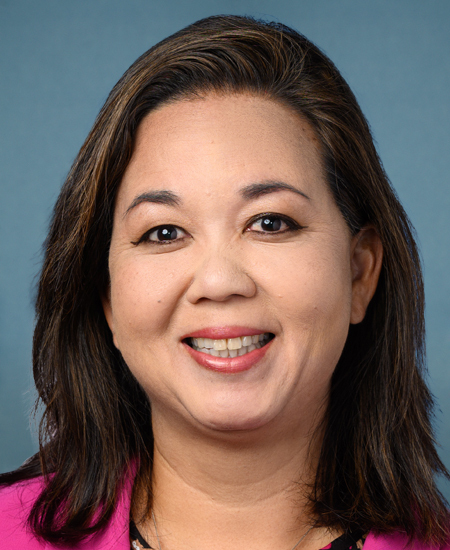
Rep. Jill N. Tokuda
Sponsored bills
Maddy summaryThe Military Family Nutrition Act of 2023 amends the Food and Nutrition Act to exclude a military member's basic housing allowance (BAH) from income calculations when determining eligibility for nutrition assistance programs like SNAP. This change directly affects military families who receive BAH as part of their housing benefit but currently have that allowance counted as income, potentially disqualifying them from food assistance. The key provision adds a specific exclusion for BAH paid to or on behalf of uniformed service members under Title 37, U.S. Code. As a result, military families will have their housing costs subtracted from their income for program eligibility, making it easier for them to qualify for nutrition support.
Maddy summaryThe Water Affordability, Transparency, Equity, and Reliability Act of 2023 establishes a new trust fund funded by increasing the corporate tax rate from 21% to 24.5% to support water infrastructure and affordability programs. It allocates funds to clean water programs (42%), safe drinking water funding (42.5%), household water wells (1%), colonias assistance (0.5%), Indian health services (3%), and water operator job training (0.5%). The bill requires the EPA to conduct a study and submit a report on water affordability, discrimination in water services, public participation in regionalization, and data collection related to service disconnections. It includes specific provisions for colonias, household water wells, and job training programs for water system operators to improve water access and equity.
Maddy summaryThe Healthy H2O Act establishes a federal grant program to help rural households and facilities improve drinking water quality by covering costs for point-of-use or point-of-entry water treatment systems, filter replacements, and related services. It directly assists eligible end users in rural areas - including homeowners, renters, child-care facilities, and small residential property owners - who have tested water containing health contaminants like lead, arsenic, or PFAS, while prioritizing private well users and limiting assistance to households with income below 150% of the median nonmetropolitan household income. Grants can fund certified treatment systems, installation by qualified professionals, maintenance, and water quality testing, administered by the Department of Agriculture with $10 million annually from 2024-2028. The program requires annual reports to Congress on progress, barriers to safe water access, and trends in treatment technology use to inform future improvements.
Maddy summaryThis bill establishes a comprehensive framework to address environmental justice by requiring federal agencies to identify and address disproportionately adverse environmental and health effects on communities of color, low-income communities, and Tribal and Indigenous communities. It creates a White House Environmental Justice Interagency Council to coordinate federal efforts, mandates that agencies develop environmental justice strategies, and requires consideration of cumulative impacts in permitting decisions for pollution sources. The bill also establishes grant programs for environmental justice communities, creates training requirements for federal employees, and includes specific provisions for safer cosmetics and economic revitalization in fossil fuel-dependent communities. These provisions aim to ensure fair treatment and meaningful involvement of all people in environmental decision-making processes, directly affecting federal agencies and communities disproportionately burdened by environmental hazards.
This resolution recognizes the 70th anniversary of the signing of the Mutual Defense Treaty between the United States and South Korea. Affirming the importance of the U.S.-South Korean alliance as the linchpin to safeguarding peace, security, and prosperity on the Korean peninsula, the resolution welcomes President Yoon Suk Yeol to the United States. It also supports ongoing defense and security ties, calls for continued promotion of human rights, and encourages close cooperation between the United States, South Korea, and Japan.
This bill expresses the sense of Congress that (1) medication abortion is appropriately approved and regulated under federal law, and (2) federal law preempts any in-person dispensing requirements or telehealth restrictions with respect to medication abortion under state law.
Maddy summaryHR 2559, the Strengthening Community Care Act of 2023, extends funding deadlines for two key healthcare programs. It amends the Affordable Care Act to extend the authorization period for Community Health Centers and the National Health Service Corps from 2023 to 2028. This change directly affects these programs, ensuring their continued operation and funding stability through 2028. The bill makes no changes to program eligibility or services, only prolonging the existing funding authorization period.
Maddy summaryThis bill requires the CDC to collect and publicly share information about concussions and brain injuries affecting public safety officers (including police, firefighters, and emergency responders). It directs the CDC to update its website with this information and develop targeted resources for medical professionals, employers, mental health providers, and families. The CDC must also consult with these groups to ensure the information meets their needs and support the creation of model treatment guidelines through grants. The law aims to improve diagnosis, treatment, and prevention strategies for brain injuries in this workforce.
This resolution urges (1) the President to issue a proclamation recognizing Earth Day; and (2) governments and people to continue building upon the Paris Agreement and other efforts to ensure that future generations inherit a livable, sustainable, and ecologically rich planet.