

Maddy summaryHR 3174 creates two new grant programs to address forests damaged by invasive plant pests and weeds. It authorizes competitive research grants (up to $400,000 annually per entity) for organizations like universities and nonprofits to study forest restoration methods, including biological control and genetic solutions, with a 20% non-Federal matching requirement. It also establishes implementation grants ($25 million annually) for eligible groups to carry out restoration projects, requiring a 10% non-Federal match and prioritizing areas most at risk from invasive species. Funding for these programs totals $3 million in 2023, increasing to $10 million annually for research and $25 million yearly for implementation through 2026.
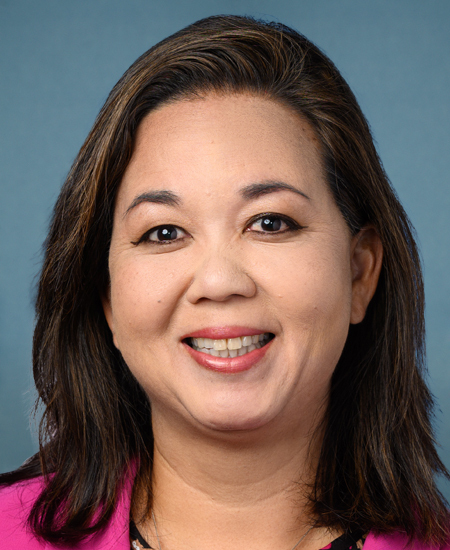
Rep. Jill N. Tokuda
Sponsored bills
Maddy summaryThis bill removes a barrier for college students seeking food assistance by amending the SNAP program rules. It directly affects students enrolled at least half-time in recognized colleges or training programs, who were previously automatically ineligible unless they met separate requirements. The key change eliminates the prior restriction (in section 6(e)) that barred most higher education students from SNAP, allowing them to qualify under the new provision in section 3(m)(5)(F). The changes take effect January 2, 2024.
Maddy summaryThis bill standardizes voluntary date labels on most packaged foods by requiring uniform phrases: "BEST If Used By" for quality dates (indicating quality may decline) and "USE By" for discard dates (indicating when food should be discarded). It applies to manufacturers of non-infant formula foods who choose to include dates, with no requirement to use them. The law mandates clear, conspicuous placement of these phrases and prohibits states from creating conflicting labeling rules. It excludes infant formula and takes effect two years after enactment, with federal agencies required to educate consumers about the new labels.
Maddy summaryHR 3126, the "Keep Kupuna Fed Act," amends the Food and Nutrition Act to exclude Social Security income (specifically title II benefits) from being counted when determining eligibility for the Supplemental Nutrition Assistance Program (SNAP), commonly known as food stamps. This change directly affects older adults, particularly Native Hawaiian elders ("kupuna"), who receive Social Security benefits and rely on SNAP for food assistance. The key provision modifies how household income is calculated for SNAP, ensuring that Social Security payments do not reduce or eliminate an individual's eligibility for food assistance. The bill aims to prevent older adults from losing critical food support due to their Social Security income being counted against SNAP limits. This is a technical adjustment to existing eligibility rules, not a new benefit or program.
Maddy summaryThis bill amends the Supplemental Nutrition Assistance Program (SNAP) to exclude income earned through specific job training programs from being counted toward household income limits. It adds a new provision (paragraph 20) that excludes earnings from vocational rehabilitation programs, refugee employment programs, and other defined training initiatives. This change directly affects SNAP households where members participate in these programs, as the income from such participation will no longer reduce their food assistance benefits. The policy update simplifies eligibility by ensuring these earnings do not trigger benefit reductions under SNAP rules.
Maddy summaryThe Closing the Meal Gap Act of 2023 amends the Food and Nutrition Act to update how SNAP (Supplemental Nutrition Assistance Program) benefits are calculated. It replaces the "thrifty food plan" with a "low-cost food plan" based on a specific 4-person family diet, requiring the government to reevaluate this plan by 2029 and every 5 years after. The bill also updates medical expense deductions, eliminates time limits on benefits, and allows Puerto Rico to join SNAP with specific transition requirements. These changes directly affect SNAP recipients, particularly in Puerto Rico, Hawaii, and Alaska, by adjusting benefit calculations to better reflect current food costs.
Maddy summaryHR 3036, the Increased TSP Access Act of 2023, amends conservation program rules to expand access to third-party providers (TSPs) who offer technical assistance to farmers on conservation practices. It creates new pathways for non-Federal entities like agricultural cooperatives or professional associations to certify TSPs, streamlines certification processes (requiring Secretary review within 10 business days), and sets payment rates for TSPs equivalent to government-provided technical assistance. The bill mandates public reporting on certification numbers, payment details, and a target utilization rate for TSPs to improve conservation program delivery. It directly affects farmers participating in USDA conservation programs by increasing options for technical support and requiring transparency in how TSPs are certified and compensated.
Hawaii Invasive Species Protection Act This bill directs the Animal and Plant Health Inspection Service (APHIS) to conduct preclearance quarantine inspections for high-risk invasive species and agricultural materials on persons, baggage, cargo, and any other articles destined for direct movement to or from the state of Hawaii. The visual, x-ray, and canine inspections must be conducted at airports, ports, and postal sorting facilities. APHIS must also consult with the state of Hawaii to develop and publish a list of items subject to inspection. User fees must be prescribed and collected to cover the cost of the inspections.
Maddy summaryHRES 459 is a resolution expressing the House of Representatives' support for designating June 2, 2023, as "National Gun Violence Awareness Day" and June 2023 as "National Gun Violence Awareness Month." It encourages the public to wear orange, promote gun safety awareness, and discuss community safety measures during this time, particularly highlighting the summer months when gun violence often increases. The resolution references statistics on gun violence deaths and pays tribute to victims like Hadiya Pendleton, but does not create new laws or impose requirements.
Maddy summaryHRES 432 is a non-binding House resolution designating May as "Sex Ed For All Month" to promote inclusive, comprehensive sex education. It encourages schools, governments, and health organizations to adopt evidence-based programs that are medically accurate, culturally responsive, and inclusive of LGBTQ+ youth and racial/ethnic minorities. The resolution specifically recommends curricula covering consent, sexual health, and equity while discouraging programs that withhold critical information or perpetuate stereotypes. As a symbolic resolution, it does not create new laws but aims to influence policy discussions around youth sexual health access.