

Maddy summaryHR 10273 directs the Secretary of Defense to study the health effects of indoor mold in military housing, specifically focusing on risks to service members, their families, and children living in covered housing (including unaccompanied and family housing). The study must examine harmful mold types, detection methods, health impacts like respiratory illnesses, and the effect on military readiness. Based on the study, the Department of Defense must develop model standards for preventing, detecting, and remediating mold, including new construction requirements to control moisture and ventilation. The bill also requires training military health professionals on mold-related illnesses and mandates public review of proposed standards.
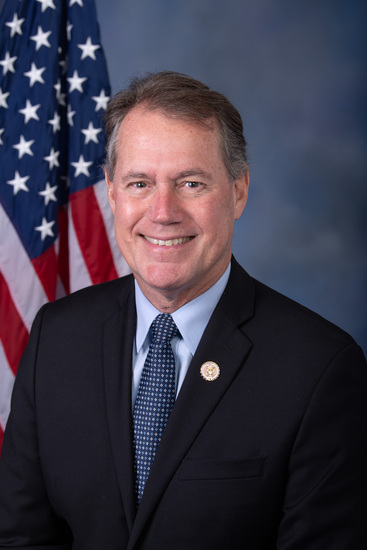
Rep. Ed Case
Sponsored bills
Maddy summaryThe Engage the Pacific Act establishes a new U.S. government committee to coordinate engagement with civil society organizations (like community groups, media, and environmental groups) across Pacific Island nations (including Fiji, Samoa, and Palau). It creates two key programs: the Indo-Pacific Media Advancement Program ($4 million annually) to strengthen independent journalism and counter disinformation, and the Pacific Islands TRADES Program ($10 million annually) to fund workforce training in sectors like tourism and fisheries. The bill requires reports from the State Department and USAID on American Spaces facilities, strategic communications, and how U.S. efforts align with Pacific priorities. These provisions directly affect U.S. agencies, Pacific Island civil society groups, and the delivery of U.S. foreign assistance in the region.
Maddy summaryThis bill establishes a Coordinator within the State Department to manage the relocation and resettlement of eligible Afghan allies and to assist U.S. citizens and lawful permanent residents in Afghanistan who seek U.S. support to leave the country. The Coordinator can hire temporary staff (preferring Foreign Service appointments), enter contracts, and coordinate with other federal agencies to use their funds for these efforts. The Coordinator must notify relevant congressional committees 15 days before transferring funds between agencies. The position and its authorities will expire three years after the bill becomes law.
Maddy summaryHR 3012 reauthorizes U.S. programs under the North Korean Human Rights Act of 2004 through 2028, extending funding and reporting requirements for existing initiatives. It directs the U.S. Agency for Global Media to continue broadcasting independent news into North Korea, supports transparent humanitarian aid delivery, and urges China to halt forcible repatriation of North Korean refugees. The bill directly affects North Korean citizens by promoting information access and refugee protection, and North Korean refugees in China by advocating for UNHCR access and refugee rights. Key provisions include extending program deadlines, reinforcing U.S. diplomatic efforts on human rights, and calling for swift confirmation of the Special Envoy on North Korean Human Rights Issues.
Maddy summaryHRES 837 is a non-binding resolution passed by the U.S. House of Representatives on November 1, 2023, reaffirming U.S. commitment to the Philippines. It specifically calls for invoking the U.S.-Philippines Mutual Defense Treaty if Philippine assets (including Coast Guard vessels) are attacked in the South China Sea, urges joint U.S.-Philippines patrols in the region, and objects to China's disputed territorial claims. The resolution does not create new laws or funding but expresses congressional support for existing defense agreements and diplomatic positions. It directly addresses U.S. foreign policy toward the Philippines and the South China Sea disputes.
Maddy summaryThe Public Land Search and Rescue Act (HR 9165) creates a federal grant program to fund remote search and rescue operations on public lands managed by the Department of the Interior or Agriculture. It provides up to 75% federal funding for eligible recipients - such as states, local governments, or their designees - to purchase equipment, maintain gear, or reimburse costs for locating and rescuing people lost or injured in remote areas. The program prioritizes applications from regions with high visitor-to-resident ratios, focusing on areas where search and rescue demand is greatest. This legislation directly supports state and local search teams conducting critical safety operations on federal lands.
Maddy summaryThe Critical Minerals Security Act of 2024 requires the U.S. Secretary of the Interior to submit regular reports to Congress assessing global critical mineral and rare earth element resources. These reports must detail which resources are controlled by foreign entities of concern (like adversarial nations), owned by U.S. allies, or underutilized, including mine output, ownership structures, and reasons for lack of commercial mining. The bill also establishes a process for U.S. persons to notify the government of planned divestments in foreign mining operations and seek non-adversarial buyers, while mandating a strategy to collaborate with allied nations on advanced mining and processing technologies. It directly affects federal agencies, U.S. entities operating in foreign mineral sectors, and U.S. government oversight of critical supply chains.
Maddy summaryHRES 1566 is a symbolic House resolution honoring all U.S. veterans on Veterans Day 2024. It recognizes the service and sacrifice of the estimated 15.8 million veterans living in the U.S. as of 2023, including those who served in conflicts from World War II to post-9/11. The resolution calls on the American public to observe Veterans Day to acknowledge veterans' role in preserving national freedom. As a non-binding resolution, it has no direct policy impact but formally expresses congressional recognition of veterans' contributions.
Maddy summaryThis resolution (HRES 1558) is a symbolic House of Representatives measure supporting October as "National Domestic Violence Awareness Month." It does not create new laws or allocate funding but formally expresses the House's support for raising awareness about domestic violence and its impacts, and urges continued backing for existing programs that address domestic violence. The resolution cites statistics on domestic violence prevalence (e.g., 24 people per minute affected by intimate partner violence) to underscore the importance of the observance. It directly affects public awareness efforts but does not change policies or directly impact individuals.
Maddy summaryHRES 1555 is a symbolic House resolution condemning the spread of false claims and malicious rumors about disaster response efforts, which have led to credible threats against FEMA personnel and disrupted aid for survivors. It specifically references incidents after Hurricanes Helene and Milton, including a pause in North Carolina door-to-door assistance due to safety threats and antisemitic targeting of officials. The resolution formally condemns those spreading disinformation for political gain and commits Congress to supporting FEMA’s efforts to combat misinformation and promote accurate recovery information. As a non-binding resolution, it does not create new laws but expresses congressional support for protecting disaster response workers and ensuring survivors receive timely aid.