

Maddy summaryThis bill requires Medicare Advantage plans to implement electronic prior authorization systems by 2027 and publish detailed data on their approval and denial rates for medical services by 2026. It directly affects Medicare Advantage plans (private insurers offering Medicare coverage) and their enrollees (seniors 65+), mandating transparency about prior authorization decisions, processing times, and appeal outcomes. Key provisions include requiring plans to report annual statistics on request approvals/denials, average processing times, and use of technology, with this data published publicly by the Centers for Medicare & Medicaid Services. The bill also sets timelines for plan responses to prior authorization requests and mandates reports to Congress on implementation and impacts.
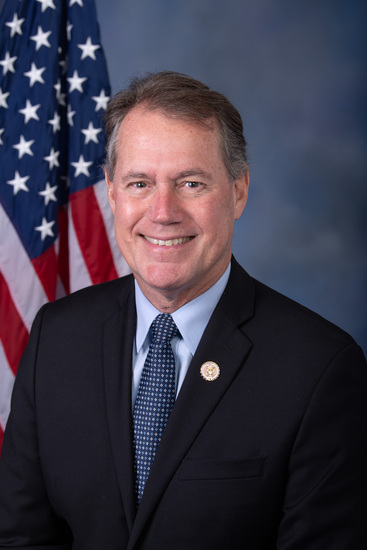
Rep. Ed Case
Sponsored bills
Maddy summaryThis bill, the PATCH Act (Preserving Access To Care in Hawaii Act), sets a minimum payment rate for Medicare physician services in Hawaii. It directly affects healthcare providers who treat Medicare patients in Hawaii by ensuring their reimbursement rates won't fall below 1.5 times the standard rate. The key provision requires the Medicare Secretary to adjust the "work geographic index" to 1.5 for Hawaii services starting January 2025 if the calculated rate would be lower. This change aims to maintain current payment levels for physicians in Hawaii without increasing overall federal spending.
Maddy summaryHR 8018, the ABC Act, requires Medicare, Medicaid, CHIP, and Social Security Administration to review their eligibility processes, forms, and communications to simplify interactions for family caregivers. It targets reducing duplicate paperwork, improving website accessibility (including ADA compliance), and enhancing staff communication - such as shorter call waits and multilingual support - to better serve caregivers supporting individuals enrolled in these programs. The review must include input from caregivers and organizations, with results reported to Congress within one year. This procedural bill does not change program benefits but mandates systemic improvements to reduce administrative burdens.
Maddy summaryHR 7442 directs the Government Accountability Office (GAO) to study whether Medicare could cover medical services provided in the Philippines for beneficiaries already enrolled in Medicare Part B or Part C. The study must analyze potential cost savings compared to U.S. care (2025-2034) and identify required legislative/administrative changes to expand coverage. This bill only authorizes a study and does not change current Medicare benefits or eligibility.
Maddy summaryThis bill requires Medicare to provide clear outreach and education so Medicare beneficiaries (enrolled in Part A, Part B, or Medicare Advantage plans) can authorize family caregivers to access their health information via 1-800-MEDICARE. It mandates the inclusion of a specific authorization form (CMS-10106) in Medicare notices and on Medicare.gov, along with training for call center staff. The Secretary must also share best practices to prevent fraud related to caregiver access and make materials available in non-English languages. It directly affects beneficiaries, their family caregivers, healthcare providers, and Medicare call center operators.
Maddy summaryThis bill expands eligibility for certain tax-advantaged health accounts to cover medical expenses for parents. It amends the tax code to allow individuals to use funds from Health Savings Accounts (HSAs), Flexible Spending Accounts (FSAs), and Health Reimbursement Arrangements (HRAs) for qualified medical care of their parents or their spouse's parents - previously limited to immediate family members. The changes apply to expenses incurred after December 31, 2023, directly benefiting adult caregivers (like children supporting elderly parents) who use these accounts for parental healthcare costs. The bill makes no new funding commitments but adjusts existing account rules to reduce out-of-pocket costs for caregivers.
Maddy summaryThis bill adds 1,000 new medical residency positions (500 in 2024 and 500 across 2025-2028) specifically for training in addiction medicine, addiction psychiatry, or pain medicine. It directly affects hospitals that have or will establish approved residency programs in these fields. Hospitals receiving these positions must use them for addiction-related training for five years, with unused positions redistributed if requirements aren't met. The goal is to expand the healthcare workforce addressing the substance use disorder crisis by increasing specialized training opportunities.
Maddy summaryHR 6447, the Saving NEMO Act, prohibits the taking, importing, exporting, or trading of specific marine reef species designated as "covered coral reef species" by the Secretary of the Interior. It directly affects businesses in the aquarium and curio trade, importers, exporters, and others involved in harvesting or selling these species. The bill designates species based on CITES Appendix II listings or joint determinations by the Interior and Commerce Secretaries that their trade threatens sustainability, with exceptions for scientific research, certified breeding programs, and sustainable aquaculture facilities. Enforcement includes civil penalties up to $25,000 per violation, criminal fines, and allows citizens to file lawsuits to stop violations.
Maddy summaryThis bill extends federal welfare program eligibility to the Northern Mariana Islands (CNMI), granting its residents access to the same family assistance benefits previously available only to U.S. states. It authorizes an annual federal grant of $1.631 million to the CNMI for its family assistance program, requiring the territory to submit a 3-year plan outlining benefit delivery, avoiding duplicate aid, and promoting employment opportunities for recipients. The bill also adjusts matching grant formulas to include the CNMI ($2.131 million annually) and provides $5 million for initial child support program development. These changes directly affect CNMI residents and its government by integrating the territory into federal welfare administration under existing Social Security Act provisions.
Maddy summaryHR 6407, the Medical Nutrition Therapy Act of 2023, expands Medicare coverage to include medical nutrition therapy for more chronic conditions beyond current limits. It directly affects Medicare beneficiaries with conditions like obesity, hypertension, dyslipidemia, eating disorders, and others not previously covered under Part B. The bill amends Medicare rules to allow coverage for prevention, management, or treatment of these conditions by a wider range of providers, including registered dietitians and clinical psychologists. This change would make medically necessary nutrition services available for conditions listed in the bill, such as diabetes, cardiovascular disease, and HIV, as determined by the Secretary.