

Maddy summaryHRES 341 is a symbolic House resolution expressing support for Earth Day, not a substantive bill. It urges the President to issue an Earth Day proclamation, encourages Americans to address environmental challenges (like climate change and litter), and calls for rejoining the Paris Agreement - though these are non-binding recommendations with no legal force. The resolution references historical environmental legislation (like the Clean Air Act) but does not create new policies, allocate funds, or change regulations. It directly affects no specific group, as it solely serves to affirm environmental values through symbolic recognition. (Note: The document header incorrectly lists "Federal Water Pollution Control Act" as the bill text, but this is a formatting error; the actual resolution is about Earth Day.)
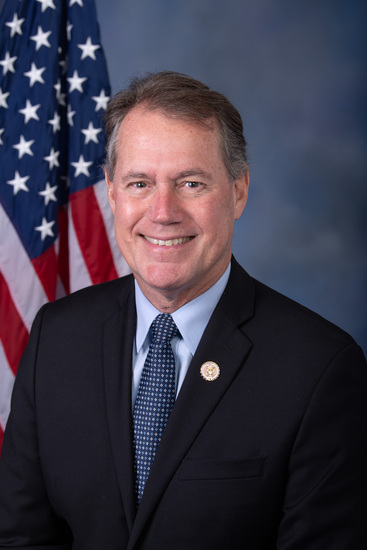
Rep. Ed Case
Sponsored bills
Maddy summaryHRES 340 is a ceremonial resolution recognizing April 2025 as "Community College Month" to celebrate the role of over 1,000 U.S. community colleges. It highlights these institutions' work in providing affordable higher education, workforce training, and economic support - serving 10.2 million students annually and contributing significantly to national economic growth (e.g., generating $898 billion in alumni income in 2020). The resolution emphasizes community colleges' accessibility (average $3,990 tuition for in-district students, 10-mile average student commute) and their role in workforce development across sectors like healthcare and manufacturing. As a non-binding recognition, it does not create new laws or funding.
Maddy summaryHR 2975, the Broadband Incentives for Communities Act, creates a federal grant program to help local governments (cities, counties, and tribal entities) speed up approvals for broadband infrastructure projects. The bill provides competitive grants to eligible local governments that adopt specific streamlined processes, such as using micro-trenching, limiting permit fees to actual costs, and creating clear written policies for faster approvals. This directly affects communities seeking to expand broadband access, particularly in rural and low-income areas, by reducing delays in deploying fiber and wireless networks. The grants fund training, technology, and staff for local governments to handle increased permit volumes efficiently. A new advisory council will also develop solutions for broadband deployment challenges facing local jurisdictions.
Maddy summaryHR 2518 expands access to existing agricultural credit programs for businesses supporting the fishing industry. It amends the Farm Credit Act of 1971 to allow Farm Credit Banks and Production Credit Associations to provide loans and financial services to businesses that supply services directly related to the operating needs of fishermen or seafood harvesters (like equipment suppliers or processing services). This change specifically includes these service providers under the same eligibility rules currently applied to fishing producers themselves. The bill does not create new funding but broadens the scope of existing credit mechanisms to better serve the full fishing supply chain.
Hot Foods Act of 2025 This bill expands the Supplemental Nutrition Assistance Program (SNAP) to permit the use of SNAP benefits to purchase hot foods or hot food products ready for immediate consumption.
Maddy summaryHR 2947, the Deafblind DATA Act, requires the U.S. Census Bureau to publish an annual data table starting in 2026 showing individuals who reported both hearing and vision loss in the American Community Survey. The table will include demographic details (sex, race, age) and economic factors (employment, education, income, poverty status) for people in each state, without revealing personal identifiers. This bill directly addresses the lack of centralized data on the deafblind population (estimated at 10,000 children and 40,000 adults by the National Center on Deafblindness), which currently prevents accurate service planning. The Census Bureau must also report to Congress within 180 days on feasibility of expanding such data collection. The Act does not change existing services but aims to improve understanding of this population's needs through better data.
Maddy summaryThis bill amends the Elementary and Secondary Education Act to explicitly include accounting education as part of a well-rounded K-12 curriculum. It requires schools to develop and strengthen programs teaching accounting, including increasing access to high-quality accounting courses for students from groups historically underrepresented in accounting careers. The key provision inserts specific language into existing law, directing schools to promote accounting career awareness and expand course availability through grade 12. This directly affects K-12 students, particularly those from underrepresented backgrounds, by making accounting education a recognized component of career-focused learning.
Maddy summaryHR 2837 establishes an Advisory Council under the Department of Health and Human Services to improve access to existing resources for victims of gun violence. The council, composed of federal agency heads and appointed victims/support professionals, will assess needs, identify effective programs, and compile a public resource hub with contact information for medical, financial, mental health, legal, and government support services. It requires a detailed report within 180 days of enactment and a follow-up report within two years, focusing on gaps in current assistance and coordination. The bill directly affects individuals defined as victims of gun violence (including those wounded, threatened, witnessing incidents, or related to victims) and aims to connect them to existing federal, state, and nonprofit resources without authorizing new funding. The council will sunset after five years.
Maddy summaryHR 2831, the Small Business Energy Loan Enhancement Act, doubles the maximum loan amounts for certain small business energy projects under the Small Business Investment Act of 1958, raising the cap from $5.5 million to $10 million for two specific loan categories. This directly affects small businesses seeking financing for energy-related investments, such as efficiency upgrades or renewable energy installations. The bill requires the Small Business Administration (SBA) to annually report to Congress on which industries and geographic areas receive these loans. These changes aim to increase access to capital for qualifying energy projects without altering eligibility criteria.
Maddy summaryHR 2881, the COAST Anti-Drilling Act of 2025, prohibits the federal government from issuing new oil and gas leases in four specific coastal planning areas: the North Atlantic, Mid-Atlantic, South Atlantic, and Straits of Florida. This directly affects the Department of the Interior (specifically the Secretary) and oil and gas companies seeking to explore or develop resources in these regions. The bill amends the Outer Continental Shelf Lands Act to ban all new leasing authorizations in these areas, as defined by the 2024-2029 leasing program notice. It does not affect existing leases or operations but prevents future development in these designated coastal zones.