

Maddy summaryThis bill expands access to employee ownership by modifying the Small Business Act to allow S corporations owned by employee stock ownership plans (ESOPs) to retain small business status, even when an ESOP owns over 49% of the company. It creates a new Treasury Department office to provide education and technical assistance for S corporations establishing ESOPs, and establishes a Labor Department Advocate for Employee Ownership to coordinate outreach and resolve disputes. These changes directly affect S corporations transitioning to ESOP ownership and their employees, who gain retirement benefits through ESOP accounts. The bill aims to increase employee ownership by removing eligibility barriers and improving support for businesses adopting this model.
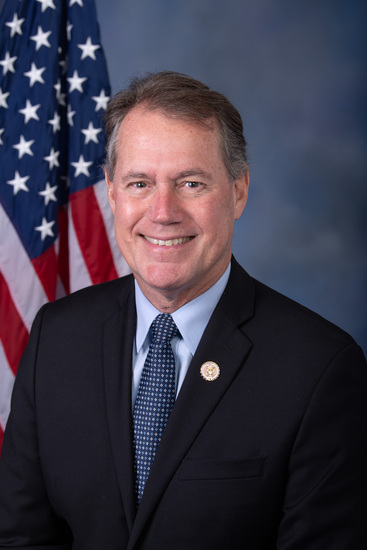
Rep. Ed Case
Sponsored bills
Maddy summaryHR 3124 establishes a National Science Foundation grant program to increase participation of women, underrepresented minorities (including Black, Hispanic, Native American, Pacific Islander, and Asian subgroups), LGBTQ+ individuals, and people with disabilities in STEM fields. The bill authorizes $15 million annually for grants to organizations that implement activities like mentoring programs, STEM internships, online workshops, and outreach to K-12 students. These grants specifically target efforts to improve recruitment, retention, and workforce representation for groups facing documented underrepresentation in STEM education and careers. The program directly affects educational institutions, nonprofits, and community organizations working to support these underrepresented groups through evidence-based initiatives.
Maddy summaryThe Equality Act (HR 15) amends federal civil rights laws to explicitly prohibit discrimination based on sexual orientation and gender identity in employment, housing, public accommodations, credit, and jury service. It expands existing protections under the Civil Rights Act of 1964 by adding sexual orientation and gender identity as protected characteristics under sex discrimination prohibitions. The bill clarifies that discrimination against LGBTQ people is a form of sex discrimination, consistent with the Supreme Court's Bostock decision, and adds specific definitions for gender identity and sexual orientation. This legislation directly affects businesses, employers, housing providers, financial institutions, and government entities that serve the public. The bill creates a more comprehensive legal framework to address discrimination that LGBTQ people face in multiple aspects of daily life.
Maddy summaryHR 3067, the Arctic Refuge Protection Act, repeals the existing oil and gas program for the Arctic National Wildlife Refuge (ANWR) and designates approximately 1.56 million acres of the refuge's Coastal Plain as wilderness. This directly affects federal management of the ANWR, halting potential oil drilling in the designated area. The bill requires the Secretary of the Interior to administer the newly designated wilderness area under the Wilderness Act, treating it as part of the existing wilderness within ANWR. The change prevents future oil and gas development on this specific portion of the refuge.
Maddy summaryThis bill amends the Visit America Act to require the Assistant Secretary of Commerce for Travel and Tourism to specifically identify and promote music tourism destinations both domestically and internationally. It directs the agency to highlight music-related attractions (like venues, studios, and museums) and events (such as festivals and concerts) in travel promotion efforts, including for international visitors. The bill also mandates annual reports to Congress on progress toward these tourism goals. It formally defines "music tourism" as travel to music-related sites or events, aligning with the bill's focus.
Maddy summaryThe Ocean Regional Opportunity and Innovation Act of 2025 establishes regional "Ocean Innovation Clusters" in seven designated areas (including Great Lakes, Gulf of Mexico, and five National Marine Fisheries Service regions) to advance the Blue Economy. These clusters, led by nonprofit organizations and including businesses, academic institutions, Tribal groups, and government agencies, will develop physical "Ocean Innovation Centers" offering shared workspaces, workforce training, and support for sustainable industries like seafood, ocean energy, and coastal resilience. The bill authorizes $10 million annually in grants (2026-2030) to help clusters become self-sustaining, focusing on equitable growth, small business development, and cross-sector collaboration. It prioritizes projects serving underserved communities and enhancing economic opportunities across coastal regions.
Maddy summaryHR 3045, the West Bank Violence Prevention Act of 2025, imposes U.S. sanctions on foreign individuals and entities responsible for violence, displacement, or property destruction in the West Bank. It targets those directly involved in attacks on civilians, forced displacement, or property seizures, including settler leaders or officials of groups engaged in such activities. Key provisions require freezing assets of sanctioned individuals within U.S. jurisdiction and blocking their entry into the United States via visa restrictions. The law applies to foreign nationals meeting specific criteria outlined in the bill, not U.S. citizens or entities.
Maddy summaryHR 2993, the ESOP Funding for SBA Position Act of 2025, creates a new position within the Small Business Administration (SBA) to assist small businesses in establishing Employee Stock Ownership Plans (ESOPs). This role provides guidance on ESOP setup - including tax treatment, regulatory compliance, and funding options - and coordinates with agencies like the Department of Labor to improve support. The SBA Administrator must report annually to Congress on the position’s activities, including the number of small businesses assisted and policy recommendations. The bill authorizes $500,000 for the first year to fund this position, with ongoing appropriations as needed.
Maddy summaryHR 3005, the Global Fragility Reauthorization Act, extends key U.S. funding for conflict prevention and stabilization programs through 2030. It requires annual meetings of senior officials (including State Department, USAID, Defense, and Treasury leaders) to align aid strategies with current U.S. policy priorities in designated "priority countries." The bill also authorizes existing Economic Support Fund resources to cover monitoring, evaluation, and learning activities for these programs. These changes directly affect U.S. agencies managing international aid in fragile regions, ensuring sustained support for efforts to prevent violence and stabilize communities.
Maddy summaryHR 3024, the "Stamp Out Invasive Species Act," creates a semipostal stamp sold by the U.S. Postal Service to raise funds for programs combating invasive species. The public can purchase this stamp at a slight premium (up to 25% above standard postage), with all proceeds split equally between the Department of the Interior and the Department of Agriculture for invasive species management. The stamp would be available for sale for two years after enactment, with funds transferred to the agencies at least twice yearly. This bill directly affects the public through voluntary stamp purchases and the agencies through dedicated funding for ecosystem protection.