

Maddy summaryThis bill extends existing federal reentry programs under the Second Chance Act through 2030, continuing funding for services supporting people returning to communities after incarceration. It specifically maintains grants for state/local reentry projects (including substance use treatment, housing, and peer recovery services), family-based substance abuse treatment, prison/jail educational programs, career training, and community mentoring by nonprofits. The bill updates program timelines from their previous 2019-2023 authorization period to 2026-2030 without altering the core services provided. It directly affects state/local agencies, prisons, and nonprofit organizations administering these reentry programs. The legislation focuses solely on extending current funding mechanisms, not changing program requirements or creating new initiatives.
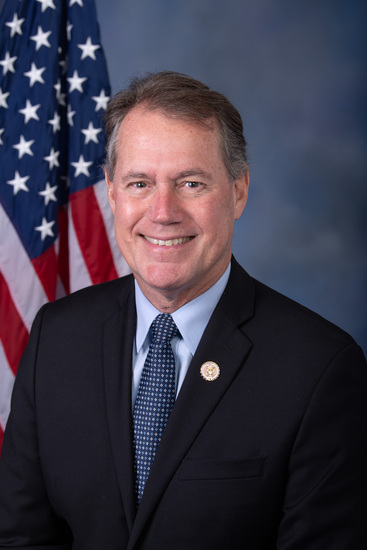
Rep. Ed Case
Sponsored bills
Maddy summaryThis bill prohibits the U.S. military from discriminating against service members or applicants based on gender identity. It bans policies that would deny service, involuntarily separate members, deny medically necessary healthcare, or require service in a gender different from one's identity. The law defines "gender identity" broadly to include a person's internal sense of gender, appearance, and mannerisms, regardless of sex assigned at birth. It directly affects transgender and gender-diverse individuals currently serving or seeking to serve in the Armed Forces.
Maddy summaryThis bill amends federal education law to require K-12 schools to include Asian American, Native Hawaiian, and Pacific Islander (AANHPI) history in American history and civics education. It directs the Department of Education to update curriculum standards, teacher training programs, and national assessments to ensure AANHPI contributions and experiences are integrated into existing history lessons. The policy affects all public schools receiving federal education funding by mandating specific inclusion of AANHPI history alongside traditional American history content. This change aims to address historical gaps in curricula that have excluded these communities' diverse roles and experiences.
Maddy summaryThe Strengthening the Quad Act directs the U.S. State Department to create a strategy within 180 days for deepening cooperation with the Quad (U.S., Australia, India, and Japan), covering democratic leadership, current initiatives (like infrastructure, climate, and supply chains), and barriers to collaboration. It also establishes a formal Quad Inter-Parliamentary Working Group, requiring the U.S. to form a congressional delegation of up to 24 members (split evenly between House and Senate, with committee representation) to meet annually with Quad counterparts. The strategy must include specific recommendations for Congress to address obstacles and secure new resources for Quad initiatives. This bill directly affects U.S. foreign policy coordination with Quad nations and congressional committees overseeing foreign affairs.
Maddy summaryHR 3485 repeals a specific requirement in the Small Business Act (section 8(a)(11)) that previously mandated small businesses receiving federal construction contracts through the 8(a) program must award subcontracts within the same county or state where the main project is performed. This change eliminates the geographic restriction on subcontracting for these federal construction contracts. The bill directly affects small businesses participating in the 8(a) program that secure federal construction work, allowing them more flexibility in selecting subcontractors nationwide. The key mechanism is the removal of this specific statutory provision from the Small Business Act.
Maddy summaryHR 3397, the Pacific Ready Coast Guard Act, establishes a new Center of Expertise in Indo-Pacific Maritime Governance within the Coast Guard to provide education, training, and research on maritime governance best practices, particularly focused on building partner capacity in the Indo-Pacific region. The bill requires the Coast Guard Commandant to submit annual plans (by December 31) and budget displays (by February 15) to specific congressional committees detailing Pacific operations, resource needs, and projected demand for Coast Guard engagement. It also mandates three additional reports within specific timeframes: feasibility of a standing Indo-Pacific maritime group, a plan for forward operating bases, and an assessment of Coast Guard attaché staffing in the region. These provisions aim to enhance coordination with the State and Defense Departments and improve the Coast Guard’s operational planning and resource allocation in the Pacific.
Stronger Communities through Better Transit Act This bill requires the Department of Transportation (DOT) to establish a grant program to support operating projects for public transportation and related service improvements, particularly in underserved communities and areas of persistent poverty. Specifically, the bill requires DOT to allocate funding under the program for urbanized areas, states, and Indian tribes that are recipients of funds under either the Federal Transit Administration's (FTA's) Urbanized Area Formula Funding program or Formula Grants for Rural Areas program. Eligible recipients may use funding for operating costs associated with projects that improve public transportation service for transit-dependent populations and support increased transit ridership (e.g., service expansion, information technology enhancements, and workforce development). DOT must apportion the funding so that recipients receive funds that are proportional to their share of operating costs. The bill also provides for an increased federal cost share for operating assistance for projects or programs carried out in areas of persistent poverty or underserved communities. DOT must set up a multimodal access measurement interface for public agencies to aid transit agencies in determining and reporting on access to jobs and essential services. A grant recipient must (1) report specific information to the FTA for inclusion in the National Transit Database, and (2) survey transit riders and non-riding residents regarding transit service improvements. Further, the bill expands the purposes of the public transportation programs to include supporting public transportation's role in combating climate change through growing/retaining transit ridership.
Maddy summaryThis bill amends the South Pacific Tuna Act of 1988 to update U.S. fishing regulations in the South Pacific region. It primarily affects U.S. commercial tuna fishing vessels operating in the region, as well as Pacific Island nations with whom the U.S. has fishing agreements. Key provisions include revised definitions for fishing areas and vessels, updated prohibited fishing activities, new license requirements, and enhanced technical assistance for Pacific Island nations. The bill also establishes clearer enforcement procedures, penalties for violations, and dispute resolution mechanisms under the treaty framework.
Maddy summaryHRES 407 is a symbolic House resolution designating May 10, 2025, as "National Asian American, Native Hawaiian, and Pacific Islander Mental Health Day." It directly recognizes the mental health disparities faced by AANHPI communities, including lower service utilization rates and higher youth suicide rates. The resolution encourages federal, state, and local health agencies to improve mental health awareness and access for these communities. It does not create new laws or funding but formally supports efforts to address cultural barriers in mental health care. The designation aligns with May's existing observances of AANHPI Heritage Month and Mental Health Awareness Month.
Maddy summaryHR 3332, the Pacific Partnership Act, requires the U.S. President to develop a formal strategy for engagement with Pacific Island nations by 2026 and again by 2030. The strategy must outline U.S. diplomatic, defense, and economic goals; assess regional threats like natural disasters and foreign military activity; and detail resource plans for addressing these challenges. It mandates consultation with Pacific Island governments, regional organizations like the Pacific Islands Forum, and U.S. allies such as Australia and Japan. The bill does not create new programs but establishes a structured framework for U.S. policy coordination in the region, directly affecting U.S. government agencies and indirectly shaping U.S. relations with Pacific Island nations.