

Maddy summaryThe FEMA Independence Act of 2023 would restructure the Federal Emergency Management Agency (FEMA) as a cabinet-level independent agency directly reporting to the President, rather than operating within the Department of Homeland Security (DHS). This would transfer all FEMA functions to the new independent agency within 120 days, establishing a Director appointed by the President with Senate confirmation who oversees FEMA's mission of disaster preparedness, response, and recovery. The bill includes provisions to maintain continuity of operations and personnel during the transition, and updates references to FEMA in other laws to reflect its new status as an independent agency. The change aims to strengthen FEMA's focus on emergency management by removing it from the DHS structure.
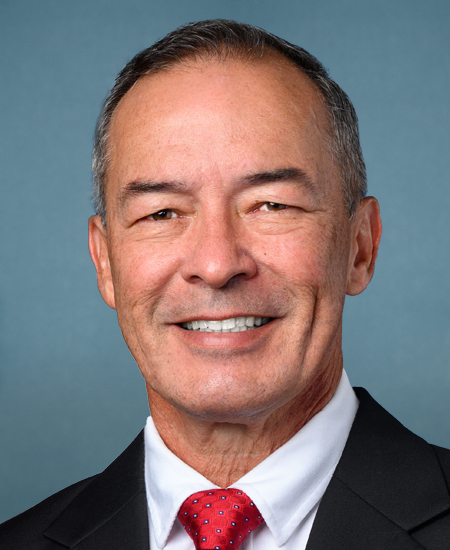
Rep. James C. Moylan
Sponsored bills
Maddy summaryHR 5590, the "No More Hard Stops Act," requires federal officials testifying before congressional committees to remain at the hearing until every committee member present has had the opportunity to ask a question. It prevents officials from leaving early ("hard stops") before all members can question them, ensuring all members receive equal questioning time. This procedural rule applies to officials mandated by law to regularly testify before committees and takes effect after the bill's enactment. The bill focuses solely on the process of committee hearings, not on substantive policy changes.
Maddy summaryThis bill raises the mandatory minimum prison sentence for trafficking minors under 18 from the previous term to **not less than 25 years or life imprisonment** under federal law (18 U.S.C. § 1591). It directly affects individuals convicted of trafficking children, increasing penalties for this specific offense. The key mechanism is amending the existing sentencing provision to eliminate lower minimums and mandate these severe penalties. The bill focuses solely on strengthening criminal penalties for child trafficking, with no new funding or program requirements.
Maddy summaryHR 5577, the FACE Act Repeal Act of 2023, would repeal a federal law (Section 248 of Title 18, U.S. Code) that made it a crime to block access to abortion clinics or threaten clinic staff. This repeal would remove criminal penalties for obstructing access to clinics, affecting abortion providers, clinic staff, and individuals attempting to access or block clinic entrances. The bill specifically targets the repeal of this prohibition, applying to prosecutions pending or initiated after the law's enactment. It does not change other abortion-related laws or create new policies.
Maddy summaryHR 5059 would allow eligible states to receive their emergency food assistance funding as cash instead of in-kind commodities, enabling them to directly purchase food from private suppliers. Currently, the federal government buys and distributes food to states; this bill would let states elect to use cash for their own purchases in the commercial marketplace. The bill defines "eligible states" based on criteria from the 2018 Agriculture Improvement Act and applies only to states that choose this option. This change provides states with greater flexibility in sourcing food for emergency feeding programs.
Maddy summaryHR 4831, the Fair Pay for Federal Firefighters Act, increases pay for wildland firefighters employed by the Forest Service or Department of the Interior during fiscal years 2024-2025. It establishes special pay rates (ranging from 1.5% to 42% above standard General Schedule rates, depending on grade) that replace regular pay for these workers. The bill also creates a new "incident response premium pay" provision, entitling eligible firefighters to 450% of their hourly rate for each day deployed on qualifying wildfires or fire-related incidents, capped at $9,000 annually per employee. This premium pay is excluded from calculations for benefits like leave accruals, overtime, or retirement. The bill directly affects federal wildland firefighters whose duties focus on forest, range, or wildland fires (not structural fires).
This bill extends the eligibility or applicability of various Department of Veterans Affairs (VA) programs and benefits. First, the bill extends from three to five years the authority for additional licensed health care professionals (i.e., physician assistants, nurse practitioners, audiologists, and psychologists) to perform medical disability examinations as part of the existing VA pilot program related to the use of contract physicians for disability examinations. Currently, when an individual transfers fewer than 12 credits from a program of education that is closed or disapproved, the individual is deemed to have not received those credits, and no charge from the individual's entitlement to education assistance may be made for that period of enrollment. Under the bill, this period of relief for those affected by a closure or disapproval is extended by two years to apply to programs that close or discontinue before September 30, 2025. The bill extends through FY2028 the authorization for VA emergency preparedness for public health emergencies. The bill also extends the applicability of certain loan fee rates through November 15, 2031, under the VA's home loan program.
Maddy summaryHRES 677 is a symbolic House resolution condemning Russia for actions that worsen global food insecurity. It specifically targets Russia's invasion of Ukraine, including its blockade of Ukrainian Black Sea ports, attacks on grain infrastructure, and suspension of the Black Sea Grain Initiative - measures that disrupted Ukraine's role as a major global grain exporter (supplying 11% of world cereals). The resolution demands Russia cease targeting grain facilities, resume participation in the Grain Initiative, and stop weaponizing food shortages. It affirms that Russia's actions, not sanctions, are the cause of rising global food insecurity, which the resolution links to U.S. national security. This resolution does not enact new laws but formally expresses congressional opposition to Russia's tactics.
Maddy summaryHR 4003, the Let Freedom Sing Act, removes permit requirements for singing the national anthem in specific public areas of the U.S. Capitol, including National Statuary Hall, when it does not disrupt government operations. The bill directly affects individuals who wish to sing the anthem in these federally owned spaces without prior authorization. It prohibits Capitol Police or the Sergeant at Arms from requiring permits for such singing and overrides local D.C. code restrictions in these areas. The law explicitly states singing the anthem in designated Capitol spaces is not considered disruptive protest under the First Amendment.
Equality in the Halls of Congress Act This bill authorizes the President to invite each U.S. territory to provide and furnish no more than two statues for placement in National Statuary Hall.