

Maddy summaryThis bill requires heads of Executive agencies who serve on the National Security Council (like the Secretary of Defense or Homeland Security) to notify key government officials within 24 hours if they become unable to perform their duties due to illness. If they fail to meet this deadline, they must submit a detailed report within 30 days explaining the delay, listing acting officials and resources used, and documenting the incapacity period. It directly affects top national security agency leaders and ensures transparency during leadership gaps. The law aims to prevent confusion about who is temporarily in charge during medical emergencies involving critical national security roles.
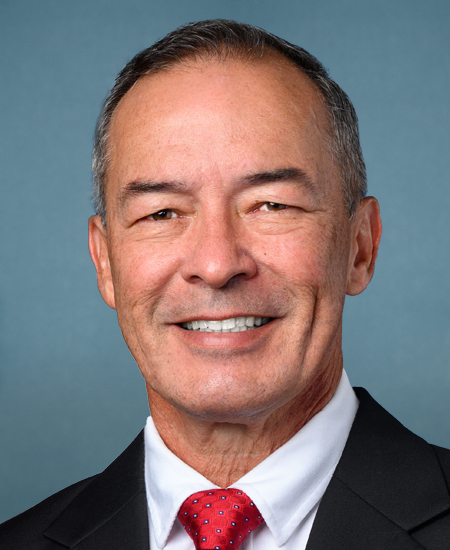
Rep. James C. Moylan
Sponsored bills
Maddy summaryThis bill extends federal welfare program eligibility to the Northern Mariana Islands (CNMI), granting its residents access to the same family assistance benefits previously available only to U.S. states. It authorizes an annual federal grant of $1.631 million to the CNMI for its family assistance program, requiring the territory to submit a 3-year plan outlining benefit delivery, avoiding duplicate aid, and promoting employment opportunities for recipients. The bill also adjusts matching grant formulas to include the CNMI ($2.131 million annually) and provides $5 million for initial child support program development. These changes directly affect CNMI residents and its government by integrating the territory into federal welfare administration under existing Social Security Act provisions.
Maddy summaryThis bill provides continuing appropriations for federal government operations through January 11, 2024, ensuring funding for ongoing programs and activities. It includes $16 billion for disaster relief and over $21 billion in supplemental funding for Ukraine assistance, covering military aid, economic support, and humanitarian programs. The bill also extends funding for community health centers, Federal Aviation Administration programs, and the Temporary Assistance for Needy Families program through the same date. These funding measures maintain government operations and support critical domestic and international programs during the fiscal year.
Maddy summaryThe Healthy at Home Act of 2023 establishes new standards for addressing indoor residential mold and other health hazards in federally assisted housing. It requires federal agencies to conduct research on mold health impacts, develop model standards for preventing and remediating mold, and create a mapping tool to identify mold-impacted areas. The bill mandates that properties receiving housing assistance maintain decent, safe, and sanitary conditions, with enforcement actions for failing properties, and provides $250 million in preservation grants for housing improvements. It also requires public education campaigns about mold hazards, empowers tenants with information about inspections, and denies tax deductions for properties with failed inspections.
Maddy summaryThis bill adds free PFAS blood testing to Medicare Part B coverage for seniors. It requires Medicare to cover physician-ordered blood tests for perfluoroalkyl and polyfluoroalkyl substances (PFAS) with no out-of-pocket costs starting January 1, 2024. The policy directly affects Medicare beneficiaries (primarily seniors) who receive a doctor's order for PFAS testing. Key provisions amend Medicare rules to include PFAS testing under preventive services with 100% coverage, defining it as a blood test to measure PFAS concentration. This change eliminates cost-sharing for eligible seniors seeking this specific type of screening.
Maddy summaryThe BLUE Pacific Act establishes a comprehensive U.S. strategy to deepen engagement with Pacific Island nations through coordinated assistance across multiple policy areas. It authorizes $250 million annually for fiscal years 2023-2033 to support initiatives in climate resilience, economic development, security capacity building, public health, and democratic governance. The act requires the President to develop a Pacific Islands Partnership Strategy by 2027, with regular congressional reporting, and mandates consultation with Pacific Island nations and regional organizations. This legislation formalizes U.S. efforts to support Pacific Island countries in addressing shared challenges like climate change, economic development, and security while strengthening regional partnerships. The strategy will guide U.S. assistance across multiple agencies to support Pacific Island nations' priorities as outlined in regional frameworks like the 2050 Strategy for the Blue Pacific Continent.
Maddy summaryThe Formula 3.0 Act removes tariffs on infant formula base powder (a dry mixture requiring only vitamins/minerals to become formula) for manufacturers authorized by the FDA to market infant formula in the U.S. It creates a new duty-free tariff classification (1901.90.57) for this base powder, effective 120 days after enactment. This directly affects infant formula manufacturers and importers who meet FDA authorization requirements. The bill modifies U.S. tariff schedules to eliminate duties on specific infant formula components, aiming to reduce import costs for compliant manufacturers.
Maddy summaryThis bill would require Medicare to cover FDA-approved blood tests that screen for multiple cancers simultaneously (like breast, lung, or colorectal cancer) for beneficiaries. It directly affects Medicare recipients aged 65+ who could access these new screenings once per year, without prior authorization. The key provision adds "multi-cancer early detection screening tests" to Medicare's covered services under Part B, defining them as blood tests analyzing cell-free DNA, while maintaining existing coverage for standard screenings like mammograms. The bill does not change current coverage for individual cancer screenings but ensures Medicare keeps pace with new medical technology.
Maddy summaryHR 1675, the Territory Health Revitalization Act, increases funding access for health programs in U.S. territories. It requires 5% of certain Social Security Act health grants to be reserved for territories (like Guam, Puerto Rico, and the Northern Mariana Islands), removes a restriction blocking the Northern Mariana Islands from qualifying, and guarantees at least two grants to territory-based organizations each year. The bill directly affects territorial health programs and local grantees by ensuring dedicated funding and eligibility. These changes take effect October 1, 2023, modifying existing federal grant allocation rules without creating new programs.
Maddy summaryHR 1571, the Compact Impact Fairness Act of 2023, removes barriers to federal benefits for citizens of the Federated States of Micronesia (FSM), the Republic of the Marshall Islands (RMI), and Palau who legally reside in the U.S. under the Compacts of Free Association. The bill amends the 1996 welfare law to add an exception, making these citizens eligible for most federal benefit programs (like Medicaid and food assistance) that previously excluded them due to their immigration status. It eliminates a 5-year waiting period for benefits and removes specific references to Medicaid, applying the change broadly across all federal programs. This directly affects over 30,000 citizens of these nations living in the U.S. under the compacts, who currently face restrictions on accessing critical support. The bill aims to align federal benefit eligibility with the unique status granted by the Compacts of Free Association.