

Maddy summaryHR 3332, the Pacific Partnership Act, requires the U.S. President to develop a formal strategy for engagement with Pacific Island nations by 2026 and again by 2030. The strategy must outline U.S. diplomatic, defense, and economic goals; assess regional threats like natural disasters and foreign military activity; and detail resource plans for addressing these challenges. It mandates consultation with Pacific Island governments, regional organizations like the Pacific Islands Forum, and U.S. allies such as Australia and Japan. The bill does not create new programs but establishes a structured framework for U.S. policy coordination in the region, directly affecting U.S. government agencies and indirectly shaping U.S. relations with Pacific Island nations.
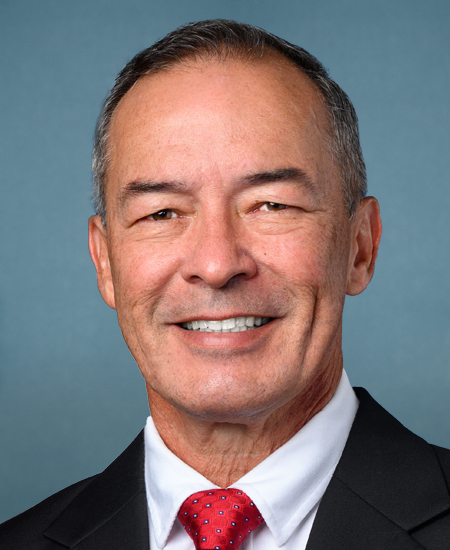
Rep. James C. Moylan
Sponsored bills
Maddy summaryHR 3277, the Ensuring Lasting Smiles Act, requires group health plans and health insurance issuers to cover medically necessary outpatient and inpatient treatments for congenital anomalies or birth defects primarily affecting the eyes, ears, teeth, mouth, or jaw. This includes reconstructive procedures, dental/orthodontic support during treatment, and follow-up care, but excludes purely cosmetic surgery not tied to a medical diagnosis. Cost-sharing (like copays) for these services must not be stricter than for other medical benefits. The law takes effect for plan years beginning January 1, 2026, and mandates insurers to provide notice about this coverage to beneficiaries.
Maddy summaryThe MIL FMLA Act expands the Family and Medical Leave Act to provide military families with additional leave options. It allows eligible employees to take up to 26 workweeks of leave during a 12-month period to care for a covered servicemember (active duty member or veteran), regardless of the employee's family relationship to the servicemember. The bill adds new definitions to include domestic partners, grandparents, siblings, and other extended family members as eligible caregivers, and creates a new "veteran leave" provision for employees who are covered servicemembers needing leave due to service-related serious injury or illness. These changes aim to better support military families by providing more comprehensive leave options for caregiving needs related to military service.
Maddy summaryHR 3278, the Protecting Critical Infrastructure Act, increases criminal penalties for attacks on critical infrastructure and authorizes sanctions against foreign individuals or entities that knowingly access such infrastructure to harm U.S. national security or citizen safety. The bill adds a mandatory minimum 30-year prison term or life imprisonment for offenses involving critical infrastructure (defined in existing law) and requires the President to impose sanctions - including freezing assets and blocking U.S. entry - on foreign persons determined to have accessed infrastructure for harmful purposes. These sanctions apply to foreign individuals or entities, with limited exceptions for U.N. personnel and a 180-day waiver option for national security reasons. The law mandates regulations within 90 days and defines key terms like "critical infrastructure," "foreign person," and "knowingly" to clarify implementation.
Maddy summaryHR 3304, the Providing Child Care for Police Officers Act of 2025, establishes a federal grant program to help law enforcement agencies provide child care for officers' minor children during nonstandard shifts. The program awards competitive 3-year grants to state or local "lead agencies" (like state child care offices) to fund child care services through eligible law enforcement agencies or consortia, with 20% of funds reserved for small agencies (under 200 officers). Grants cover startup costs, provider training, sick child care, facility construction, and other needs, requiring local matching funds (10% to 33% over three years). The program is authorized for $24 million annually from 2026-2030 and includes studies to evaluate its impact on child care access for officers and other first responders.
Maddy summaryThe Disaster Housing Flexibility Act of 2025 creates a new program allowing states to receive block grants instead of individuals applying directly for temporary housing assistance after a major disaster. Under this bill, states that choose to participate would manage housing funds through a block grant from FEMA, replacing the current process where individuals apply for aid under Section 408(c) of the Stafford Act. FEMA must assess housing costs with state input, and the grant amount must cover equivalent assistance to what would have been provided under the existing program. States must report on fund usage and can redirect unused funds to disaster preparedness, directly affecting participating states and residents who would have accessed direct aid under the current system.
Maddy summaryHR 3264 requires the U.S. Treasury to determine within 180 days if Hong Kong should be designated as a "jurisdiction of primary money laundering concern" under U.S. law. It also mandates a 360-day report from the State Department (with Treasury and Commerce) assessing Hong Kong's role in facilitating exports and financial transactions that violate U.S. sanctions on Russia, Iran, and other adversaries. The report must evaluate how Hong Kong enables illegal transfers of goods/technology, assess impacts of Hong Kong's National Security Law on anti-money laundering efforts, and detail U.S.-Hong Kong cooperation on enforcement. This bill directly affects U.S. financial institutions operating in Hong Kong and aims to strengthen oversight of Hong Kong's compliance with U.S. sanctions and export controls.
Maddy summaryThe MEGOBARI Act (HR 36) is a U.S. legislative proposal that aims to strengthen Georgia's democratic development and Euro-Atlantic integration. It directs the U.S. Secretary of State to suspend the U.S.-Georgia Strategic Partnership Commission until Georgia meets specific democratic standards, including respecting citizens' democratic wishes and advancing EU/NATO membership. The bill establishes potential sanctions against Georgian officials who block Euro-Atlantic integration or undermine Georgia's sovereignty, requiring the President to determine if officials have engaged in significant corruption or actions against Georgia's territorial integrity. Additionally, it mandates reports on Russian intelligence assets in Georgia and a 5-year U.S. strategy for bilateral relations, with the Act set to sunset after 5 years from enactment.
Maddy summaryThis bill exempts energy products from certain transportation regulations when moving between the contiguous U.S. and noncontiguous areas like Alaska, Hawaii, Guam, or Puerto Rico. It directly affects energy companies and utilities transporting equipment (such as generators, solar panels, or natural gas) for electricity generation, storage, or distribution in these regions. The key provision removes a requirement that previously applied to "covered noncontiguous trade" (trade between the mainland U.S. and these territories), allowing energy products to be transported on vessels without meeting the standard vessel rules. This simplifies logistics for energy providers serving remote areas but does not change fuel costs or create new funding.
Maddy summary# Summary of the SHIPS for America Act This comprehensive legislation focuses on strengthening the U.S. maritime industry, shipbuilding capacity, and maritime workforce to enhance national security and economic competitiveness. ## Key Areas of Focus 1. **Shipbuilding & Maritime Infrastructure** - Establishes a United States Center for Maritime Innovation to accelerate adoption of commercial technologies - Creates a National Shipbuilding Research Program - Requires an annual survey of anticipated commercial vessel construction - Includes provisions for streamlined environmental reviews of maritime infrastructure 2. **Workforce Development** - Establishes the United States Merchant Marine Career Retention Program to maintain mariner qualifications - Creates Centers of Excellence for Domestic Maritime Workforce Training and Education - Implements military-to-maritime transition programs - Establishes a Maritime Career and Technical Education Advisory Committee 3. **Education & Training** - Expands educational assistance for merchant mariners - Creates eligibility for Naval Postgraduate School for merchant mariners - Establishes maritime education programs from K-12 through higher education - Provides for international exchanges for mariners and naval architects 4. **National Security & Strategic Readiness** - Requires reports on National Defense Reserve Fleet utilization - Includes measures to de-risk the maritime sector from Chinese influence - Enhances shipbuilding capacity for national security needs - Establishes programs to ensure sufficient mariner workforce for national defense 5. **Funding Mechanisms** - Authorizes appropriations from the Maritime Security Trust Fund - Includes funding for workforce programs, education, and shipbuilding initiatives - Establishes specific funding levels for various programs over multiple fiscal years The legislation aims to create a sustainable domestic maritime industrial base that supports both commercial shipping and national defense requirements, with a particular emphasis on developing and retaining a skilled U.S. maritime workforce.