

Maddy summaryThis bill amends the WIC program to replace "drug abuse" with "substance use disorder" throughout its provisions, directly affecting WIC participants who may have substance use disorder. Key mechanisms include creating new nutrition education materials for pregnant individuals with substance use disorder and infants affected by prenatal exposure, establishing an online clearinghouse for these resources, and authorizing $1 million for fiscal year 2026. The changes aim to provide evidence-based, non-judgmental support through updated program materials and outreach. The bill specifically targets WIC participants impacted by substance use disorder, not broader population changes.
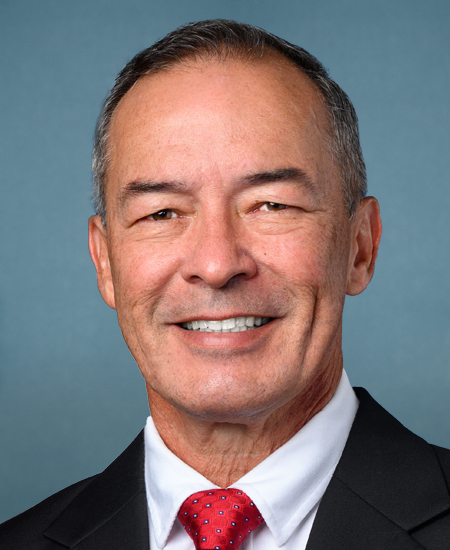
Rep. James C. Moylan
Sponsored bills
Maddy summary# Summary of Proposed Magnuson-Stevens Fishery Conservation and Management Act Amendments This comprehensive legislative proposal contains numerous amendments to the Magnuson-Stevens Fishery Conservation and Management Act, with the following key provisions: ## Fisheries Science and Data Modernization - Establishes a national strategic plan for fisheries data with user-centric systems - Mandates electronic monitoring and reporting in fisheries (replacing or complementing human observers) - Creates an electronic technologies innovation prize competition to accelerate data collection technology development - Requires standardized bycatch reporting program to assess bycatch across fisheries - Establishes a recreational data improvement program to improve timeliness, accuracy, and validation of recreational catch data ## Essential Fish Habitat and Ecosystem Management - Redefines "adverse effect" on essential fish habitat - Creates "habitat areas of particular concern" with specific criteria - Requires Councils to develop habitat protection plans with quantitative targets - Requires consideration of both fishing and non-fishing impacts on habitat ## Forage Fish Conservation - Defines "forage fish" (species that function as a main pathway for energy transfer in marine ecosystems) - Requires Councils to develop lists of unmanaged forage fish and recommend prohibitions on new directed fisheries - Mandates that annual catch limits for forage fish consider diet needs of higher trophic level species ## Bycatch Reduction - Requires conservation and management measures to minimize bycatch - Establishes a national standardized bycatch reporting program - Creates a bycatch reduction engineering program with technical assistance and outreach ## Fishery Management Improvements - Requires objective and measurable criteria for identifying overfished stocks - Mandates development of rebuilding plans with specific timeframes and measurable criteria - Requires consideration of climate change impacts in management decisions - Establishes a "Zeke Grader Fisheries Conservation and Management Fund" for research and adaptation ## International Fisheries Management - Proposes changes to U.S. representation on international fisheries commissions (Atlantic Tunas Convention, Western and Central Pacific Fisheries Convention, Inter-American Tropical Tuna Commission) ## Funding - Authorizes specific funding amounts for 2026-2030 ($698 million to $765 million annually) This legislation represents a significant modernization of U.S. fisheries management, with strong emphasis on data-driven decision making, ecosystem-based management, climate resilience, and technological innovation in fisheries monitoring and management.
Maddy summaryThis resolution (HRES 459) is a symbolic gesture recognizing National Poppy Day, observed the Friday before Memorial Day. It supports the tradition of wearing red poppies as a symbol honoring U.S. military veterans who died in service, referencing the historical connection to World War I poetry and veterans' organizations. The resolution encourages all U.S. citizens, residents, and visitors to wear poppies on this designated day to express appreciation for those who died preserving freedom. It does not create new laws, funding, or obligations, but formally acknowledges the poppy's role in commemorating military sacrifice.
Maddy summaryHR 3646, the Guam Temporary Workforce Act, requires employers in Guam seeking H-2B temporary foreign workers to first obtain a labor certification from the Governor of Guam before filing with U.S. immigration authorities. This certification must confirm that no U.S. workers are available for the position at fair wages and working conditions, and that the employer has a qualifying need (like seasonal or peak demand). The bill directly affects Guam-based employers hiring temporary foreign workers under the H-2B visa program. Approved Guam labor certifications are valid for one year and can only be invalidated for fraud or misconduct, streamlining the visa process for eligible employers.
Maddy summaryHRES 444 is a symbolic House resolution calling on all Americans to observe Memorial Day 2025 by honoring military personnel who died in service. It does not create new laws or affect specific groups, as it is a non-binding expression of national remembrance. The resolution states that Americans should commemorate the sacrifices of over one million service members who died pursuing freedom and peace, framing Memorial Day as a day to express respect for their ultimate sacrifice. This is a routine ceremonial resolution with no policy changes or concrete mechanisms beyond urging public observance.
Maddy summaryHR 3597, the Protecting Circuit Boards and Substrates Act, creates two main incentives to boost domestic production of printed circuit boards and integrated circuit substrates. It provides a 25% tax credit for businesses purchasing US-manufactured circuit boards and substrates, and establishes a federal financial assistance program offering up to $300 million per project (with larger amounts possible with presidential approval) for manufacturing or research and development facilities in the United States. The program prioritizes small businesses, minority-owned businesses, veteran-owned businesses, and projects that expand domestic production capacity or relocate manufacturing from foreign-controlled areas. Recipients must use funds for specific covered incentives like facility construction, equipment, or workforce training programs, with strict clawback provisions for delays or inappropriate technology sharing with foreign entities of concern. The program requires coordination with multiple federal agencies and includes annual reviews by the Government Accountability Office to track outcomes.
Maddy summaryHR 1701, the Strategic Ports Reporting Act, requires the State and Defense Departments to map global ports critical to U.S. national security and economic interests, including identifying Chinese government or company efforts to control such ports. It mandates a comprehensive study on Chinese activities at strategic ports - such as promoting products like LOGINK and setting industry standards - and assesses how Chinese control could harm U.S. interests. The departments must submit a detailed, unclassified report to Congress within one year, including lists of ports controlled by China or the U.S., vulnerability assessments, and a strategy for securing trusted investments in port infrastructure. The report will also evaluate costs for replacing Chinese products and identify funding sources for U.S. alternatives.
Maddy summaryHR 3526, the Uplifting First-Time Homebuyers Act of 2025, increases the maximum amount first-time homebuyers can withdraw penalty-free from retirement accounts. It amends the Internal Revenue Code to raise the limit from $10,000 to $50,000 for qualified first-time homebuyer distributions. This change directly affects individuals using retirement savings to purchase their first home, allowing them to access significantly more funds without incurring the usual 10% early withdrawal penalty. The provision applies to taxable years beginning after December 31, 2024.
Maddy summaryHR 3397, the Pacific Ready Coast Guard Act, establishes a new Center of Expertise in Indo-Pacific Maritime Governance within the Coast Guard to provide education, training, and research on maritime governance best practices, particularly focused on building partner capacity in the Indo-Pacific region. The bill requires the Coast Guard Commandant to submit annual plans (by December 31) and budget displays (by February 15) to specific congressional committees detailing Pacific operations, resource needs, and projected demand for Coast Guard engagement. It also mandates three additional reports within specific timeframes: feasibility of a standing Indo-Pacific maritime group, a plan for forward operating bases, and an assessment of Coast Guard attaché staffing in the region. These provisions aim to enhance coordination with the State and Defense Departments and improve the Coast Guard’s operational planning and resource allocation in the Pacific.
Maddy summaryHR 3452, the "Six Assurances to Taiwan Act," formally codifies six longstanding U.S. policy commitments regarding Taiwan that were established in 1982. It reaffirms that the U.S. has never agreed to set a date for ending arms sales to Taiwan, consult with China on such sales, mediate between Taiwan and China, revise the Taiwan Relations Act, take a position on Taiwan's sovereignty, or pressure Taiwan to negotiate with China. The bill’s key mechanism requires the President to notify Congress before taking any action that could alter these assurances, giving Congress 30 days (or 60 days during a specific period) to review proposals through a joint resolution process. This applies to actions like pausing arms sales, negotiating with China on arms, or changing U.S. policy on Taiwan’s status. The bill directly affects U.S. executive branch decisions on Taiwan policy and Congressional oversight authority.