

Maddy summaryThis bill denies federal Community Development Block Grants (CDBG) to any state or local government designated as a "sanctuary jurisdiction." A sanctuary jurisdiction is defined as one with policies restricting sharing immigration status information with federal authorities or refusing to comply with DHS detainer requests (with an exception for victims/witnesses of crimes). The law amends the 1974 Housing Act to require grant recipients to certify they are not sanctuary jurisdictions and will not become one during the grant period. This directly affects cities or counties with such policies by cutting off a key source of federal funding for housing, infrastructure, and community programs. The policy change is limited to CDBG funding under the 1974 Act, with no broader immigration enforcement provisions.
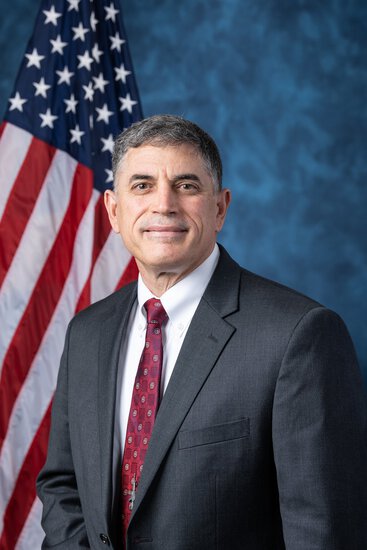
Rep. Andrew S. Clyde
Sponsored bills
Maddy summaryHR 10299, the Medicaid Funds Integrity Act of 2024, amends federal Medicaid law to prohibit using federal funds for gun violence prevention or intervention programs. Specifically, it adds a new provision (paragraph 28) to Section 1903(i) of the Social Security Act, blocking federal financial participation for such programs under Medicaid. This directly affects state Medicaid programs that might have sought federal funding for initiatives addressing gun violence. The bill creates a concrete funding restriction, ensuring Medicaid dollars cannot be spent on these specific types of programs.
Maddy summaryHR 10300, the Chevron Re-Review Act, establishes a new process for Congress to review and disapprove federal agency rules that relied on Chevron deference (the legal doctrine where courts defer to agency interpretations of ambiguous laws). The bill requires agencies to provide Congress with specific information about such rules - including cost-benefit analyses and litigation history - within 30 days of a disapproval resolution's introduction. If Congress passes a joint resolution disapproving a rule, the rule is treated as if it never took effect. This procedural bill directly affects agencies and Congress, applying only to rules explicitly based on Chevron deference or upheld by courts using that doctrine.
Maddy summaryThis bill enhances the existing American Battlefield Protection Program by expanding eligibility for grants to include Tribes, nonprofit organizations, and educational institutions, alongside States and local governments. It clarifies that eligible sites must be identified in the 1993 Civil War battlefield report or 2007 Revolutionary War/War of 1812 report, excluding sites already within National Park boundaries. The bill also requires the Secretary to submit updated battlefield condition reports to Congress every 10 years, starting two years after enactment, tracking preservation efforts and battlefield changes. These changes streamline program administration and ensure ongoing assessment of historic battlefield sites.
Maddy summaryHJRES 224 is a joint resolution that disapproves a proposal submitted by the President on November 18, 2024, concerning the indebtedness of Ukraine's government. The resolution formally rejects the President's proposal regarding Ukraine's debt without altering any existing laws or creating new obligations. This bill serves as a statement of congressional opposition to the executive branch's submission on this matter. It directly affects the executive branch by countering the President's proposal on Ukraine's debt without imposing binding policy changes.
Maddy summaryHR 8706, the "Dismantle DEI Act of 2024," would prohibit federal agencies from maintaining diversity, equity, and inclusion (DEI) offices, programs, or training by requiring the closure of existing DEI offices within 90 days and banning federal funding for DEI-related activities. The bill defines "prohibited diversity, equity, and inclusion practices" as those that discriminate based on race, color, ethnicity, religion, biological sex, or national origin, or require training that asserts a particular group is inherently superior or inferior. It would rescind several executive orders related to racial equity and gender inclusion, and prohibit the use of federal funds for DEI-related activities across all federal agencies, contractors, and grant recipients. The bill contains limited exceptions for Equal Employment Opportunity offices and disability rights enforcement offices as historically organized and operated.
Maddy summary# Summary of Proposed Higher Education Act Amendments This document outlines significant proposed amendments to the Higher Education Act of 1965, primarily as part of the "College Cost Reduction Act." The key elements include: ## Accreditation Reform - Major overhaul of accreditation standards, requiring accrediting agencies to demonstrate independence from trade associations - New requirements for accrediting agencies to assess student achievement outcomes, including median value-added earnings relative to median total price charged - Introduction of an "Alternative Quality Assurance Experimental Site Initiative" to test non-accredited institutions - Protections for religious institutions, including a new process for appealing accreditation decisions related to religious mission - Removal of "litmus tests" that would require institutions to support specific political viewpoints ## Student Success Initiatives - Establishment of "Postsecondary Student Success Grants" to increase participation, retention, and completion rates for high-need students - Focus on evidence-based practices, with tiered requirements (tier 1, 2, and 3 reforms) - Mandatory inclusion of high-need student populations (low-income, first-generation, military-connected, etc.) - Requirements for institutions to report on completion rates, retention rates, and student demographics ## Regulatory Changes - Repeal of numerous existing regulations including: * Closed school discharges * Borrower defense to repayment * Pre-dispute arbitration * False certification requirements * Ability-to-benefit rules * Financial responsibility regulations - New restrictions on incentive compensation for recruiters - Changes to third-party servicer definitions and regulations ## Transfer and Credit Policies - New requirement that institutions cannot deny transfer credit based solely on the source of accreditation - Requirements for transparent transfer policies - Changes to reverse transfer policies ## Other Key Provisions - Modifications to the National Advisory Committee on Institutional Quality and Integrity (NACIQI) - New definitions for "total price" and "value-added earnings" - Changes to the process for institutions to change accrediting agencies - New requirements for institutions to report on student outcomes The overall focus of these proposed amendments is to reduce regulatory burden on institutions, promote transparency, improve student outcomes (particularly for high-need students), modernize accreditation processes, and protect religious institutions' rights in accreditation decisions.
Maddy summaryHR 10083, the "No Funding for Illegal Migrant Billboards Act," prohibits the use of federal funds to advertise the Immigration Detention Ombudsman's office or functions through billboards or similar public advertising. This bill directly affects the Department of Homeland Security, specifically restricting how the Ombudsman's office can be promoted using public funds. The key mechanism is an amendment to the Homeland Security Act of 2002, adding a provision that bans obligating or expending funds for such advertising. The law applies to all public advertising methods, not just physical billboards, and takes effect immediately upon enactment.
Maddy summaryThe No Guns for Illegal Aliens Act amends federal law to prevent individuals without legal U.S. immigration status from using certain identification documents to purchase firearms. Specifically, it revises the requirement that a buyer must present a valid ID by excluding documents issued for aliens who have not been admitted to the U.S. from being considered valid. This means non-citizens in the U.S. without legal status (often termed "illegal aliens") cannot use their existing identification - such as foreign passports or other documents issued to undocumented individuals - to pass the ID check when buying a gun from a licensed dealer. The bill directly affects undocumented immigrants seeking to purchase firearms through licensed channels by closing a loophole in current identification verification rules.
Maddy summaryHR 9913, the "Ending FCC Meddling in Our Elections Act," prohibits the Federal Communications Commission (FCC) from finalizing or enforcing a specific proposed rule about AI-generated content in political ads. The bill blocks the FCC from acting on its July 10, 2024, proposed rule (FCC 24-74) requiring disclosure of AI-generated content in political TV and radio advertisements, and also prevents the FCC from creating similar rules. This directly affects the FCC’s regulatory authority and political advertisers using AI-generated content in broadcast ads. The bill halts the FCC’s current rulemaking process without creating new requirements or altering existing disclosure laws.