

Maddy summaryThis bill appropriates $14.3 billion in supplemental security funding to Israel following the October 7, 2023 attacks. The funding includes $4 billion for Iron Dome and David's Sling defense systems, $1.35 billion for the Iron Beam defense system development, and $3.5 billion for foreign military financing. The bill requires regular reporting to Congress on security assistance provided to Israel and designates all funds as "emergency requirements" under federal budget law. It also modifies existing laws to facilitate the transfer of defense articles and services to Israel, aiming to strengthen Israel's defense capabilities against rocket threats.
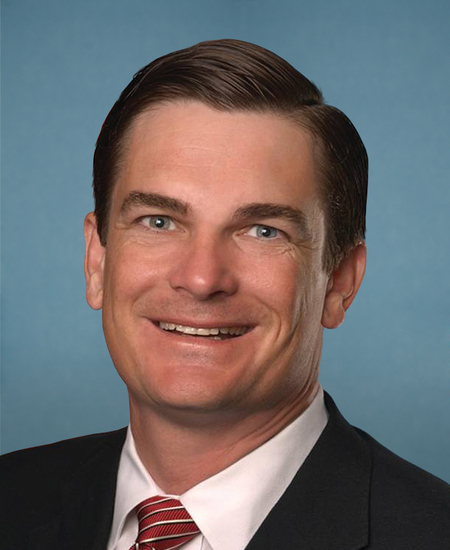
Rep. Austin Scott
Sponsored bills
Maddy summaryHRES 812 is a formal House resolution censuring Representative Jamaal Bowman (D-NY) for pulling a fire alarm during a House vote on September 30, 2023, which disrupted legislative proceedings. The resolution states Bowman violated District of Columbia law (prohibiting false fire alarms) and federal law (prohibiting obstruction of congressional proceedings). As a result, Bowman must publicly appear in the House chamber for the censure reading and is immediately removed from all committee assignments, with no committee service permitted without a majority House vote. This resolution serves as a formal rebuke by the House, not a legal penalty.
Maddy summaryHRES 771 is a non-binding resolution expressing the U.S. House of Representatives' support for Israel following Hamas' October 7, 2023, attack. It condemns Hamas' actions, affirms Israel's right to self-defense, and calls for the immediate release of hostages. The resolution also urges enforcement of existing laws restricting aid to terrorists and sanctions against Iran for supporting Hamas. It does not create new policies or allocate funds, as it is a symbolic statement of congressional support.
Maddy summaryHRES 768 is a symbolic House Resolution expressing congressional support for Israel following Hamas' October 7, 2023 attacks. It condemns Hamas' actions, reaffirms Israel's right to self-defense, and calls for the immediate release of hostages. The resolution references the U.S. commitment to Israel's security through existing military aid programs, including the 2016 U.S.-Israel Memorandum of Understanding, and emphasizes enforcement of laws like the Taylor Force Act to prevent U.S. aid from reaching terrorist groups. As a symbolic resolution, it does not create new policy but serves as a statement of congressional support for Israel.
Maddy summaryHR 6001 designates Niger, Mali, Burkina Faso, and Chad as "qualified hazardous duty areas" for tax purposes, treating military service there as if performed in a combat zone. This bill directly affects members of the U.S. Armed Forces serving in those countries, granting them access to specific tax benefits previously reserved for combat zones. Key provisions include excluding combat pay from income tax, providing death benefit protections, and allowing tax filing extensions similar to those for service in active combat zones. The change applies to military members eligible for hostile fire pay under Section 310 of Title 37, U.S. Code, during the period such eligibility exists. The bill takes effect upon enactment.
Maddy summaryHRES 755 is a procedural resolution introduced on October 2, 2023, that proposes expelling Representative Jamaal Bowman from the U.S. House of Representatives. It cites Article I, Section 5, Clause 2 of the Constitution, which grants the House authority to expel members. The resolution, referred to the Committee on Ethics, would remove Bowman from his seat if passed by the full House. This is a formal procedural step seeking to end Bowman's membership, not a law with broader policy effects.
Healthy Poultry Assistance and Indemnification Act This bill expands the Animal and Plant Health Inspection Service (APHIS) producer indemnity and compensation program to include compensation for all poultry growers and layers located in an APHIS-determined control area. Currently, APHIS provides indemnity and compensation to producers to remove animals classified as affected, suspect, or exposed to diseases of concern, including highly pathogenic avian influenza (HPAI). An APHIS-determined control area consists of both an infected zone and a buffer zone. Under the bill, APHIS must compensate all owners of poultry growing or laying facilities for flocks of birds that the facility owner was prohibited from growing or laying due to the location of the facility within a control area. This may include facilities that are located in the buffer zones and have non-infected poultry. Further, the bill establishes a new compensation payment formula that requires payments to be based on the owner’s average income from the five most recent flocks. Under the bill, APHIS's compensation determination is final and not subject to judicial or administrative review (other than by the Secretary of Agriculture or a designee).
Maddy summaryHRES 684 is a symbolic congressional resolution passed by the U.S. House of Representatives on September 14, 2023, condemning New Mexico Governor Michelle Lujan Grisham's emergency order that temporarily suspended open and concealed carry firearm rights for 30 days. The resolution asserts the order violated the Second Amendment, citing Supreme Court precedents (Heller, McDonald, Bruen) and noting a federal judge had already blocked the order's firearm restrictions. It does not change any laws or impose legal consequences - it is solely a formal expression of disapproval from Congress. The resolution directly addresses the Governor's actions but has no effect on New Mexico's laws or citizens' rights.
Maddy summaryHR 1435, the Preserving Choice in Vehicle Purchases Act, amends the Clean Air Act to restrict states from implementing vehicle emissions rules that limit the sale or use of new gasoline-powered cars. It directly affects states with stricter emissions standards (like California) by adding a new definition that blocks state rules "directly or indirectly" limiting internal combustion engine vehicles as defined in federal regulations as of January 1, 2023. The bill requires the EPA to revoke existing state emissions waivers granted between January 2022 and the bill’s enactment if they don’t comply with this new definition. This creates a concrete federal standard preventing states from advancing policies that could reduce demand for conventional vehicles.
Rural Hospital Technical Assistance Program Act This bill provides statutory authority for the Rural Hospital Technical Assistance Program within the Department of Agriculture (USDA). Under the bill, USDA must establish and maintain (directly or by grant, contract, or cooperative agreement) a program to help eligible hospital facilities in rural areas with a population of 50,000 inhabitants or less. The program must provide tailored technical assistance and training to hospital facilities to identify development needs for maintaining essential health care services and support action plans for financial, operational, and quality improvement projects to meet these needs. Development needs include (1) constructing, expanding, and modernizing health care facilities; (2) increasing telehealth capabilities; and (3) acquiring or upgrading health care information systems (e.g., electronic health records). The program must also provide technical assistance and training to help hospital facilities to better manage their financial and business strategies and identify, and apply for assistance from, USDA loan and grant programs. In selecting eligible hospital facilities to participate in the program, USDA must give priority to borrowers and grantees of certain USDA rural assistance programs. USDA must also submit an annual report to Congress on the progress and results of the program.