

Maddy summaryThe Farm and Food Cybersecurity Act of 2024 requires the U.S. Department of Agriculture to conduct biennial studies assessing cyber threats and vulnerabilities across the entire food supply chain - including farmers, processors, distributors, and retailers - and submit reports to Congress detailing risks to food safety, public health, and national security. It also mandates annual cross-sector simulations with agencies like Homeland Security and Health and Human Services to test emergency responses to food-related cyber incidents, involving government and private sector stakeholders. The bill authorizes $1 million annually (2024-2028) to fund these studies and simulations, aiming to identify gaps and improve coordination. These requirements directly affect federal agencies, state/local governments, and food industry entities responsible for food production, distribution, and security.
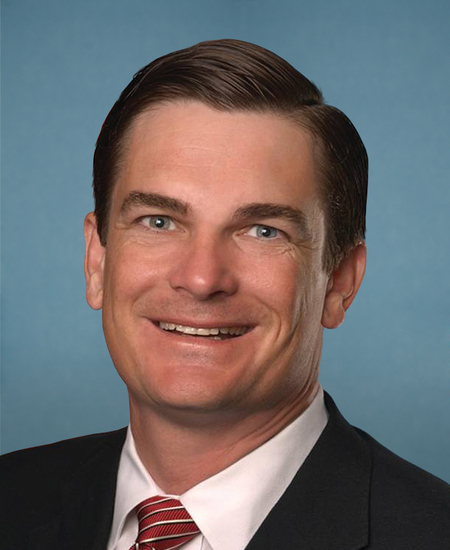
Rep. Austin Scott
Sponsored bills
Maddy summaryThe Death Tax Repeal Act would eliminate the federal estate tax and generation-skipping transfer tax for estates of people who die on or after the bill's enactment date, and for generation-skipping transfers made after that date. It would also establish a new $10 million lifetime gift tax exemption (adjusted annually for inflation) and replace the existing gift tax rate schedule with a revised structure. These changes would primarily affect high-net-worth individuals and their heirs, as the estate tax and gift tax typically apply to large estates or gifts exceeding the new exemption threshold. The bill's provisions would take effect on the date of enactment, with transitional rules for the year the bill is signed into law.
Maddy summaryThe RIFLE Act of 2024 changes how the federal government handles violations by firearms licensees, affecting gun dealers and manufacturers who hold federal licenses. It creates a graduated penalty system where non-willful violations require the Attorney General to work with licensees to fix issues before taking action, while willful violations may lead to license suspension or revocation only after proper notice, hearing, and evidence of continued noncompliance. The bill establishes new procedures for administrative hearings, defines "willful" violations more clearly, and gives licensees 90 days to liquidate inventory after license expiration or revocation, with extensions possible for reasonable cause. These changes aim to create a more transparent process for addressing violations while maintaining public safety standards.
This resolution supports the designation of National Teach Ag Day and recognizes the important role of agricultural education and the National FFA Organization in developing the next generation of agricultural leaders.
Maddy summaryHR 1147, the Whole Milk for Healthy Kids Act of 2023, allows schools participating in the National School Lunch Program to offer whole milk as an option during lunch. It amends the school lunch law to explicitly permit schools to serve flavored and unflavored whole milk alongside reduced-fat, low-fat, and fat-free milk choices for students. The bill also requires the Secretary of Agriculture to adjust meal regulations to account for saturated fat from whole milk, ensuring it doesn't count against meal fat limits. This change directly affects participating schools and the students who receive school lunches, expanding their milk beverage options.
Maddy summaryHR 6734 prohibits the use of federal funds to finalize, implement, or enforce the Bureau of Alcohol, Tobacco, Firearms, and Explosives' (ATF) proposed rule (2022R-17) defining "engaged in the business as a dealer in firearms." This bill directly affects the ATF by blocking funding for this specific regulatory rule, which was proposed in August 2023. The legislation does not create new requirements but prevents federal resources from being used to advance this particular ATF regulation.
Maddy summaryHR 6694, the 7 October Hamas Attack Evaluation and Intelligence Sharing Act, requires U.S. intelligence agencies to produce a report within 30 days on Hamas's training, weapons, and foreign support for the October 7, 2023, attack on Israel. The bill also mandates two reviews: one on whether increased intelligence sharing with Israel about Hamas, Hezbollah, and Iran improves U.S. and allied security, and another on how such sharing can reduce civilian harm and aid in the Israel-Hamas conflict. Additionally, it directs the Defense Department's Inspector General to assess whether policies to minimize civilian harm are being followed in intelligence sharing with Israel. All findings must be submitted to relevant congressional committees within the specified deadlines.
Maddy summaryHR 6612, the Birthright Citizenship Act of 2023, clarifies who qualifies for U.S. citizenship at birth under the 14th Amendment. It amends immigration law to define that a child born in the U.S. is "subject to the jurisdiction" for citizenship if one parent is a U.S. citizen, a lawful permanent resident living in the U.S., or an active-duty military member. The bill directly affects children born in the U.S. to parents in these specific categories, ensuring they meet the citizenship definition without altering the constitutional right itself. It explicitly states this definition applies only to births occurring after the law's enactment, leaving existing citizenship status unaffected for those born before. The bill aims to codify existing constitutional principles through specific, narrow criteria for parental status.
Maddy summaryHRES 910 is a commemorative resolution passed by the U.S. House of Representatives to honor the life and legacy of Rosalynn Carter, former First Lady of the United States (1977-1981). The resolution expresses the House's mourning for her passing and recognizes her advocacy for mental health care, founding of The Carter Center, and work establishing support for family caregivers through the Rosalynn Carter Institute. It does not create new laws or policies but formally commemorates her humanitarian contributions. This procedural resolution was introduced by Georgia representatives and passed unanimously on December 5, 2023.
Maddy summaryThis bill establishes a competitive grant program to improve recycling access in underserved communities - defined as areas lacking full recycling services due to cost, distance, or insufficient processing capacity. It allocates $30 million annually (2023-2027) for grants to eligible entities like states, local governments, tribes, or public-private partnerships to fund projects such as expanding transfer stations, adding curbside collection, or creating hub-and-spoke infrastructure networks. Grants range from $500,000 to $15 million per project, with 70% of funds reserved for single or multiple underserved communities, and require 90% federal cost coverage (with possible waivers for financial hardship). The program prohibits grant use for education and mandates a congressional report on implementation and outcomes within two years.