

Maddy summaryHRES 131 is a symbolic resolution expressing support for designating February 16, 2023, as "International Black Aviation Professionals Day." It recognizes the historical contributions of Black aviation professionals - from pioneers like Bessie Coleman and the Tuskegee Airmen to modern figures like Katherine Johnson - and encourages public acknowledgment of their achievements. The resolution requests the President issue a proclamation urging schools and communities to educate about these contributions and support greater opportunities for Black Americans in aviation careers. As a non-binding resolution, it does not create new laws or funding but aims to promote awareness and inclusion in the aviation industry.
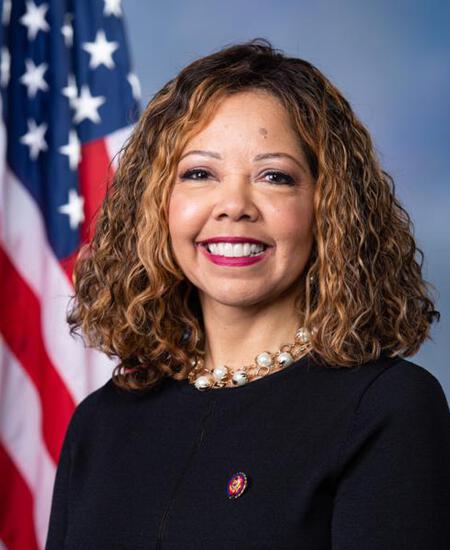
Rep. Lucy McBath
Sponsored bills
Maddy summaryThis bill authorizes a single Congressional Gold Medal to honor all U.S. Army Dustoff crews who served during the Vietnam War (1962-1973). It recognizes their critical role in evacuating nearly 900,000 wounded personnel, including U.S., South Vietnamese, and allied forces, under extreme combat conditions. The medal, designed with input from the Secretary of Defense, will be presented to the U.S. Army Medical Department Museum for permanent display. Duplicate bronze medals may be sold to cover costs, but the primary action is the commemorative recognition of these crews' service.
Maddy summaryHR 1002, the "Saving the Civil Service Act," restricts how federal government positions can be moved between competitive hiring (where most federal jobs are filled through merit-based exams) and non-competitive "excepted service" positions. The bill prevents agencies from moving positions out of the competitive service unless they fit specific schedules in place as of September 2020, requires Office of Personnel Management (OPM) approval for certain transfers, and mandates employee consent for any position transfer between service types. It also limits the number of employees that can be moved from competitive to excepted service during a presidential term - capping it at 1% of an agency's workforce or five employees, whichever is greater. The bill directly affects federal employees and agencies by making it harder to shift positions out of the competitive hiring system without strict oversight.
Maddy summaryHR 987 authorizes the U.S. Mint to produce commemorative coins honoring Golda Meir, Israel's first female Prime Minister, and the 75th anniversary of U.S.-Israel relations. It specifies three coin types: $5 gold coins (max 50,000), $1 silver coins (max 400,000), and half-dollar clad coins (max 750,000), with detailed weight and composition requirements. All coins will include Golda Meir's image, her name, and commemorative inscriptions, and will be sold during 2026. A surcharge ($35 for $5 coins, $10 for $1 coins, $5 for half-dollars) will be paid to the American Friends of Kiryat Sanz Laniado Hospital Inc. to support its hospital operations.
Maddy summaryHR 782 prohibits state officials from interfering with abortion services provided across state lines. It specifically blocks states from restricting: (1) out-of-state patients traveling for legal abortions, (2) providers offering such services, (3) assistance for travel or care, or (4) the interstate shipment of FDA-approved abortion drugs. The bill allows the federal Attorney General or affected individuals to sue violators for injunctions, damages, and attorney fees. It directly affects patients seeking care in other states, healthcare providers, transportation services, and pharmacies handling FDA-approved abortion medications. The law focuses on preventing state laws from blocking access to legally permitted abortion services.
Thomas W. Dortch, Jr. Congressional Gold Medal Act This bill provides for the award of a Congressional Gold Medal to Thomas W. Dortch, Jr., in recognition of his contributions in helping marginalized people, communities, and institutions.
Maddy summaryHR 926 would require the Supreme Court to establish a code of conduct for justices within 180 days of enactment, along with procedures for handling ethics complaints against them. The bill mandates minimum disclosure standards for gifts, income, and reimbursements received by justices and their law clerks, and requires justices to recuse themselves when they or their family received gifts from parties in a case. It would also require parties and amici curiae to disclose gifts given to justices and lobbying contacts related to justices' nominations, and establish a judicial investigation panel to review complaints against justices. The legislation aims to increase transparency in Supreme Court ethics processes and provide clearer recusal standards for justices.
Maddy summaryHRES 110 is a non-binding resolution supporting the designation of "Career and Technical Education (CTE) Month" to recognize CTE's role in preparing students for high-demand careers. It encourages educators, school counselors, and parents to promote CTE as a respected pathway for students seeking credentials in fields like healthcare, technology, and skilled trades. The resolution highlights CTE's benefits, including reducing high school dropout rates and aligning education with workforce needs, without creating new funding or policy changes. It directly affects schools, educators, and students by affirming CTE's value in workforce development.
Maddy summaryHR 866, the Equal COLA Act, changes how cost-of-living adjustments (COLAs) are calculated for federal retirees under the Federal Employees Retirement System (FERS). It requires that each year's COLA be based on the exact percent change in the price index from the previous year's base quarter, rounded to the nearest 0.1%, effective December 1. This applies to all FERS annuities starting before, on, or after the bill's enactment date, ensuring a standardized calculation method for retirees' annual adjustments.
Maddy summaryHR 882, the American Teacher Act, requires states to ensure full-time teachers in public elementary and secondary schools earn at least $60,000 annually (adjusted for inflation), with part-time teachers receiving proportional pay. It provides federal grants to states to fund these salary increases, mandating sustainability plans beyond the 4-year grant period and prioritizing schools in high-poverty areas. The bill also includes cost-of-living adjustments tied to the Consumer Price Index and funds a national campaign to promote teaching as a career. It explicitly states grant funds must supplement existing education budgets without reducing current teacher pay or state loan forgiveness programs.