

Maddy summaryHR 3868, the Enhanced Background Checks Act of 2025, modifies federal firearm background check procedures to address delays. It requires federal firearms licensees to wait 10 business days after a background check query if the system doesn’t immediately flag a transfer, unless the buyer submits an electronic petition confirming they aren’t prohibited from owning firearms. The petition process includes a 10-day response deadline from the Attorney General, with licensees allowed to proceed if the system remains silent after 10 days. The bill also mandates detailed annual reports from the FBI on petition delays and GAO reports on implementation, focusing on how these changes affect firearm transfers to prohibited individuals.
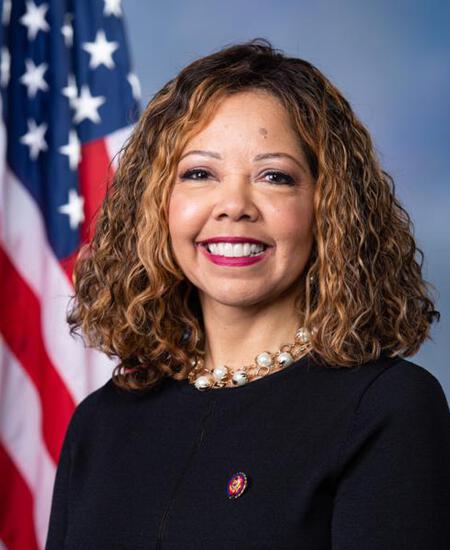
Rep. Lucy McBath
Sponsored bills
Maddy summaryThe Reimagining Inclusive Arts Education Act establishes a federal grant program to improve arts education access for students with disabilities in K-12 schools. It provides competitive grants to eligible schools, school districts, or partnerships with colleges/nonprofits to develop inclusive curricula, adapt classroom materials, and integrate creative arts therapies (like art or music therapy) into arts education. Grants, capped at 3 years with potential renewal, prioritize schools serving students with disabilities and those receiving Title I funding, while requiring geographic and socioeconomic diversity in grant distribution. The program is funded with $15 million over five years (2026-2030) to support professional development for educators and therapeutic approaches that enhance inclusion.
Maddy summaryHR 3791, the EMS Counts Act, requires the Bureau of Labor Statistics (BLS) to revise its job classification system to properly count dual-role firefighter/EMTs and firefighter/paramedics as EMS personnel. This directly affects how national workforce data on emergency medical services is collected, correcting a current undercount that excludes these workers. The bill mandates the Secretary of Labor to add specific occupational categories ("Firefighter/EMTs" and "Firefighter/Paramedics") to the BLS system within 120 days of enactment. A report detailing this change and past efforts to improve EMS counting must be submitted to Congress within 270 days. The law aims to ensure accurate data for federal agencies to better address EMS workforce needs during emergencies.
Maddy summaryHR 3757, the Pride In Mental Health Act of 2025, provides $20 million annually (2026-2030) to fund grants for mental health services targeting LGBTQ+ youth, including nonbinary, intersex, and Two Spirit youth, and their families/caregivers. The bill mandates grantees to provide trauma-informed care, cultural competency training, school bullying prevention guidelines, and evidence-based practices while explicitly prohibiting the use of funds for conversion therapy or its promotion. It also requires the federal government to restore mental health reports on LGBTQ+ youth, conduct a national survey measuring mental health distress, and produce a report on mental health services for LGBTQ+ youth in foster care. The law directly affects these youth populations by expanding access to tailored mental health resources and data collection, with funding administered through the Substance Abuse and Mental Health Administration.
Maddy summaryThis bill amends the WIC program to replace "drug abuse" with "substance use disorder" throughout its provisions, directly affecting WIC participants who may have substance use disorder. Key mechanisms include creating new nutrition education materials for pregnant individuals with substance use disorder and infants affected by prenatal exposure, establishing an online clearinghouse for these resources, and authorizing $1 million for fiscal year 2026. The changes aim to provide evidence-based, non-judgmental support through updated program materials and outreach. The bill specifically targets WIC participants impacted by substance use disorder, not broader population changes.
Maddy summaryThe BARK Act of 2025 protects donors, nonprofits, and local/government entities from liability when donating "apparently fit" pet food or supplies in good faith to help animals. It shields them from lawsuits related to minor issues like appearance, age, or packaging, as long as the items meet basic safety standards and aren’t defective. Donors must inform recipients about any flaws, and recipients must agree to recondition items to meet standards before distribution. This law does not cover cases of gross negligence or intentional harm, and it doesn’t override existing health regulations. The bill directly affects pet food donors, shelters, and animal welfare programs by reducing legal barriers to sharing surplus supplies.
Maddy summaryThis resolution (HRES 457) is a symbolic measure expressing congressional support for designating June 6, 2025, as "National Gun Violence Awareness Day" and June 2025 as "National Gun Violence Awareness Month." It does not create new laws or policies but encourages public awareness through specific actions: wearing orange on June 6, focusing on gun safety during summer months, and holding community discussions. The resolution references statistics on gun violence deaths and honors Hadiya Pendleton, a teen victim killed in 2013. It directly affects the public by calling for voluntary observance and community engagement, not government mandates.
Maddy summaryThis bill reorganizes collective bargaining rules for Veterans Health Administration (VHA) employees by removing existing subsections (b), (c), and (d) from Section 7422 of Title 38 and redesignating the current subsection (e) as (b). It directly affects VA health care employees by altering the structure of their collective bargaining framework. The bill explicitly states it does not change the Secretary of Veterans Affairs' existing authorities over incentive pay or expedited hiring under Section 706 of Title 38. The change is purely procedural, focusing on the internal organization of bargaining rules without introducing new employee benefits or obligations.
Maddy summaryHR 3607, the MARSHALS Act, restructures the U.S. Marshals Service by moving it from the Department of Justice to the judicial branch of the federal government. It requires the Chief Justice, in consultation with a new oversight Board, to appoint marshals for each judicial district (with four-year terms) and establishes a Director to lead the Service. The bill expands the Marshals Service’s duties to include protecting judges, court officers, and witnesses from intimidation, and adds specific roles in assisting with sex offender investigations and locating missing children at the Attorney General’s request. These changes directly affect federal marshals, judicial branch operations, and law enforcement coordination with the Department of Justice.
Maddy summaryHR 3604, the *Reducing Waste in National Parks Act*, requires National Park Service (NPS) units to reduce and eliminate the sale of disposable plastic products (including water bottles, bags, and food containers) where feasible, considering operational factors like cost, waste reduction, and concessioner impacts. Park officials must develop visitor education plans, implement refill stations, and weigh 13 specific factors before eliminating sales, such as infrastructure costs, revenue effects, and public health safety. The program must be evaluated every two years to measure visitor satisfaction, waste collection rates, and safety outcomes. This bill directly affects NPS operations, concessioners, and park visitors who use park facilities.