

Maddy summaryThe Inclusive Democracy Act of 2026 mandates that individuals with criminal convictions retain their right to vote in federal elections and requires prisons, jails, and probation offices to notify incarcerated or supervised individuals of this right. The bill establishes specific procedures for voter registration and absentee voting within carceral settings, including expedited transmission of forms and the ability to use either a prison address or a last known address for registration. It also prohibits states from rejecting ballots or registration applications based on late mailing dates or electronic submission methods and ensures that election materials and nonpartisan voter registration services can be distributed inside correctional facilities.
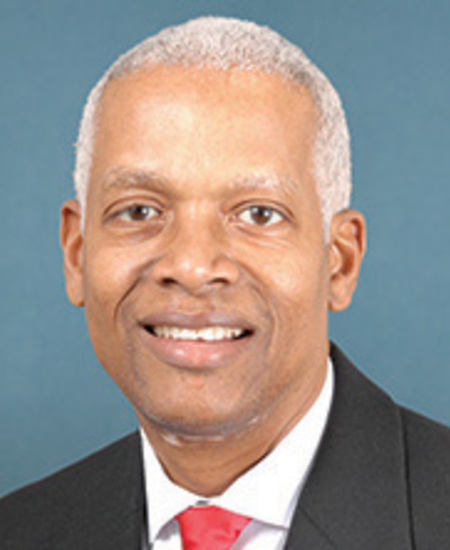
Rep. Henry C. "Hank" Johnson, Jr.
Sponsored bills
Maddy summaryThe Tuskegee Airmen Memorial Act of 2026 authorizes the organization Tuskegee Airmen, Inc. to build a commemorative monument on federal land in Washington, D.C., honoring the original Tuskegee Airmen who served in World War II. This legislation allows the group to accept private donations and cover all costs for the project without using federal funds, while requiring any leftover money to be deposited into specific government accounts. The bill also mandates that the memorial be constructed in compliance with existing federal standards for commemorative works.
Maddy summaryThe Public Safety Officers' Benefits Enhancement Act of 2026 modifies how public safety officers can claim federal benefits related to line-of-duty injuries. It simplifies the claims process by removing a requirement that injuries must be caused by factors other than pre-existing cardiovascular risks and extends the time limit for reporting certain incidents from 24 to 72 hours. These changes apply to any benefit claims that are pending or filed after the law is enacted. The bill directly affects public safety officers seeking compensation for work-related injuries.
Maddy summaryThe Children's Safe Welcome Act of 2026 establishes comprehensive protections for noncitizen children in immigration custody, primarily affecting families at the border and children placed in government care. The bill mandates that children remain with their parents or family members unless there is clear evidence of an imminent threat to national security or serious harm to the child, while also requiring the federal government to phase out large congregate care facilities in favor of smaller, family-like settings. Key provisions include strict standards for detention and housing conditions, such as 24-hour access to medical care, nutritious food, and recreational activities, alongside the creation of an independent Ombudsperson office to monitor compliance and investigate complaints. Additionally, the legislation ensures that children receive free legal representation, prohibits the use of welfare records in immigration proceedings, and establishes rigorous oversight for any emergency influx facilities used during surges in arrivals.
Maddy summaryThe Justice for Incarcerated Moms Act aims to improve maternal health outcomes for pregnant and postpartum individuals in the criminal justice system by restricting financial incentives for states that use restraints on pregnant inmates. Under the bill, states receiving federal justice grants would face a 25 percent funding penalty if they fail to implement laws limiting the use of shackles on pregnant individuals, with those withheld funds redirected to compliant states. The legislation also directs the Bureau of Prisons and the Department of Justice to create and fund programs in at least six federal facilities and across various state and local prisons that provide specialized prenatal care, mental health support, and reentry assistance. These programs are designed to address specific health disparities, particularly for racial and ethnic minority groups, by offering culturally competent care, nutrition counseling, and opportunities to maintain contact with newborn children. Additionally, the act requires an independent oversight organization to monitor program implementation and mandates a Government Accountability Office report to analyze maternal and infant health data within the correctional system.
Maddy summaryThe MOMMIES Act expands Medicaid and CHIP coverage for low-income pregnant and postpartum individuals by extending continuous benefits for one year after childbirth and mandating full coverage of oral health services. To support these changes, the bill includes maintenance of effort provisions that prevent states from restricting eligibility or reducing benefits for this population, alongside a temporary 100 percent federal funding match for states that increase spending on these services. Additionally, the legislation establishes a five-year demonstration project to fund maternity care home models that integrate medical and social support services, while also requiring studies and guidance on improving access to doula services and telehealth for maternity care.
Maddy summaryThe Protecting Immigrants From Legal Exploitation Act of 2026 aims to combat fraud by increasing criminal penalties for individuals who falsely represent themselves as immigration lawyers or provide fraudulent services. It requires non-lawyer immigration service providers to identify themselves on applications and allows victims of unauthorized practice of law to withdraw and resubmit their immigration forms without penalty. The bill also empowers the Attorney General to issue civil injunctions against fraudulent providers and mandates that convicted fraudsters reimburse their clients for services rendered. To support legitimate legal aid, the legislation authorizes funding for outreach programs and grants to nonprofit organizations that provide direct legal assistance to immigrants.
Maddy summaryThe Online Sellers' Bill of Rights Act of 2026 aims to protect third-party businesses using major online marketplaces by requiring these platforms to provide greater transparency and due process. Under the bill, the Federal Trade Commission must create rules that limit how long platforms can hold inventory or freeze funds, mandate written notice within 72 hours for any restrictions, and ensure sellers receive at least 30 days' warning before significant policy changes. The law also establishes a presumption of innocence, placing the burden of proof on the platform to demonstrate a violation rather than on the seller, and allows for specific appeals processes. Enforcement is handled through the FTC, which can pursue violations as unfair competition, while state attorneys general and individual sellers retain the right to file civil lawsuits for damages.
Maddy summaryThis bill names the Department of Veterans Affairs multispecialty clinic at 1263 Cobb Parkway NW in Marietta, Georgia, as the "Colonel Michael H. Boyce Department of Veterans Affairs Multispecialty Clinic." It is a ceremonial resolution with no policy changes or funding impacts - it solely updates the facility's official designation in government records. The clinic itself remains unchanged, and the bill does not alter services, funding, or operations for veterans.
Maddy summaryThe AADAPT Act reauthorizes and expands Project ECHO grants to improve Alzheimer’s and dementia care through technology-enabled training. It specifically funds grants for healthcare providers in rural, frontier, or medically underserved areas to enhance early diagnosis, quality care, and provider retention for dementia patients. The bill authorizes $1 million annually (2027-2032) for these dementia-focused training programs, requiring funds to supplement - not replace - existing resources. This directly supports primary care providers licensed to serve underserved communities, using collaborative online learning to address care gaps.