

Maddy summaryThe Stop Super PAC-Candidate Coordination Act clarifies when payments to political groups count as contributions to candidates. It defines "coordinated expenditures" as payments made in cooperation with a candidate or their committee, including cases where the group was formed by the candidate, the candidate helped raise funds for the group, or the group was managed by someone who worked for the candidate. The bill establishes penalties for violations, including fines equal to 300% of the amount exceeding contribution limits. It repeals current Federal Election Commission regulations on coordination and requires new regulations within 90 days, with the law taking effect for payments made after a 120-day period following enactment.
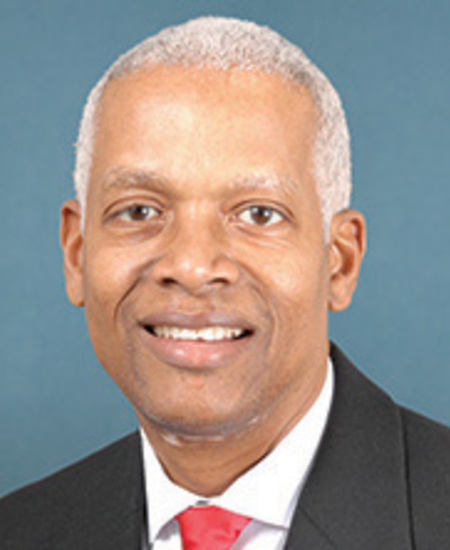
Rep. Henry C. "Hank" Johnson, Jr.
Sponsored bills
Maddy summaryThe Endometrial Cancer Research and Education Act of 2025 requires the National Institutes of Health (NIH) to expand research on endometrial cancer, ensure African-American women are represented in clinical trials proportional to their higher incidence rates, and coordinate with health agencies focusing on minority health and women’s health. It also directs the Centers for Disease Control and Prevention (CDC) to develop public education materials about endometrial cancer risk factors, treatments, and disparities, with specific resources targeted to African-American women. The bill authorizes $1 million annually for NIH research and necessary funding for CDC programs from 2026 through 2028. These measures directly affect federal health agencies and aim to address documented disparities in diagnosis and mortality rates among women, particularly African-American women.
Maddy summaryThe Mental Health in Aviation Act of 2025 requires the Federal Aviation Administration (FAA) to update regulations within two years to encourage pilots and air traffic controllers to seek mental health care and disclose conditions without fear of losing medical clearance. It mandates annual reviews to improve the medical clearance process for mental health conditions - such as approving additional safe medications, enhancing examiner training, and reducing backlogs - and allocates $13.74 million yearly (2026-2029) to hire more aviation medical examiners. The bill also directs the FAA to implement recommendations from a mental health rulemaking committee and fund a public campaign to reduce stigma around mental health care in aviation. These provisions aim to support aviation workers' well-being while streamlining safety-related medical evaluations.
Maddy summaryThis resolution (HRES 680) recognizes suicide as a serious public health issue and designates September 8, 2025, as "988 Day" to highlight the national three-digit crisis hotline (988 Suicide and Crisis Lifeline). It does not create new laws or funding but formally supports existing efforts to raise awareness about the 988 hotline, which connects people in mental health crisis to 24/7 support services. The resolution emphasizes the hotline's role in suicide prevention, citing data showing it handled nearly 18 million contacts since 2022 and was reported as helpful by 98% of users. It urges continued public education about the hotline, particularly for high-risk groups like LGBTQI+ youth, and encourages broader access to mental health services.
Sickle Cell Disease Comprehensive Care Act This bill allows state Medicaid programs to establish health homes to provide coordinated care for individuals with sickle-cell disease. (Under current law, state Medicaid programs may establish health homes to provide coordinated care for individuals with specified chronic conditions.) States must ensure that such care includes dental and vision services. The Centers for Medicare & Medicaid Services must issue best practices for states on how to design and implement such health homes.
Maddy summaryThis bill amends the Social Security Act to remove an exclusion for rural facilities primarily treating mental health conditions from Medicare coverage. It specifically changes Section 1861(aa)(2) by deleting the phrase "or a facility which is primarily for the care and treatment of mental diseases," allowing these facilities to qualify for Medicare reimbursement. The change directly affects rural behavioral health centers specializing in mental health care that were previously excluded. The amendment takes effect on January 1, 2027, enabling these facilities to access federal Medicare funding for services.
Maddy summaryThis bill extends preferential U.S. trade benefits for Haitian exports until 2037 (previously ending in 2025) under the Caribbean Basin Economic Recovery Act. It requires Haitian producers to comply with core labor standards and Haitian labor laws related to minimum wages, working hours, and safe conditions to maintain these benefits. The bill also creates a new technical assistance program where the U.S. Trade Representative will work with Haitian government agencies, businesses, labor groups, and trade support institutions to boost exports - focusing on agricultural processing, apparel sector competitiveness, and export strategy development. These changes directly affect Haitian exporters seeking U.S. trade preferences and U.S. agencies administering trade programs.
Maddy summaryThis bill changes federal rules for rural healthcare facilities that employ physician assistants (PAs) and nurse practitioners (NPs). It requires these facilities (not run by a physician) to have arrangements consistent with state laws governing PA/NP practice, ensuring services follow state regulations. The policy directly affects rural clinics and hospitals seeking federal reimbursement for PA/NP services. The changes take effect January 1, 2027, aligning federal requirements with existing state oversight of these healthcare providers.
Maddy summaryHR 5198, the Rural Health Clinic Location Modernization Act of 2025, changes Medicare eligibility rules for rural health clinics by updating the definition of "urban area" used to determine clinic qualification. It replaces the current "urbanized area" standard with a clearer definition: any urban area (per Census Bureau data) having a population of 50,000 or more. This adjustment directly affects clinics seeking Medicare certification, ensuring they meet consistent geographic criteria for rural designation. The change takes effect January 1, 2027, aiming to simplify qualification rules without altering Medicare coverage or benefits.
Maddy summaryHR 2181, the Protect Our Watchdogs Act of 2025, strengthens protections for federal Inspectors General (IGs) by requiring the President to have specific, documented reasons to remove them. The bill amends federal law to specify nine grounds for removal, including documented felony convictions, gross mismanagement, waste of funds, abuse of authority, or neglect of duty - each requiring written justification. This directly affects IGs who oversee federal agency accountability and investigations, as it prevents arbitrary removals and mandates transparency in the process. The law applies to all federal Inspectors General across agencies, ensuring their independence is maintained through clear, enforceable standards.