

Maddy summaryHR 5309, the Congressional Tribute to Constance Baker Motley Act of 2025, authorizes a posthumous Congressional gold medal for Constance Baker Motley, a pioneering civil rights attorney and judge. The bill directs the Treasury Secretary to strike the medal with her image and name, to be presented to her son, Joel W. Motley III, and her niece, Constance Royster. It also permits the sale of bronze duplicates at cost to cover expenses, with proceeds going to the U.S. Mint fund. This is a commemorative measure with no substantive policy changes, honoring Motley’s legacy as the first African-American woman appointed to a federal judgeship.
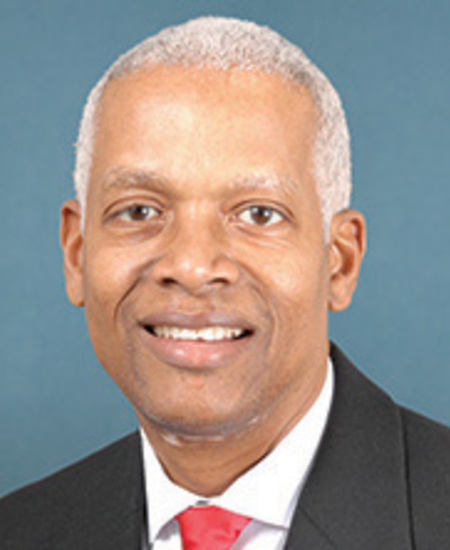
Rep. Henry C. "Hank" Johnson, Jr.
Sponsored bills
Maddy summaryThe LINE Act (HR 5319) prohibits the Centers for Medicare and Medicaid Services (CMS) and the Department of Health and Human Services (HHS) from sharing Medicaid health data with U.S. Immigration and Customs Enforcement (ICE). Specifically, it blocks the disclosure of individually identifiable health information from Medicaid enrollment records (under Title XIX of the Social Security Act) to ICE for immigration enforcement purposes. This directly affects Medicaid enrollees, particularly those who may be immigrants, by preventing their health data from being used in immigration proceedings. The law creates a clear barrier between Medicaid health records and immigration enforcement efforts.
Maddy summaryHR 5340 prohibits the U.S. Department of Housing and Urban Development (HUD) and public housing agencies from sharing tenant records with immigration authorities for immigration enforcement purposes. It directly affects all HUD housing program participants (including renters and applicants, regardless of immigration status) by requiring HUD to obtain written consent or a language-proficient request from the individual before disclosing their records. Key provisions include banning disclosure without consent, preventing HUD from forcing public housing agencies to share records, and mandating a 90-day compliance report to Congress detailing record security and past sharing practices. The bill aims to protect housing privacy by ensuring immigration enforcement cannot access sensitive tenant information held by HUD without explicit individual authorization.
Maddy summaryHRES 697 is a symbolic House resolution recognizing suicide as a preventable public health issue and supporting the designation of September as "National Suicide Prevention Month" and September 10, 2025, as "World Suicide Prevention Day." It does not create new laws or allocate funds but formally expresses congressional support for these designations to raise awareness. The resolution cites statistics showing suicide as a leading cause of death across age groups, including among veterans and adolescents, and emphasizes mental health as equally important as physical health. It acknowledges the need for diverse prevention strategies without specifying new policies or programs. This resolution is purely declarative, aiming to bolster public awareness rather than enact concrete changes.
Maddy summaryThis resolution designates September 9 as "National African Immigrant and Refugee HIV/AIDS and Hepatitis Awareness Day" (NAIRHHA Day). It directly supports African immigrant and refugee communities in the U.S., which face significantly higher rates of HIV (6x the general population) and hepatitis B (10% prevalence) compared to other groups. The resolution expresses support for raising awareness about these health disparities, reducing stigma, and promoting culturally appropriate prevention, testing, and treatment resources. It is a non-binding symbolic gesture by the House of Representatives, not a policy with new requirements or funding.
Maddy summaryHR 5278, the Affordable Inhalers and Nebulizers Act of 2025, limits out-of-pocket costs for patients using prescription inhalers and nebulizers to treat asthma and chronic obstructive pulmonary disease (COPD). The bill requires private health insurance plans, Medicare Part B and Part D, and new payment programs to cover these products with no deductible and a maximum cost of $15 per 30-day supply. It directly affects patients with asthma or COPD who rely on covered inhalers, nebulizers, and related equipment like spacers. The law applies to all specified inhaler products (including medications and administration equipment) and takes effect for plan years beginning January 1, 2026.
Maddy summaryThis bill directs the U.S. President to identify Pakistani officials responsible for undermining democracy and human rights within 180 days of enactment, then impose Global Magnitsky sanctions on them. It targets senior government, military, or security officials found to have committed gross human rights violations or interfered with democratic processes, such as during Pakistan’s 2024 elections or through constitutional changes. Sanctions would include asset freezes and travel bans, with exceptions for humanitarian aid, UN obligations, and national security activities. The bill expires on September 30, 2030, and aims to pressure Pakistan to uphold democratic norms, human rights, and judicial independence.
Maddy summaryHRES 684 is a non-binding House resolution designating September 9, 2025, as "National Firearm Suicide Prevention Day." It aims to raise public awareness about firearm suicide statistics (including that firearms were used in 55% of U.S. suicides in 2023) and promote safe firearm storage as a key suicide prevention strategy. The resolution encourages health professionals to discuss safe storage with patients and supports existing awareness efforts led by organizations like Brady and End Family Fire. It directly affects the public and healthcare providers by emphasizing evidence-based prevention practices, not by creating new laws.
Maddy summaryHR 5226, the Deceptive Downsizing Prohibition Act of 2025, bans manufacturers from selling consumer products (like food) in smaller sizes using packaging designed for larger versions without clear disclosure. It directly affects manufacturers of consumer products by requiring them to prominently display both the previous larger size and current reduced size on the product packaging. The key mechanism is a "safe harbor" provision: manufacturers avoid penalties if they clearly show the size change on the main packaging panel with conspicuous, easy-to-understand text. The Federal Trade Commission (FTC) will enforce this as part of its authority over deceptive practices under existing law.
Maddy summaryHR 5237, the Campaign Transparency Act, eliminates the $200 threshold for reporting political contributions in federal elections. It requires all political committees (including candidates, parties, and PACs) to report the name and address of every contributor, regardless of the contribution amount. This changes the current rule, which only mandated disclosure for contributions exceeding $200. The bill applies to all reports filed after its enactment date. It directly affects how political committees collect and disclose donor information.