

Maddy summaryThis bill establishes a federal grant program to improve diabetes care in underserved urban and rural communities. It authorizes the Health Secretary to fund eligible providers - including community health centers, rural clinics, and tribal health departments - to deliver comprehensive services like routine diabetes treatment, prevention education, eye/foot care, and kidney disease management. Grants require providers to offer culturally appropriate care in local languages and conduct community outreach. Funding must be distributed equitably between urban and rural areas, with authorization for fiscal years 2026-2031. The program directly supports patients in medically underserved communities facing barriers to diabetes care.
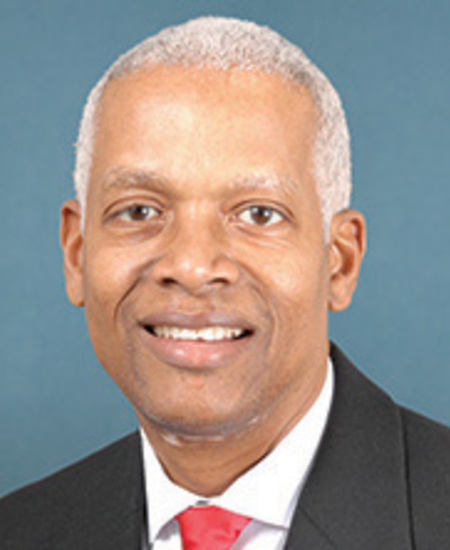
Rep. Henry C. "Hank" Johnson, Jr.
Sponsored bills
Maddy summaryThe HEAR Act of 2025 adds Medicare coverage for hearing rehabilitation services and hearing aids. It directly affects Medicare beneficiaries with hearing loss who need new devices or services, requiring a comprehensive assessment and meeting specific criteria (like not having received hearing aids in the past three years). Key provisions include defining "hearing rehabilitation" to cover audiologist assessments, counseling, and device fitting, and specifying that covered hearing aids must meet FDA standards (excluding over-the-counter models). The bill also removes previous exclusions that blocked this coverage. These changes apply to services provided after a date set by the Health and Human Services Secretary, starting no earlier than January 1, 2026.
Maddy summaryHR 6181, the John Lewis Every Child Deserves a Family Act, prohibits child welfare agencies receiving federal funds from discriminating against children, youth, or prospective foster/adoptive parents based on religion, sex (including sexual orientation and gender identity), or marital status. It directly affects LGBTQ youth in foster care - overrepresented at 30% of the system - who face higher risks of trauma, group home placements, and suicide attempts compared to non-LGBTQ peers. Key provisions require agencies to collect data on sexual orientation and gender identity, establish a National Resource Center for LGBTQ youth support, provide cultural competency training, and eliminate discriminatory practices. The law aims to improve safety, permanency, and placement stability by expanding access to family-based care and ensuring equitable services for all children in the system.
Maddy summaryHR 6172, the Ending Forced Arbitration of Race Discrimination Act of 2025, prevents companies from requiring employees or consumers to use private arbitration to resolve race discrimination claims. It makes any pre-dispute arbitration agreement unenforceable for disputes involving alleged race, color, or national origin discrimination under federal, tribal, state, or local law. The bill ensures courts - not arbitrators - determine if this law applies to a case, giving people the choice to pursue claims in court instead of forced arbitration. It directly affects individuals alleging race discrimination who would otherwise be barred from court by such agreements. The law applies to claims arising on or after its enactment date.
Maddy summaryHRES 581 is a procedural resolution that establishes rules for the House to consider H.R. 185, the Epstein Files Transparency Act. It waives all points of order against the bill, adopts a specific amendment (the full text of the Epstein Files Transparency Act), and limits debate to one hour equally divided between the Judiciary Committee's chair and ranking minority member. The resolution also requires the Attorney General to release unclassified DOJ records related to Jeffrey Epstein within 30 days, with limited exceptions for privacy or national security.
Maddy summaryThe Housing Financial Literacy Act of 2025 modifies mortgage insurance premiums for first-time homebuyers who complete approved financial literacy counseling programs. It requires that such counseling be completed before signing a mortgage application or sales agreement. The bill reduces the mortgage insurance premium by 25 basis points (0.25%) below the standard rate established by the Secretary of Housing and Urban Development. This change directly affects first-time homebuyers who participate in qualifying housing counseling programs.
Maddy summaryThe FAIR Act requires immigration detention centers to provide detained immigrants with access to forms needed to contact their congressional representatives, including a Privacy Waiver form (ICE Form 60-001) and a Congressional Privacy Release form, upon written request. Detainees must receive these forms and a multilingual handbook explaining constituent services within 90 days of the bill’s enactment, with the handbook provided in their language or via interpreter. Centers must notify the detainee’s congressional office within seven days of a request and allow access to communication tools like computers and printers for ongoing contact. Failure to comply allows detainees to file complaints or sue in federal court, with enforcement mechanisms detailed in the bill. The law takes effect 90 days after enactment.
Maddy summaryThe EXPERTS Act of 2025 requires agencies to disclose funding sources and potential conflicts of interest for studies submitted during rulemaking, including who funded research and any financial relationships that might influence findings. It establishes an Office of the Public Advocate within the Office of Management and Budget to assist public participation in rulemaking, conduct social equity assessments, and improve outreach to underrepresented groups. The bill also mandates that agencies consider social equity impacts when creating rules and requires detailed explanations for withdrawing proposed regulations. These provisions aim to increase transparency, inclusivity, and accountability in the federal regulatory process.
Maddy summaryThe AIM Act (HR 6127) removes numerous restrictions that have been placed on the Bureau of Alcohol, Tobacco, Firearms and Explosives (ATF) through annual appropriations bills. It eliminates provisions limiting how the ATF collects and uses firearms trace data, requires physical inventory checks of gun dealers, destroys background check records within 24 hours, and processes Freedom of Information Act requests. The bill also revises standards for license revocation from "willful" to "knowing" violations and removes barriers to record-keeping inspections and firearm import approvals. These changes directly affect the ATF's operational procedures and the federal firearms licensing system, allowing the agency greater flexibility in data collection and enforcement. The bill focuses on modernizing ATF operations by removing decades-old restrictions that were added through annual funding measures.
Maddy summaryHR 6124, the "End Rent Fixing Act of 2025," prohibits rental property owners and coordinators from sharing or analyzing rental data to set prices or lease terms across multiple properties. It bans any "coordinating function" (such as collecting and processing rental data to recommend prices or occupancy levels to multiple owners) and makes agreements with coordinators unlawful under antitrust laws. The bill directly affects rental property owners (including individuals, corporations, and property management entities) who engage in coordinated rent-setting practices. Enforcement will be handled by the Federal Trade Commission, the Attorney General, and state attorneys general under existing antitrust laws, with private lawsuits allowed for affected renters seeking triple damages.