

Safe Line Speeds in COVID-19 Act This bill directs the Food Safety and Inspection Service of the Department of Agriculture (USDA), for the duration of the COVID-19 (i.e., coronavirus disease 2019) emergency period, to suspend any waivers and not issue new waivers related to line speeds in meat and poultry establishments and inspection staffing requirements for such establishments. Additionally, the implementation of, and conversion to, the New Swine Slaughter Inspection System must be suspended. No funds made available to USDA during the COVID-19 emergency period shall be used to develop, propose, finalize, issue, amend, or implement any policy, regulation, directive, constituent update, or any other agency program that would increase line speeds at meat and poultry establishments. Upon termination of the COVID-19 emergency period, the Government Accountability Office shall conduct a review of actions taken by specific federal agencies, including USDA, in response to the COVID-19 pandemic to determine the effectiveness of such actions in protecting animal, food, and worker safety.
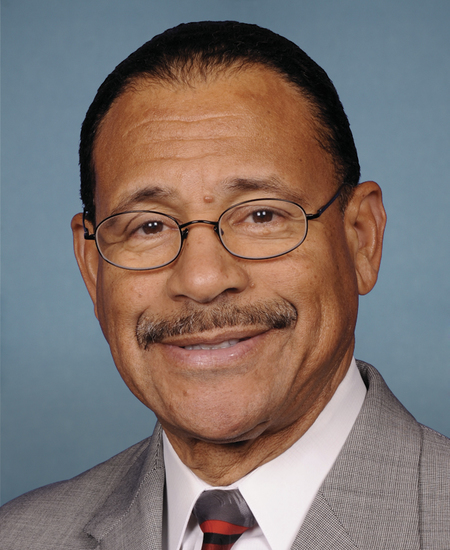
Rep. Sanford D. Bishop, Jr.
Sponsored bills
Healthy Maternity and Obstetric Medicine Act or the Healthy MOM Act This bill expands health insurance coverage availability for pregnant individuals. It requires health insurers, health insurance exchanges, and group health plans to offer a special enrollment period to pregnant individuals. The special enrollment period offered by an insurer or exchange must begin when the pregnancy is reported to the insurer or exchange. The special enrollment period offered by a group health plan must begin when the pregnancy is reported to the plan or is confirmed by a health care provider. The bill also makes pregnancy a qualifying life event for the purpose of enrolling in a federal employee health benefit plan. Additionally, a group health plan or health insurer that covers dependents must provide coverage for maternity care to all covered individuals. Any individual who is eligible for Medicaid and is, or becomes, pregnant maintains such eligibility for one year after the end of the pregnancy. The bill revises the range in which a state must establish a maximum level of family income for pregnant women and infants to be eligible for Medicaid. The upper limit of the range is eliminated and the lower limit is set to the level in place on January 1, 2014.
Foster Youth Mentoring Act of 20 21 This bill directs the Department of Health and Human Services to award grants for programs that provide mentoring for children in foster care and children with experience in foster care.
COVID Vaccine Transportation Access Act This bill establishes a grant program to remove transportation barriers in accessing COVID-19 vaccination sites. It also requires the federal government to cover the full cost of nonemergency transportation benefits related to accessing a COVID-19 vaccine for Medicaid recipients. Specifically, the Department of Health and Human Services must award the grants through state health agencies to nonprofits that have experience providing services to communities with disparities in health status and health care access. Grant-funded projects may include prescheduled or on-demand transportation to and from COVID-19 vaccination sites.
This resolution celebrates the 149th anniversary of Arbor Day and encourages the people of the United States to participate in National Arbor Day activities.
Transforming Hiring in Rural Industries and Vital Economies Act of 202 1 This bill establishes the White House Rural Council within the Executive Office of the President to make recommendations and coordinate the efforts of the executive branch regarding economic development in rural areas.
Affordable Housing for Homeless Veterans Act of 2021 This bill reauthorizes and modifies a program of the Department of Veterans Affairs (VA) that provides housing assistance to homeless veterans. Specifically, the bill authorizes the VA to enter into agreements with specified entities (e.g., nonprofit organizations or tribal entities) through September 30, 2025, to assist homeless veterans and their families in acquiring shelter or permanent housing. Under the bill, the VA may enter into agreements where an entity that is buying, leasing, or receiving property agrees to sell or rent the property directly to homeless veterans or veterans at risk of homelessness.
Truth in Tuition Act of 2021 This bill requires institutions of higher education (IHEs) that participate in federal student-aid programs to provide admitted students with information related to tuition and fees. Specifically, the bill requires an IHE to provide to a student (1) a multi-year tuition and fee schedule; or (2) a single-year tuition and fee schedule and a nonbinding, multi-year estimate of net costs after financial aid is awarded. The Department of Education may waive this requirement under certain circumstances.
Mark Takai Atomic Veterans Healthcare Parity Act This bill includes veterans who participated in the cleanup of Enewetak Atoll in the Marshall Islands between January 1, 1977, and December 31, 1980, as radiation-exposed veterans for purposes of the Department of Veterans Affairs presumption of service-connection for specified cancers. Under a presumption of service-connection, specific conditions diagnosed in certain veterans are presumed to have been caused by the circumstances of their military service. Health care benefits and disability compensation may then be awarded.
This concurrent resolution (1) affirms, on the 400th anniversary of the arrival of the first slave ship, that the nation owes a debt of remembrance not only to those who lived through the injustices of slavery but also to their descendants; and (2) urges the establishment of a U.S. Commission on Truth, Racial Healing, and Transformation to properly acknowledge, memorialize, and be a catalyst for progress, including toward permanently eliminating persistent racial inequities.